sawyer bergeron
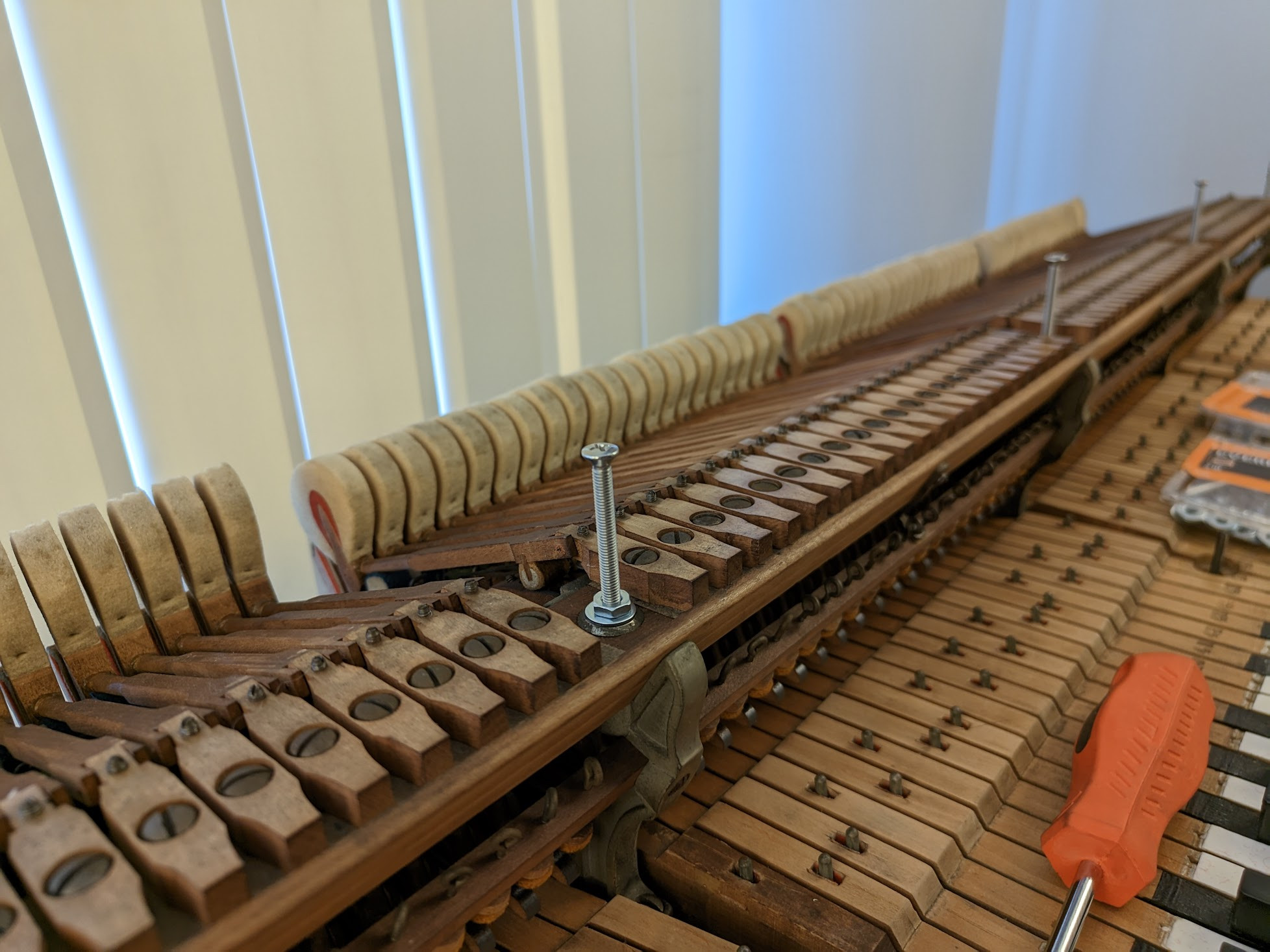
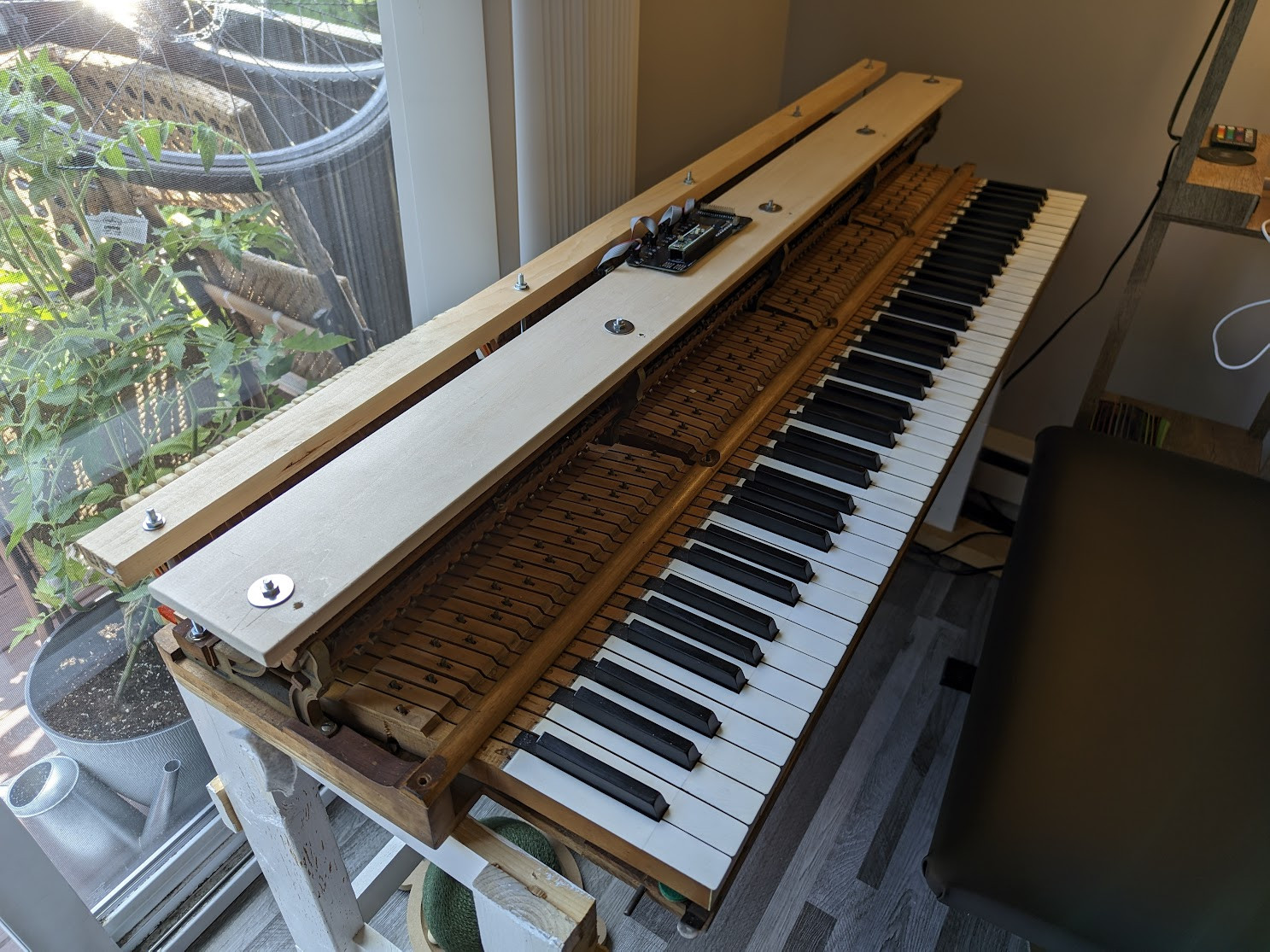
vagfilm I'm measuring hammers, sensors are going to be mounted on a rail above them, with magnets on the shanks. I did a test with a Lego model while I was getting my salvage action, and did find there to be some crosstalk, but I can do a relatively simple transformation to "de-convolve" the gaussian to reduce it from the 10 parts in a hundred down to likely sub-0.5 compared to the direct signal from the matching hammer. Basically, take the measured value from neighboring keys (to some reasonable kernel size) and subtract some offset as calculated by some mapping function. You can do that once for a significant reduction, out to n times (with scaled down contributions each time) in a long tail of diminishing returns. The (observed, but not scientifically measured) low noise I'm seeing from the sensor is really exciting to me, since it means even if I have to do some corrections I'm at least not going to be forced into wasting a bunch of measurements just filtering out noise.
I'm definitely winging this a bit, I've never been much of a person for the controlled rigor of science (let alone writing it all down…) but so far everything has been quite straightforward and had pretty obvious choices just from looking at the outputs.