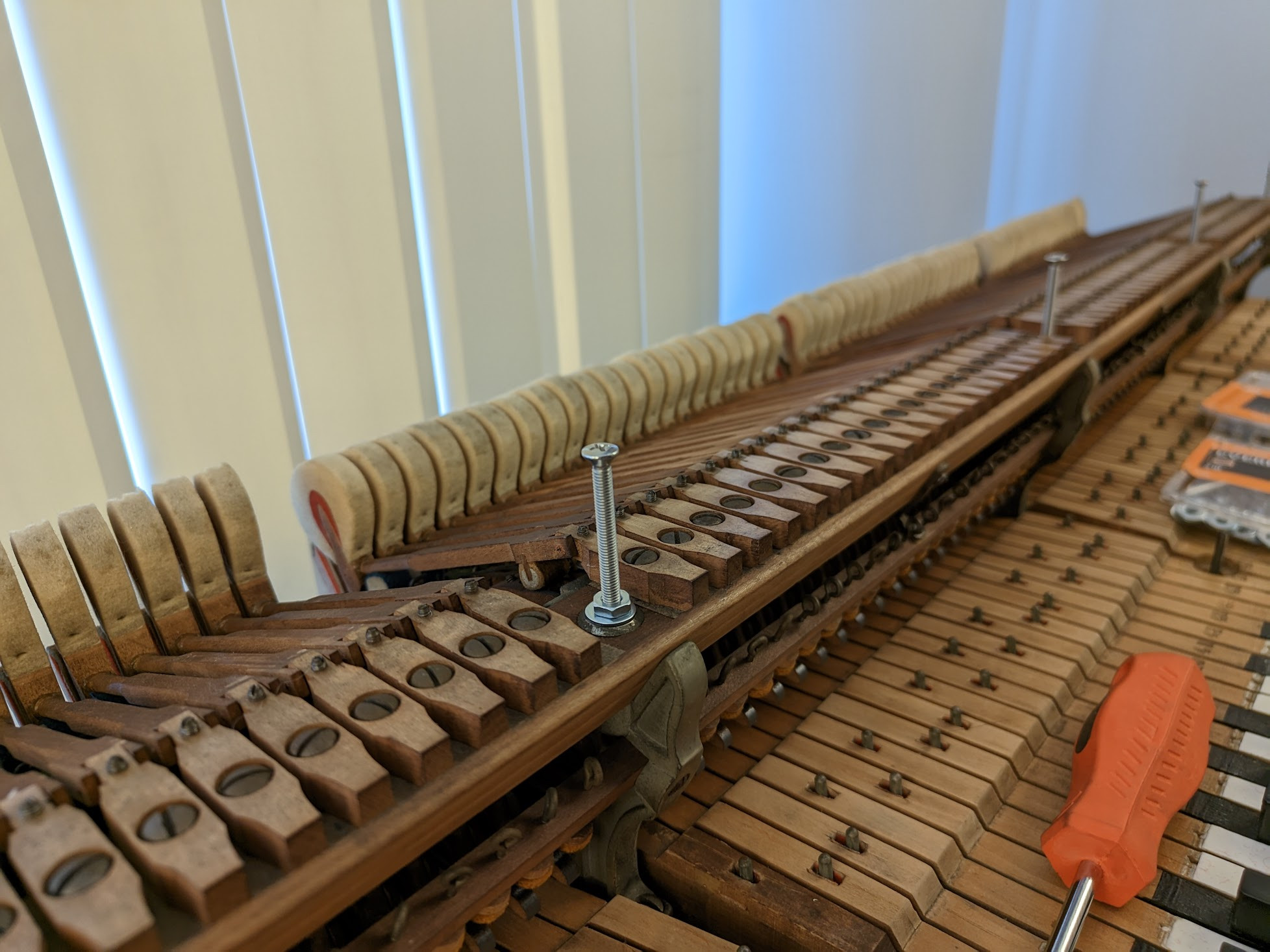
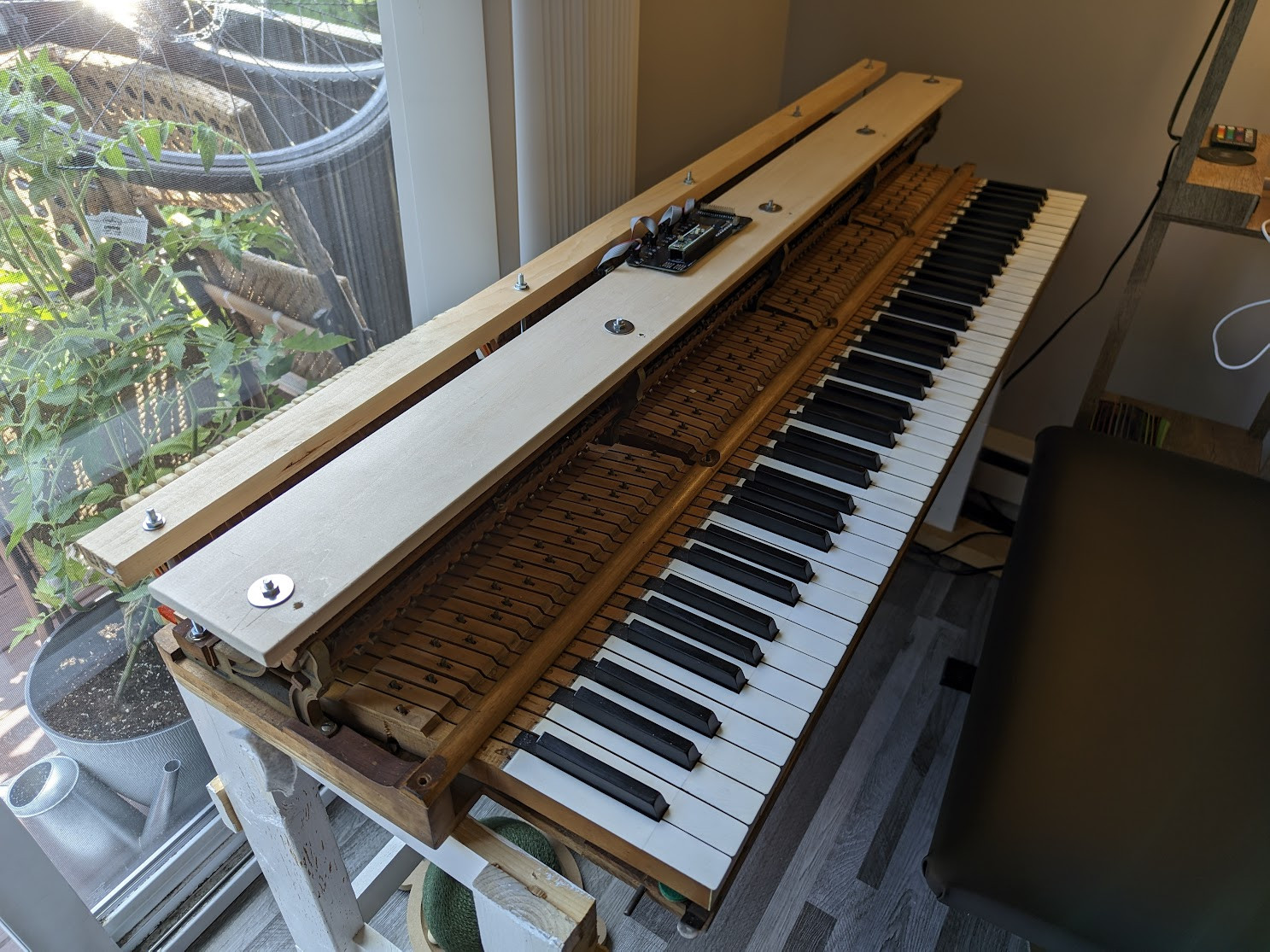
Some initial eyeballing of my measurements tells me that I've struck gold with the mounting arrangement. I'm not seeing any of the wobble that @gzpiano mentioned with the extrusion based mounting. Getting the extra supports along the length I'm sure is most of it, since it constrains any oscillations to the 4th harmonic of the bar, which seems to damp out basically immediately (with it being wood, and not something that rings in those harmonics like aluminum would)
![]()
I do very badly need to regulate the action though. I have the striker rail height set to catch the hammers at the correct angle going by the string wear marks, but still a full half of the jacks aren't coming off of the knuckles so those hammers stay bouncing at the top of travel. I'm debating if I can do a good enough job regulating by myself, or if it would be worth it to hire a pro and hopefully be "done with it".
Re: hall effect sensors: that part itself works amazingly. The hammers in the real action are spaced out more than my model was, so I see even less cross-talk. The bus architecture also seems fine, even putting analog signals over a few feet of ribbon cable, 1 microsecond of switching delay before doing reads seems to be plenty for everything to stabilize (haven't tried pushing it down more than that yet).
Next steps may not be mechanical at all, since aside from a bunch of stupidly annoying manual soldering (why did I have to choose SPST switches the size of coarse salt grains? why didn't I pay for some robot in china to just do that for me?), I think the remaining MVP problems can be completely solved in software.