I actually have not given much consideration into that, and just accepted what others have done, so let me bring @gzpiano and @JayKominek into the conversation, but here are my speculations
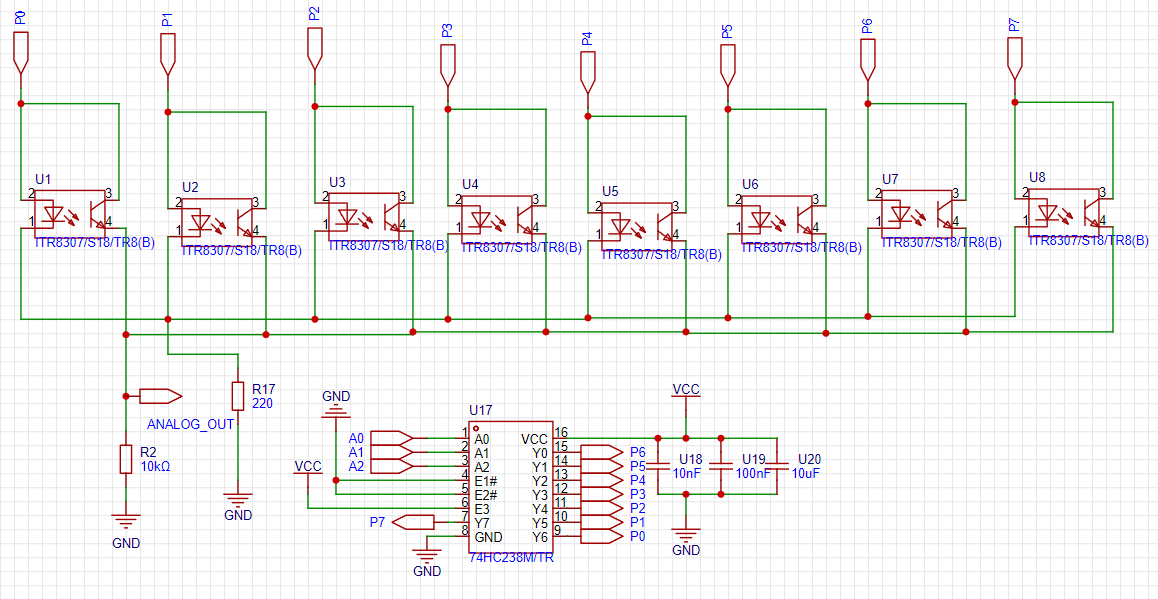
DavisB Reduces power consumption to 1/8
This is a nice-to-have. For constant current driver (which IMHO is what should be used for this project) where there is no current-limiting resistor, the power consumption is not that much, so I'll take the saving, but not a big deal.
DavisB Need only 2 resistors for 8 sensors
Again, you are thinking of the 16 resistors needed for a circuit with individual current limiting resistors, which IMHO you should not. See my quick take on this if you don't know what I am talking about
DavisB Reduces light crosstalk (there's 7 unlit sensors on both sides)
I think that's a great advantage, and the reason why you grabbed my attention even if I came to the computer with the intention of shutting it off, rather than posting another message 😃
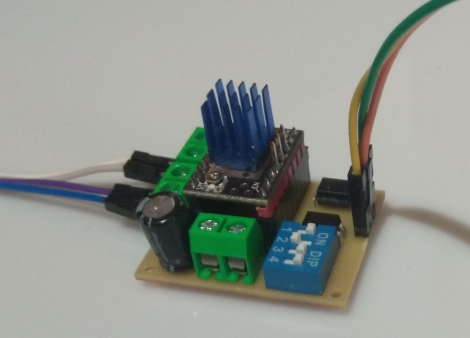
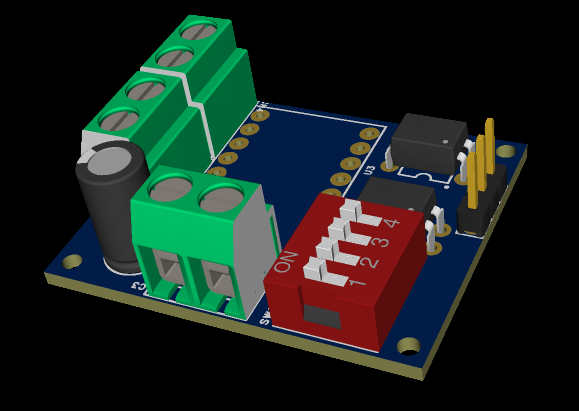
Possible problems I see from the LED driver point of view: I am not sure how a constant current setup would react to this kind of multiplexing. The LED themselves are able to switch on and off at that rate no problem. I don't think their lifetime would be affected by the number of on/off cycles, if they are not subjected to current spikes. In fact their lifetime could be extended by such a driving mode since it's typically rated in pure time spent in the on status. The question is if one can make the parasitic impedance of the rest of circuit small enough to not subject them to current spikes (I think that is feasible) and to have the current stabilize quickly enough for the readout, since you don't want to use the sensor until you know the lighting from LED is constant. I think the most important questions are how much current can the mux carry, what is its parasitic impedance and how that would affect the the speed of switching the LEDs on and off?
As "gut feeling" (my EE is just amateurishy) is that this can be done with some work. Simply there is not such a large advantage for people to have (so far) thought about it. I think reducing crosstalk is very valuable benefit and worth investigating this more, especially for small-size keyboards, where the sensors are closer to each other.
See video number 29 for a take from @gzpiano about crosstalk.
See also my comment and @gzpiano somewhat dismissive one (which would apply less on reduced-size-keyboards) at things to consider number 6
Since I'm at it, let me comment on
RIP By the way, I'm now experimenting with WNG action parts
RIP I'll post some updates on this with some creative "non-regular" assembly I've been thinking of.
to just say that I've done very little about it, and I've found it's difficult for reasons I'll explain later because
RIP once I finish with the regularly sized project (hopefully just a weekend or two)
this is taking longer than I hoped (but it's making progress, as I reported in the other thread)