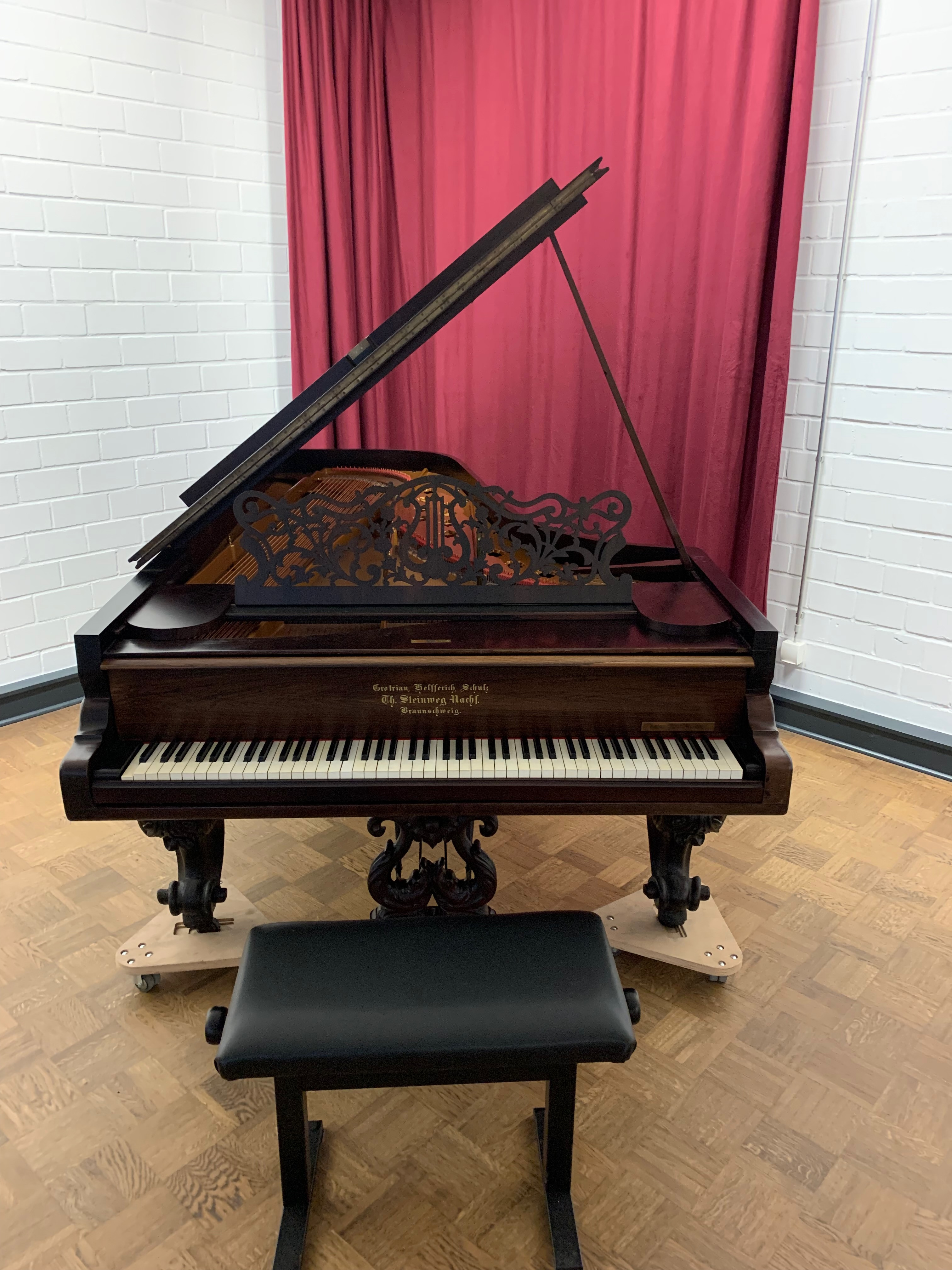
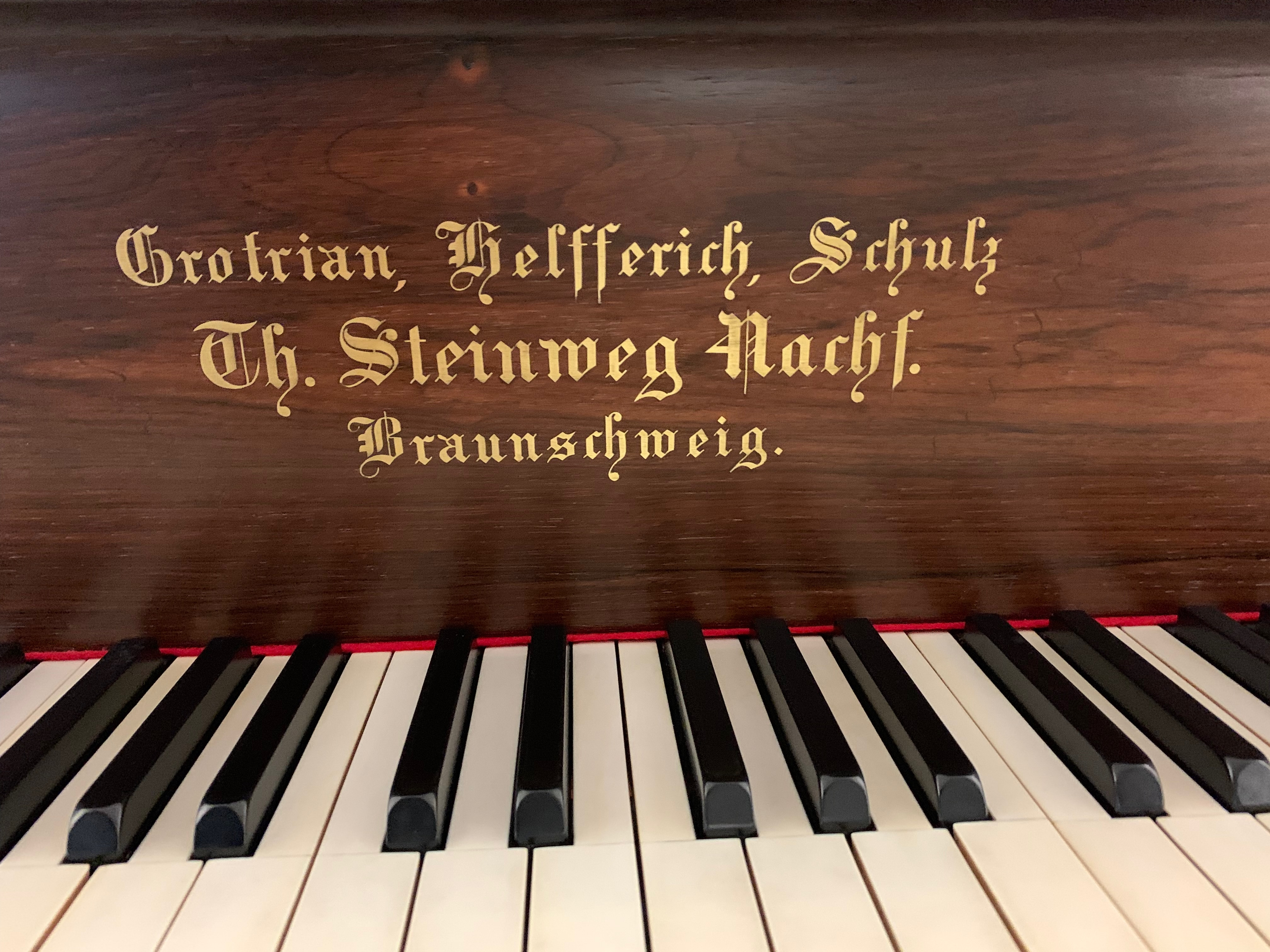
locture Given this piano like 150yo, there must have been significant amount of effort restoring and maintaining it. I haven't ever touched any piano like this in my life, and very curious to know what you have done so far, like what parts you have to replace and how things are done to get it back to life?
I can honestly say that it's a true restoration and that basically there are no new spare parts in it, except for strings, tuning pins and the the red felt for string guidance on the plate.
We have, however, worked with German hammer manufacturer Abel to get a set of replica hammers for the sampling session, but the original hammers are still kept in a vault and can be used for special purposes such as exclusive recordings with certain pianists.
The bulk of restoration work was renewal of the French Polish shellac surface, but since the methods to apply this are the same as they were in 1888, this is considered part of a true restoration process.
A lot of work was necessary to clean the inside the of the piano from dust and debris, but thanks to the meticulous work by the excellent piano maker Tobias Schmidt, who even went so far as to clean the plate with a tiny electric toothbrush, we ended up with a piano that basically is what it was back in 1887. We actually sent in the wippens to Abel in order to have them refurbished, but they came back without any work done on them, because Mr. Abel told me that they are as perfect and sturdy as can be.
You can find some more information on the restoration process and corresponding images on our website: https://clavierhaus.at/steinway-d-1887/
Anyway, I am here and available to answer any further questions about the piano. As to the digital side of it, please move to https://forum.pianoworld.com//ubbthreads.php/topics/3631183.html#Post3631183 where product manager Paul Kopf is available to answer questions in this regard.