Warning: this will be a long post! Buckle up because it is about knowing and knowledge.
In my almost 30 years of interest surrounding the Piano instrument only in that (other) forum I found an individual asking the right questions I tried to ask when I was a teenager. And was ignored or dismissed as seeking problems where there are none. I beg to differ and am glad I am not the only one. I am quoting this question as found in the other forum about piano and Music "theory".
This thread is for archiving purpose or for posterity in case other people look up for it online.
The Paradigm Shift (how did we end up like this?)
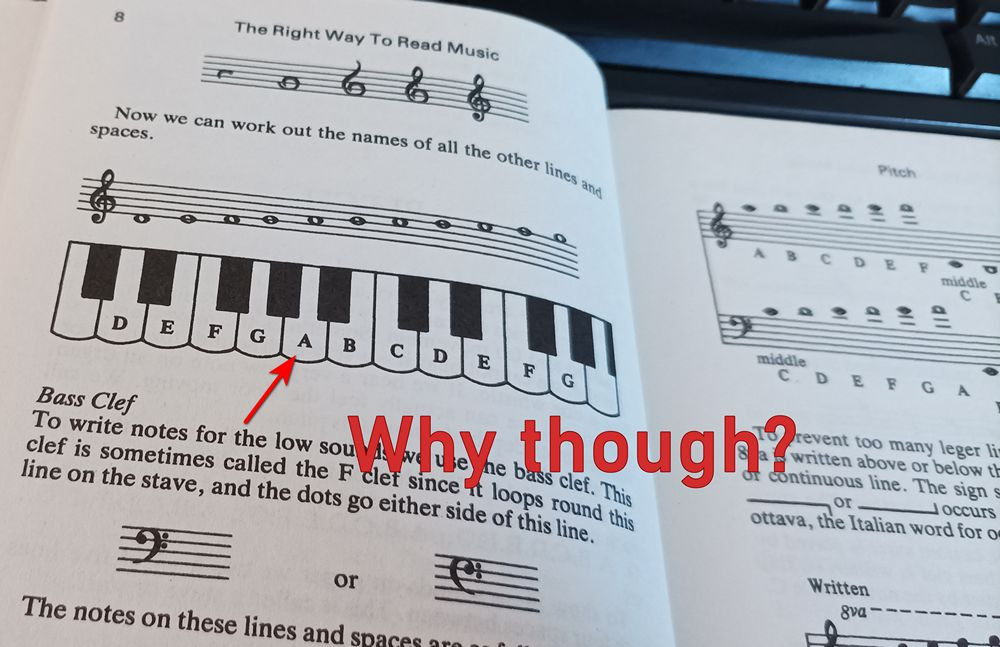
Question by silph: Why are we using a naming system that names the most basic scale starting with the letter 'C'?! It seems arbitrary that the name of the first note of the most basic scale we use is C, instead of A. "Why is the note that we call 'C' on the piano, actually not called 'A' instead?".
So, why A is where it is on a piano? Why is it not assigned to a different key?
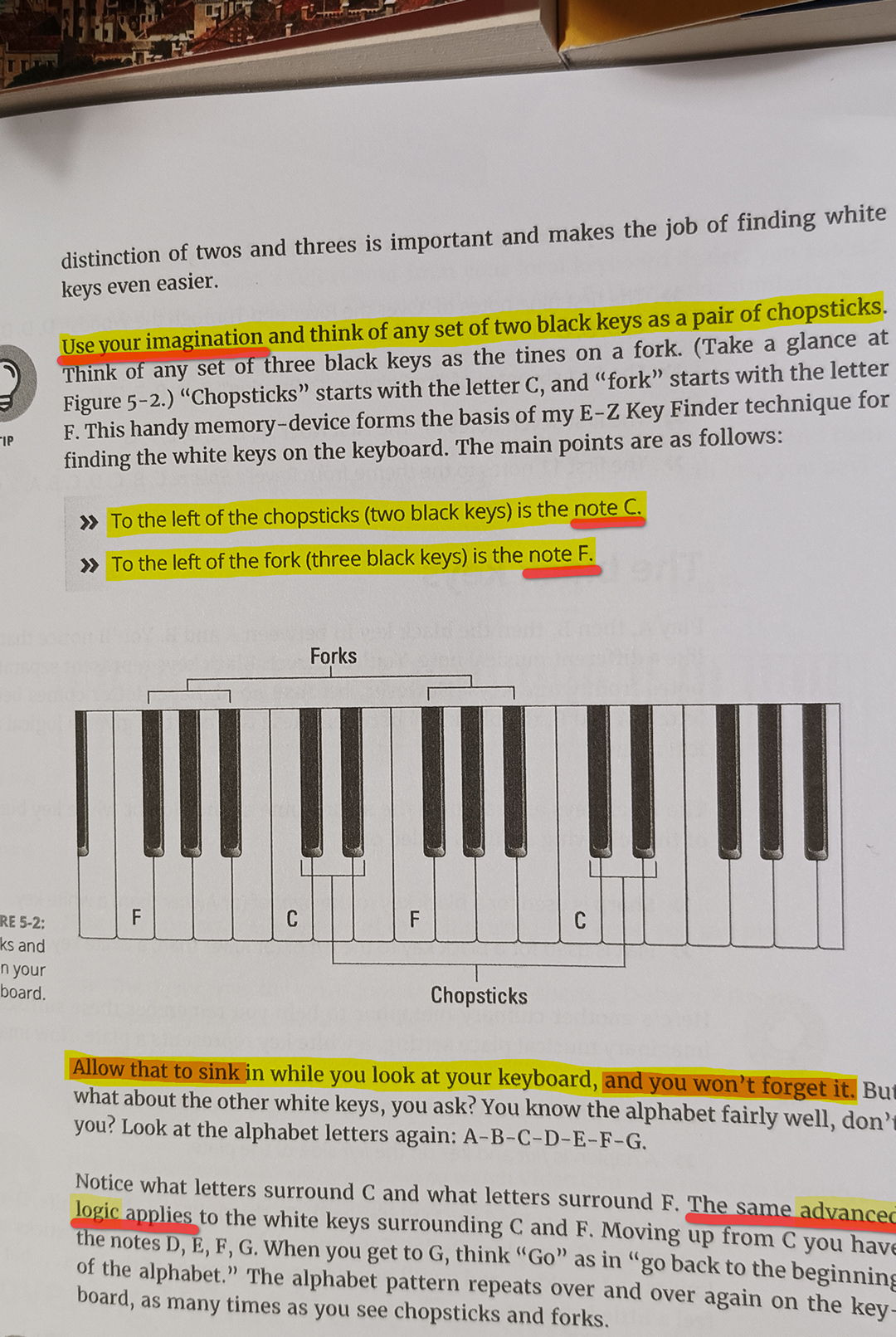
Interestingly enough (not to me though) is that all the participant besides one (much later in the discussion) could not even comprehend the question as asked by silph. I do not blame them as this type of indoctrination we have discussed in another thread and I had to visualize it with a screenshot from a book on 'Music theory'.
![]()
![]()
Another participant, kosulin, makes a quick search with 'Google AI' and cites this as the answer:
Around the year 500 AD, the Roman philosopher Boethius is widely credited with assigning the first 14 letters of the Latin alphabet to the notes of the two-octave range used during his era. The simple, systematic nature of the alphabet provided a convenient way to label notes in ascending order. The system was later condensed to letters A through G.
Hi, all
I will answer your question because believe or not it caused me to realize and express certain criticism over the so called "standard" music notation which got me banned from many forums related to Piano and Music.
We have to go way back in time… in times when the Church dominated all aspects of human activity (at least in Europe… most of Europe and consequently in America after 1500s). Also, times when Latin language was the de facto international language as today is its (indirect) successor the English language (they share the same alphabet more than less).
Contrary to popular belief, many will say that it was Boethius (end of 5th and beginning of 6th century CE) who gave us the first letters of the notes as arranged by the Latin language alphabet (he was Italian so it makes sense). That is incorrect and incomplete because all he was marking with the first 14 letters were… intervals (in his time the letter J did not exist by the way).
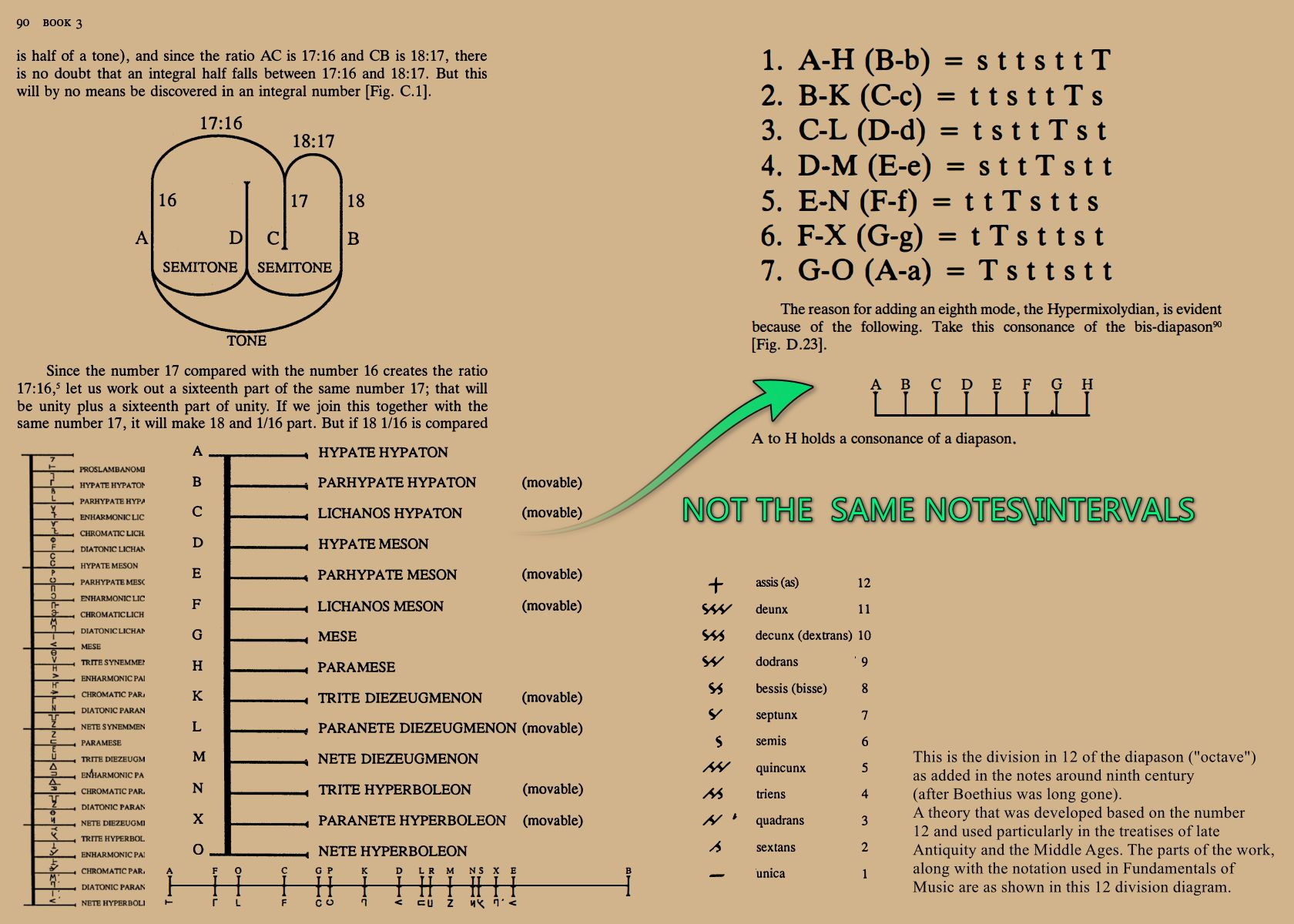
Boethius did not name the notes. A common misconception apparently is that he did. He named the intervals using the Latin letters. All notes still had their own symbols (runic like, mirrored, rotated, etc., a long story) as derived from the cumulative work of Aristoxenes and then Ptolemy and Alypius (the latter in 3rd century CE, two centuries before Boethius). In his work "Fundamentals of Music" can be seen he used AB as a full tone interval, then AD as a semi-tone interval, and DB as another semi-tone. In another diagram he would use AB (full tone), BC (again a full tone!, not a semi-tone), CE (semi-tone). AB could be a semi-tone or a tone, as it is appointed as 'movable' interval (read his work!), not a specified pitch (or string). In his work "Fundamentals of Music" we can read the following:
"Take four middle notes:
A, B, C, and D. A should hold the sesquitertian ratio-the diatessaron in relation to D; likewise A should stand a tone away from B, and B a tone away from C. The remainder, C to D, should maintain the interval of a semitone [Fig. D.22] → A I B I C I D"
— Boethius
Note: The letters only designated intervals! Above, Boethius clearly says C to D to represent a semi-tone! He used the letters as we today use them for geometry problems (or alike). No indication of pitch is given in conjunction with this alphabetical series Boethius used. The enumeration of species here may be seen as an abstract demonstration that, given a two "octave" system, one octave segment remains after the seven species have been computed, and that this segment may become the basis of an eighth mode. If this series is taken concretely, on the other hand, letter A must represent the highest pitch (the nete hyperboleon). In Boethius's numbering of species and derivation of the modes, the first species of diapason, that between the nete hyperboleon and the mese, becomes the basis for the first mode.
Only occasionally in his work certain tetrachords A, B, C, D will match the intervals "tone, semi-tone, tone". But mostly, any two of those letters would make or get other intervals, sometimes A-B is a renova (an "octave").
Boethius' influence on Music theory and nomenclature (naming notes, rather intervals)
Boethius is credited for constructing the modes from lower strings to higher as today we would call and present the scales in Music (in his time the typical representation would be downwards, where 'cadence' comes from as it was very popular modal move).
Anyway, using an alphabetic letter sequence (of a language) as a Music alphabet is a predilection and should be avoided as otherwise it dismisses other writing systems. Music must have its own alphabet and I created it long time ago. Certainly, Latin was the sort of the international (at least in Europe, so hardly ever international!) language at that time and English today as its successor but that should not be "the norm".
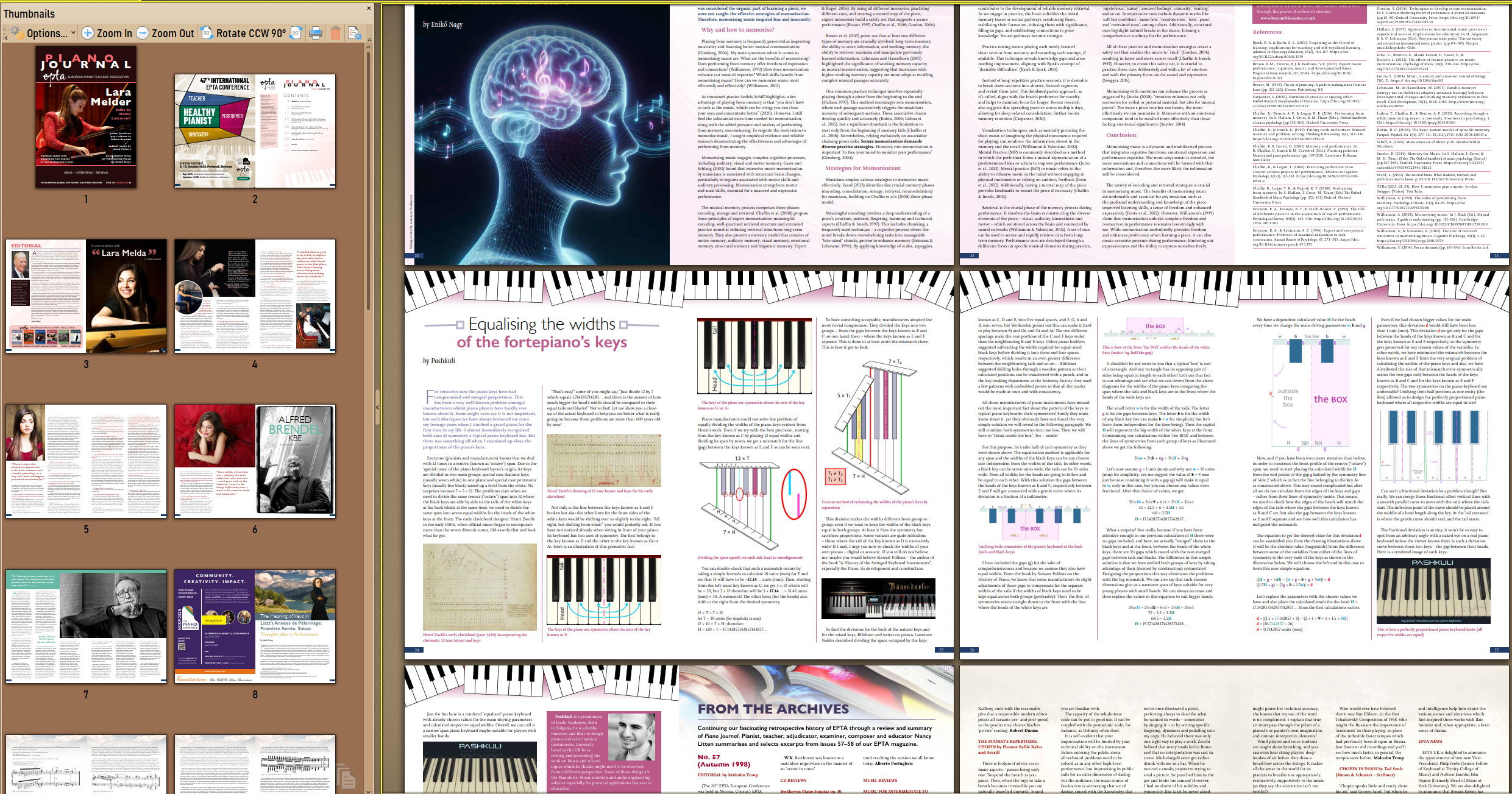
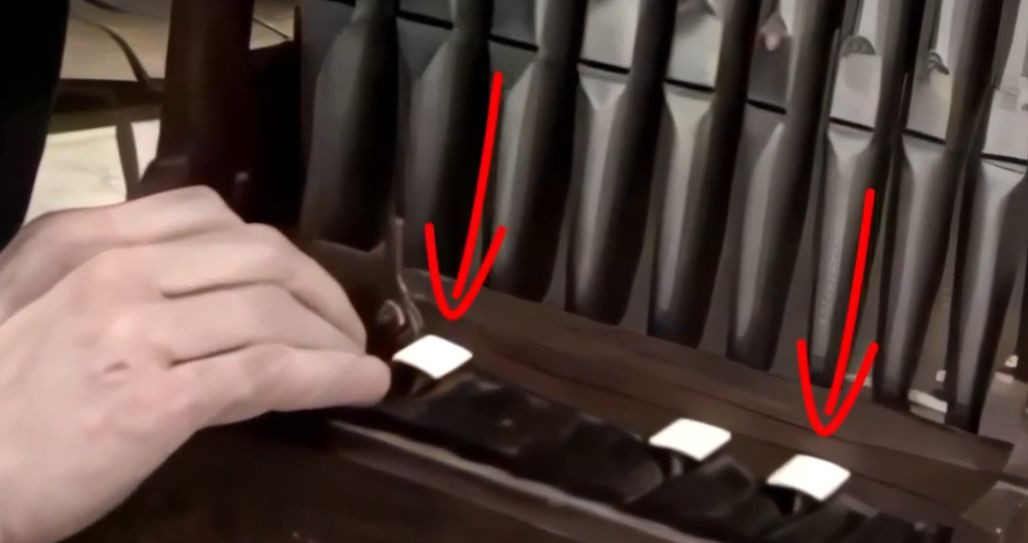
Keep in mind that in that time up until the late 14th century there were no 'piano keyboards' with all the 'black' notes we know today. The black keys were slowly introduced by the century on portative organs with the complete set of 7 big and 5 small keys described by Henri Zwolle in 1430 for a portable clavichembalo instrument he designed.
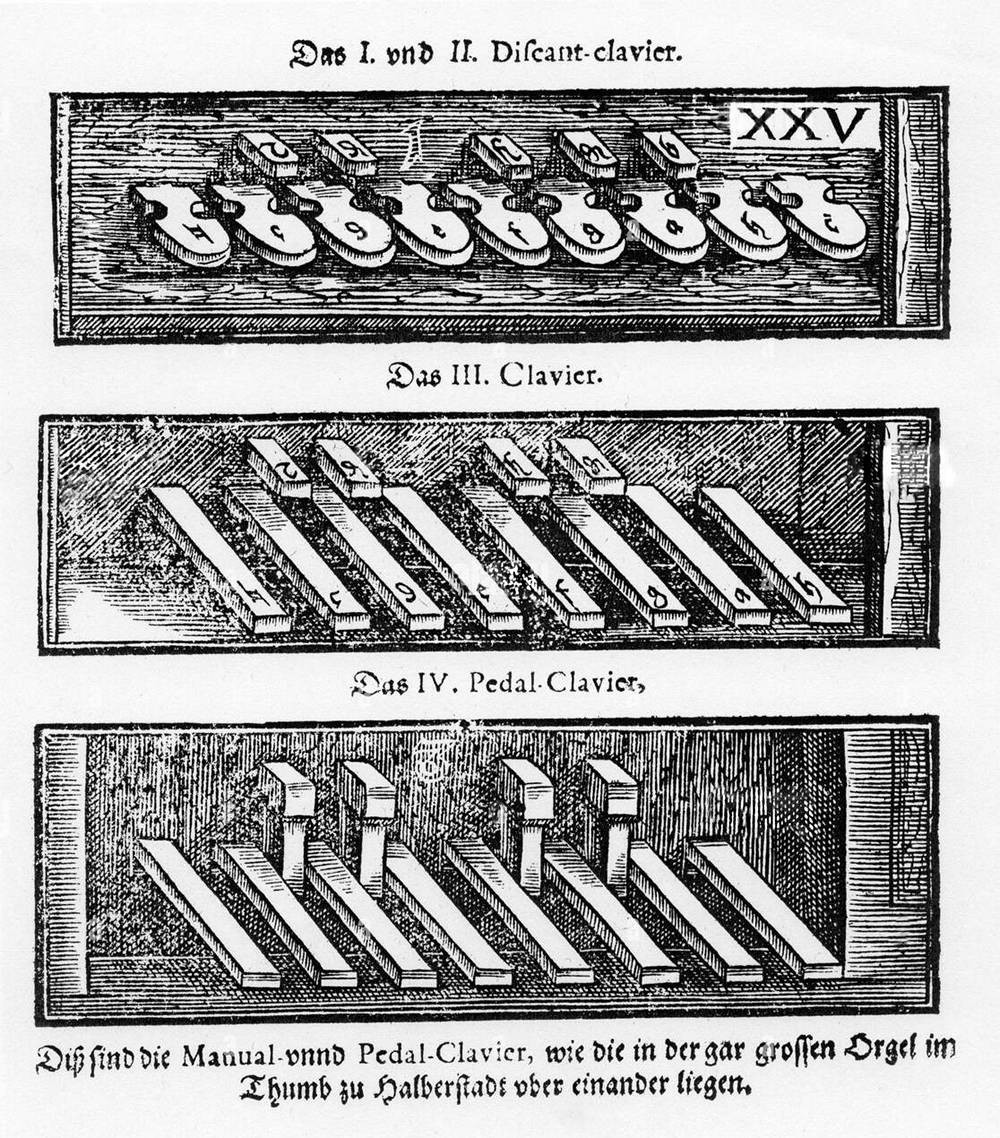
Before him similar thing did Nicholas Faber in Halberstadt, Germany in 1361 for a organ but there were no keys, rather levers pushed with a whole hand\grip or fist.
![]()
You can see that in those illustrations A and C are placed on the keys as they are today. So, we should go further back in time when there were no black keys. The times of Boethius (6th century CE) and then when Guido d'Arezzo and Odo\pseudo-Odo (in 10th and 11 century CE) and the Church monks lived.
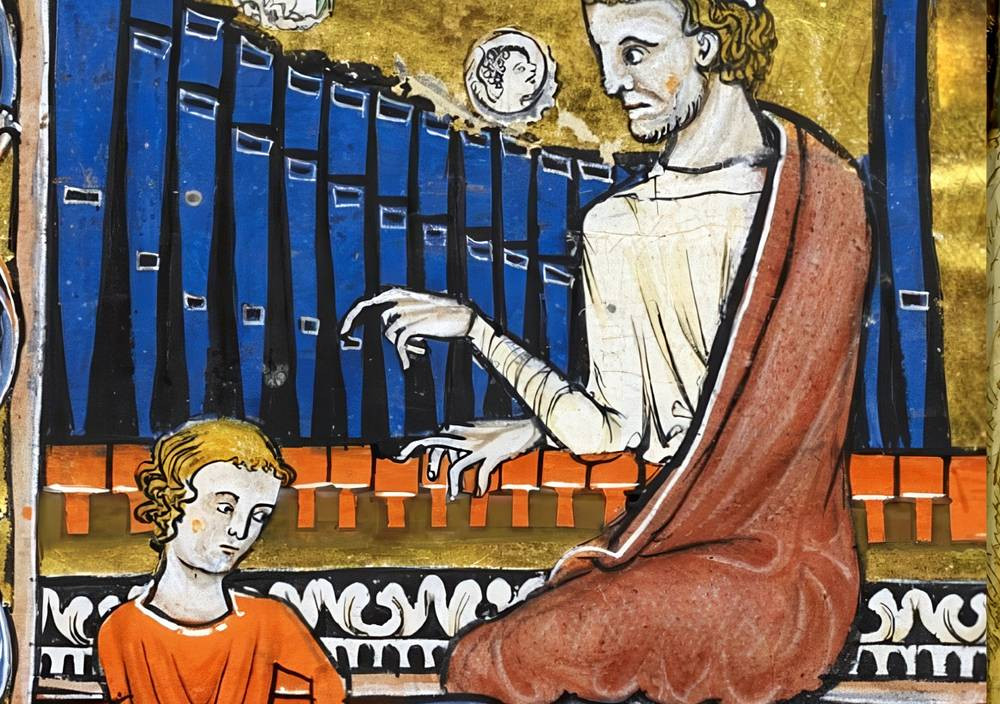
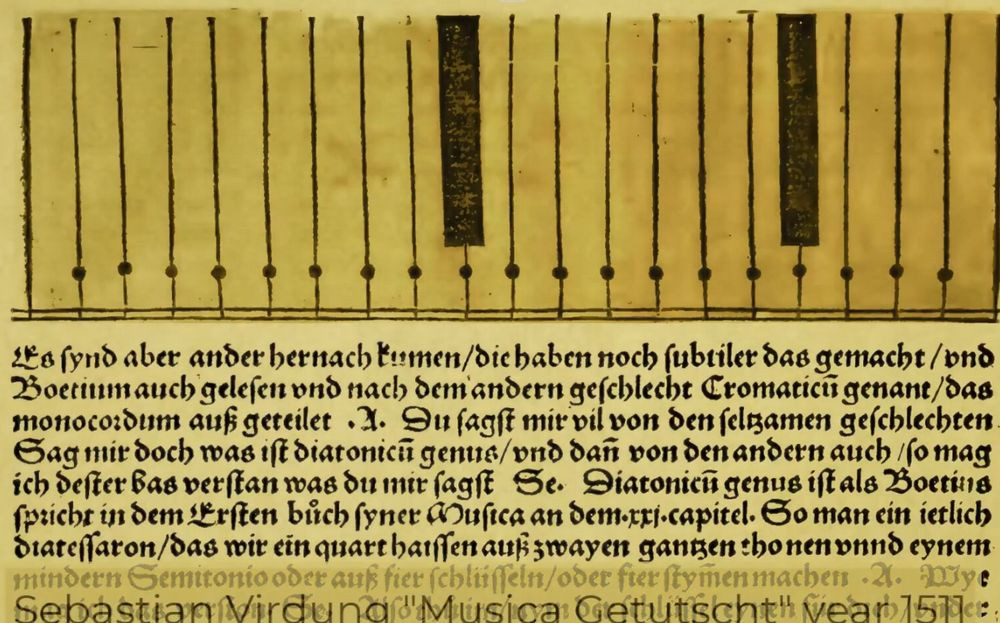
As you can see below, back then the portative and positive organs did not have any black keys. Encyclopedia Britannica also mentions that the key for B♭ was also a big "white" key at one point and Sebastian Virdung and Hans Beham (early and mid 16th century CE) have illustrated positive organs having a couple of black keys (B♭) and they referred to historical development of its keys as in their time all 12 keys were present.
![]()
![]()
![]()
The correct reason why A got where it is on the keyboard
Let's imagine those times between the 9th and 10th centuries CE in medieval Europe and Italy in particular. Church has established its dominance and in fact spreading aggressively, confronting the Byzantine Orthodox Christianity and literally killing all other denominations as heresy or apostasy. Church was governing all education as luxury as it was for most secular\ordinary people, only a few of whom in a village or a town could write or even read! No scientific notation existed, no physics, math or, God forbid, chemistry.
We see us back in those days, when the keys were just big key levers with no "accidentals" (no 'black' keys). I am talking about the time of the church monks Odo, Petri, and finally that same Guido d'Arezzo. They were totally clueless in their effort at establishing a tuning system and applied the ratio 9:8 (Pythagorean\Aristoxenian "major second = whole-tone") to the string of the monochord they used for the task at hand. For completely ignorant reason they called the whole (open) string Г… and I quote:
"Because Г is a little known Greek letter here and many do not use it."
Now here is the ironic coincidence. Г (gamma) is the third letter in the Greek alphabet. One possible phonetic transcription of Г is as G, which is the seventh letter in Latin\English\Italian\French alphabets. Although G is also pronounced similarly to J in the alphabet (but keep in mind at that time the letter J was not existent it will appear post year 1400). Also, the letter G was actually C but it got that line at the front to resemble the guttural aspect of its pronunciation as similar to how the Greek (and later Cyrillic) Г sounded to them.
Confused already? It gets even more ridiculous because Г (looks like an upside-down L) …and was similar alike to the hook or pin they attached the string on the monochord. Then we can read one of the correspondents church clerks there to say about the string:
"Divide it in 9 and take 8 and…
Note: Means, next tone is the length 8 of those 9 divisions
…and call it A, then from that A divide again with 9:8 and write B. But then go back to Г (open string) and divide its length of string into 4…
means, take 3/4ths of that new A length
…and write C. Then repeat all from that C."
As you can see, here we clearly have Г (open string), A, B, C following the interval structure "tone, tone, semi-tone" strictly as a rule by construction (Г_A_B-C). Then the same from C with the introduction to D, E, F respectively.
The actual naming of notes started by an ignorant application of both Boethius interval naming and Aristoxenus' 'division of genera' by the church monks\clerks Odo ("Musicae artis disciplina"), then Guido and Theodalus around year 1017 (500 years after Boethius).
What if…
Imagine, if they had called the whole string A as a main note from the get go (no use of a Greek letter) and started from there. We would have had A being where G is today but let's see why… because there were no 'black' keys in that time, remember?
It is ridiculous how they destroyed the works of Alypius and Boethius who lived centuries before those ignorant church monks. I mean, they literally only took the Pythagorean ratios of 3/2 (9/8 if you power by 2 and divide in 2 to lower the note one diapason\octave\renova) and 3/4. They constructed "the G Myxolidian mode" in today terms, which should be the real natural major mode also for the reasons of 'overtone series' but that is another topic and criticism I hold against modern "standard" Music notation!!!
The ignorant thing is that in the first half they do not encounter what is known as B♭, but in the next renova ("octave") they see it in the ratios of Boethius\Aristoxenes (they get smaller → better "resolution") and have no idea how to call it. So they write it as a 'square' shaped b (or b quadratus). If you combine b and q and write it in a square-like script you'll get the symbol for "natural" ♮; if you take a and d, d stands for diesis (means shift), and write in a similar combination, you'll get what today is the symbol for sharp ♯):
![]()
But didn't they have some portative organs in those medieval times?
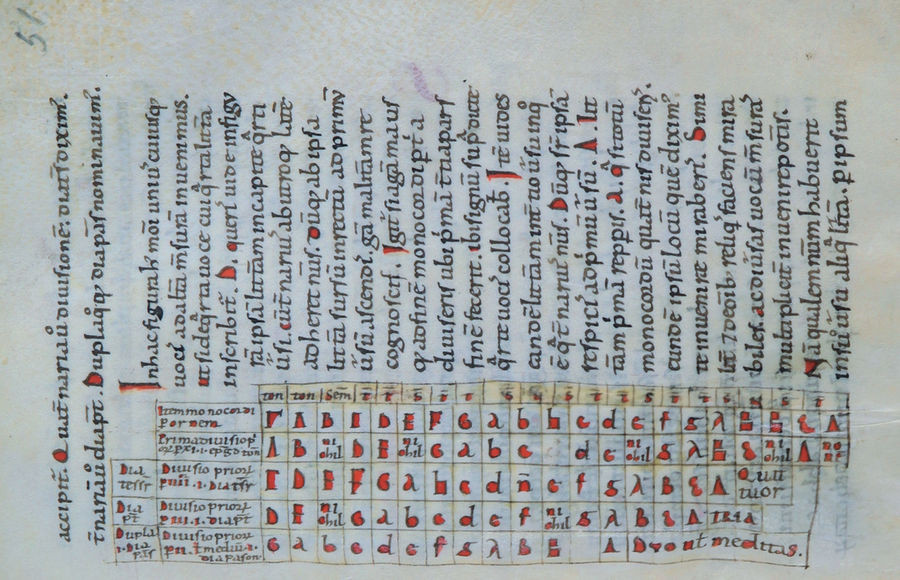
Of course they had them. And they (their pipe lengths) were tuned according to same rations and sources. Till that time though there was a separation of instrumental and vocal chant notation, where the latter also transformed into the so called Neume notation or rather its cheironomic manuscript (curved stenographic like written symbols). Those, ancient symbols and cheironomic neumes were cumbersome for the emerging church chants and the expansion of the portative organ into positive and separating all into instrumental and vocal notation. Here it is in more detailed explanation.
In Boethius' "The Fundamentals of Music" there is the 3rd chapter in the 'Book 4'. The text gives the names of the notes, first using the Greek terms found in 'Book 1', then the later Latin names for the first time:
Quote
- The naming of musical notes in Greek and Latin scholarship
Since we are left with the task of dividing a string by means of a rule (according to the consonances just discussed), and since this same partition will display the requisite sounds through three genera of melody, at this point we must set out musical notes; in this way, when we inscribe the divided line 18 with these same written symbols, 19 the name of each individual note will be recognized very easily.
For the present, let us take just one of the modes, the Lydian, and arrange its written symbols through the three genera; we defer doing the same with the other modes until another time. Surely if I sketch the disposition of notes using the names of Greek letters, the reader should not be put off by anything unusual.
Then Boethius uses the actual note symbols for all notes as they were created in earlier times (Aristoxenes to Alypius) including chromatic changes and each had its own symbol (actually two for each, as they differentiated the note symbols between hardware instruments and vocal singing but that is not important)! (see attached image)
If you claim that Boethius used notation for notes, I will have to say, it is not really how he proceeded. We can see that in his work the notes B and C were "movable" or as we could say today they could have "accidental" counterparts. Same with E and F. Completely different from what the monks did in the 10th and 11th century CE. They ruined it all out of pure ignorance and total misunderstanding if at all familiar with his work (hope so, as they were all Italians after all)!
![]()
![]()
So, that 10th century alphabetic structure got with the tuning of the then developing portative organs for the Church and now they had assigned the letters to specific notes by matching the sounds with those on the monochord. There were mostly two possible matches → either today's G or C, maybe F if you push it, because the organs already had a tonal structure and did not care about how the string of their monochord was tuned! It was the other way around. Rather, they tuned the monochord to a note on the organ till their "invented" A, B, C structure matched as much as possible to the notes produced by the organ. It was that ignorant on their behalf, if you ask me!
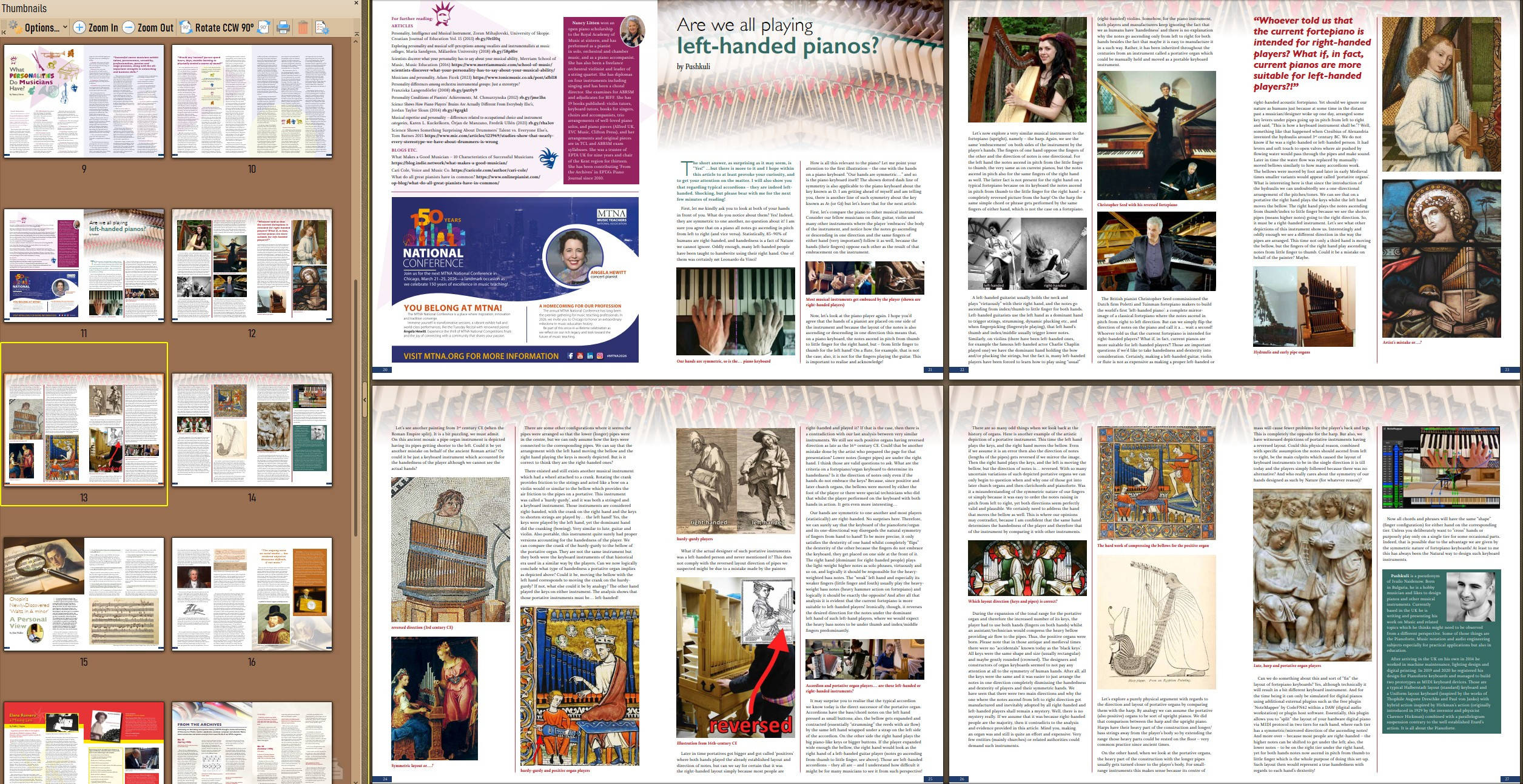
Later when the key for what they called B♭ (B flat, as on an organ you had to flatten the nozzle of the pipe to lower the pitch and literally sharpen it to raise it) was introduced, so were the new "accidental" notes (keys). And therefore → the present layout of the piano keyboard as established in the church organs especially during Bach's time. And it was again another utterly ridiculous misunderstanding of design and handedness. On that, I have written another criticism as well.
But it gets even more ridiculous!
Then comes Guido d'Arezzo (yet another church monk in Italy in the 11th century) and says that Latin letters are good and all but why we should not give a proper names to the good notes of not only his native Latin language but also from his favorite church psalm (chant).
'do-re-mi-fa-sol-la-si' syllables were introduced by Guido d'Arezzo, who took the first syllable from each line of the hymn "Ut queant laxis" to help in memorization:
Utqueant laxis (later in time Ut will be replaced as Do by Giovanni Battista Doni in the 17th century because "do" is an open syllable, whereas "ut" is a closed one concerning singing)
Resonare fibris
Mira gestorum
Famuli tuorum
Solve polluti
Labiis reatum
Sancte Iohannes (the 7th one was not assiged by Guido, it happened later also changed to Ti from the word Sancti
I should add the fact that he used his favorite chant and took the syllables of the first six notes which matched the diatonic structure of the first different notes. At Guido's time the seventh note was not used (at least not in church chants). It was added later when it was used and quite possibly when the organs extended to positive organs (around 12 and 13 century CE). And there it is another special case' with only 7 notes (out of the 12 from the ancient chromatic genera), because at those times organs did not have 'black keys' at all!
Both such naming of notes by Guido and the earlier A, B, C… are predilections as inherited by their Latin speaking creators. Music must and should have its own Musical alphabet, the 12 notes named (not just 6 or 7). The system is incomplete, and leads to inconveniences later in time. I have dedicated articles (books) and now making videos about it with lots and lots of criticism.
So… There you have the answer. It was due to pure ignorant application of a Pythagorean ratios and even more ignorant assignment of letters to shortened string lengths following Latin alphabet sequence.
How to create a truly dedicated and neutral Music alphabet can be read in my treatise about 'Music elements' and 'Plain Music Notation system' and 'How to design a piano keyboard'.