n-player Does one only consider samples of a given sensor over time or also those of other keys? That is, taking into account the overall velocity trends of a musical piece.
It is up to us to decide. AFAIK (and certainly for what I am doing), currently I consider only the sensor itself and not the others. Using others would be difficult for me, and with my minimalist approach I would do it only if strong benefits are shown.
xooorx W.R.T. the position variable in the filter, here's the original centered filter (red) vs the pos=12 version (blue) showing the faster response, but also the increased noise and the overshoot:
If my understanding is correct, the black is the hammer position, right? If so, even the red curve may be more than adequate, because in an acoustic piano the sound is not heard immediately as the hammer starts to slow down upon touching the string, but only after it leaves it free to vibrate, so when it starts going down.
Regarding the overshoot, if that is an additive or multiplicative factor more or less constant for all the MIDI velocity levels, it's irrelevant, no? Of course in general the overshoot will depend on the characteristics of the thing being differentiated, but here we know well: a slowing down hammer, so we can use that knowledge to make assumptions?
xooorx How many bits are the ADCs?
The least accurate ones (mine) have 9 bits effective (12 nominal). The most accurate ones, 16 nominal (I dunno effective).
xooorx What's the sample rate?
The slowest I've seen discussed is 1kSample/s (per channel). The faster (mine) 167kSample/s (per channel).
xooorx What accuracy is required?
At the very least 0.5 MIDI velocities, i.e. 8 bits. Ideally some more, let's say 14 bit (but that is likely overkill).
With this info can you provide more specifics? 🤣
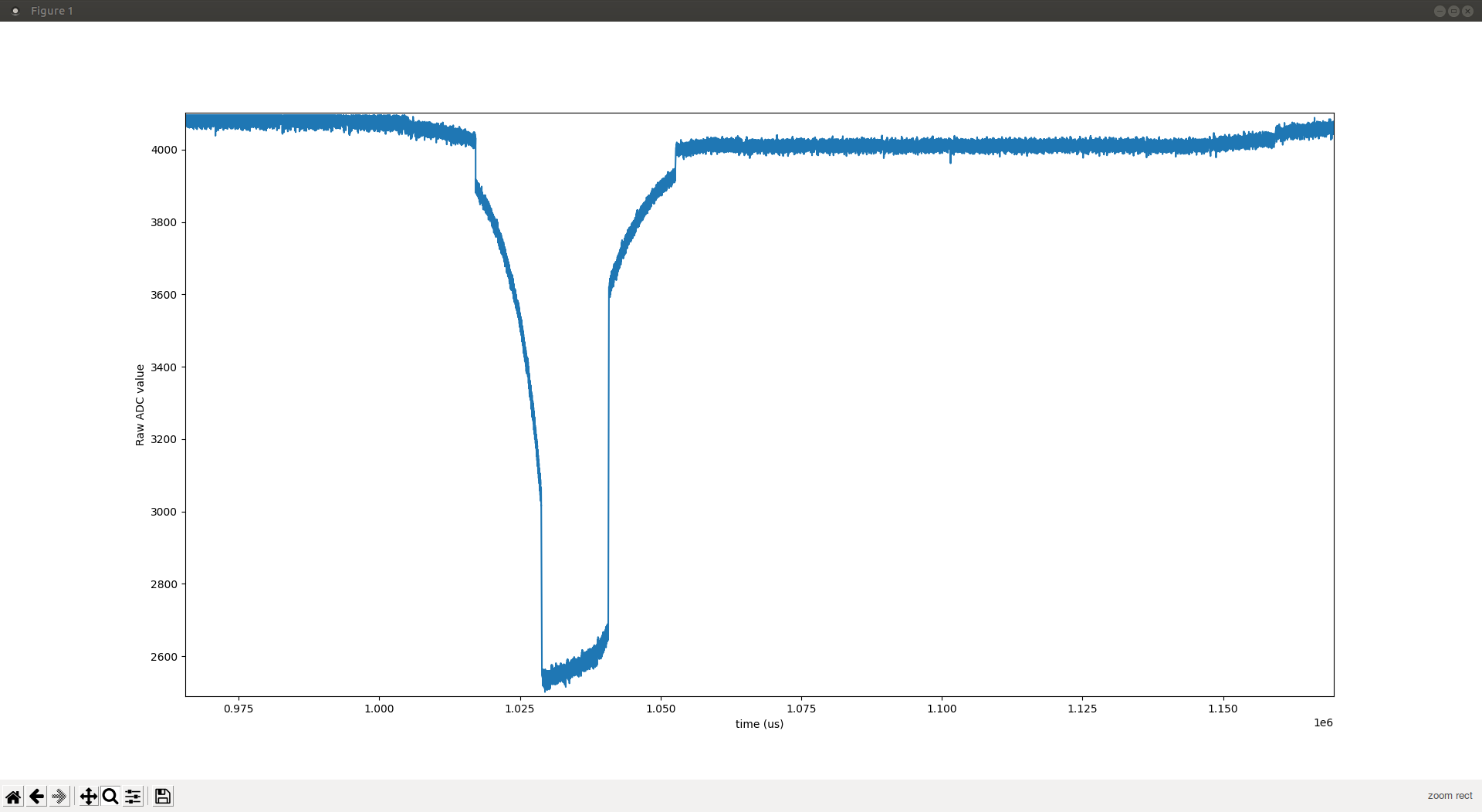
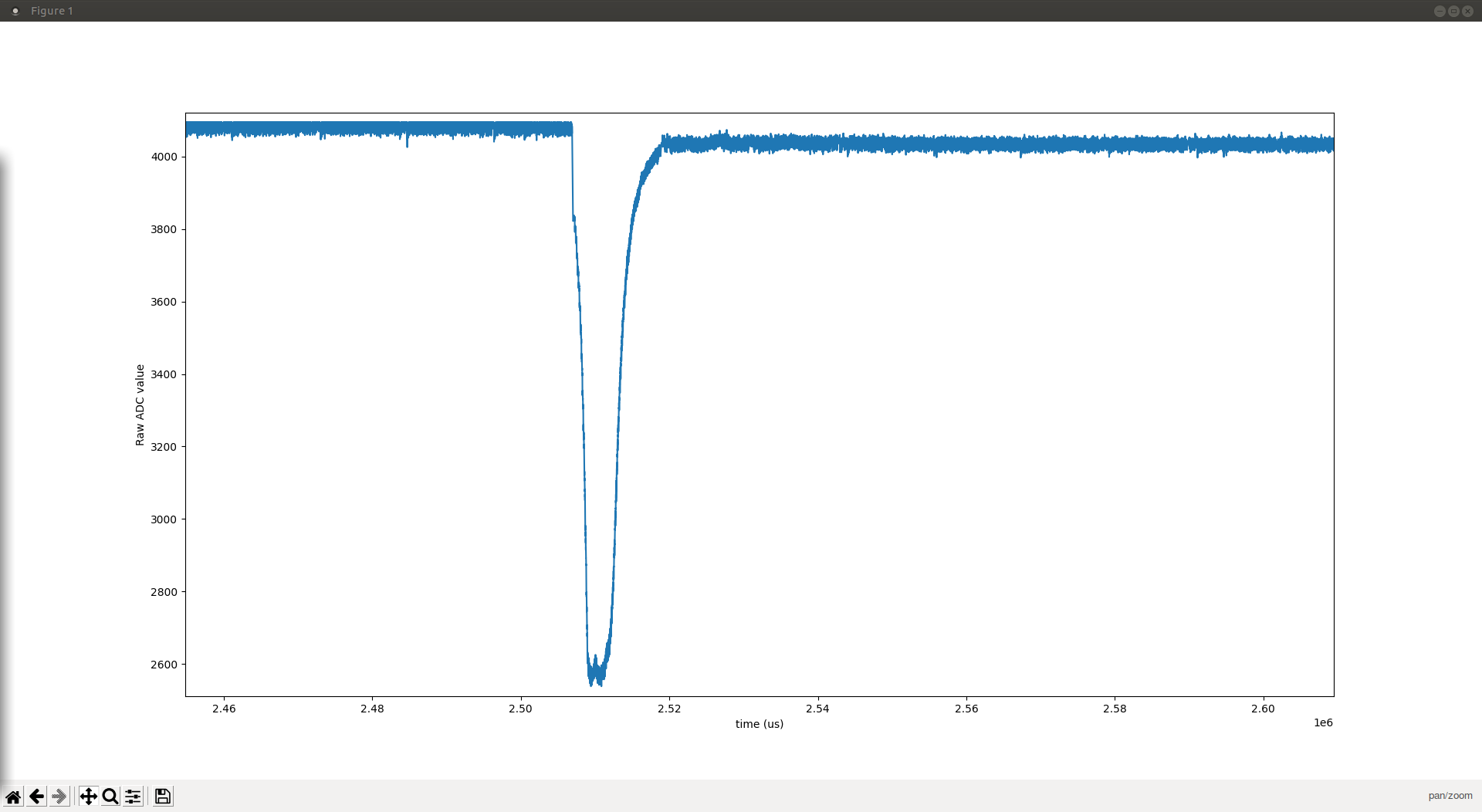
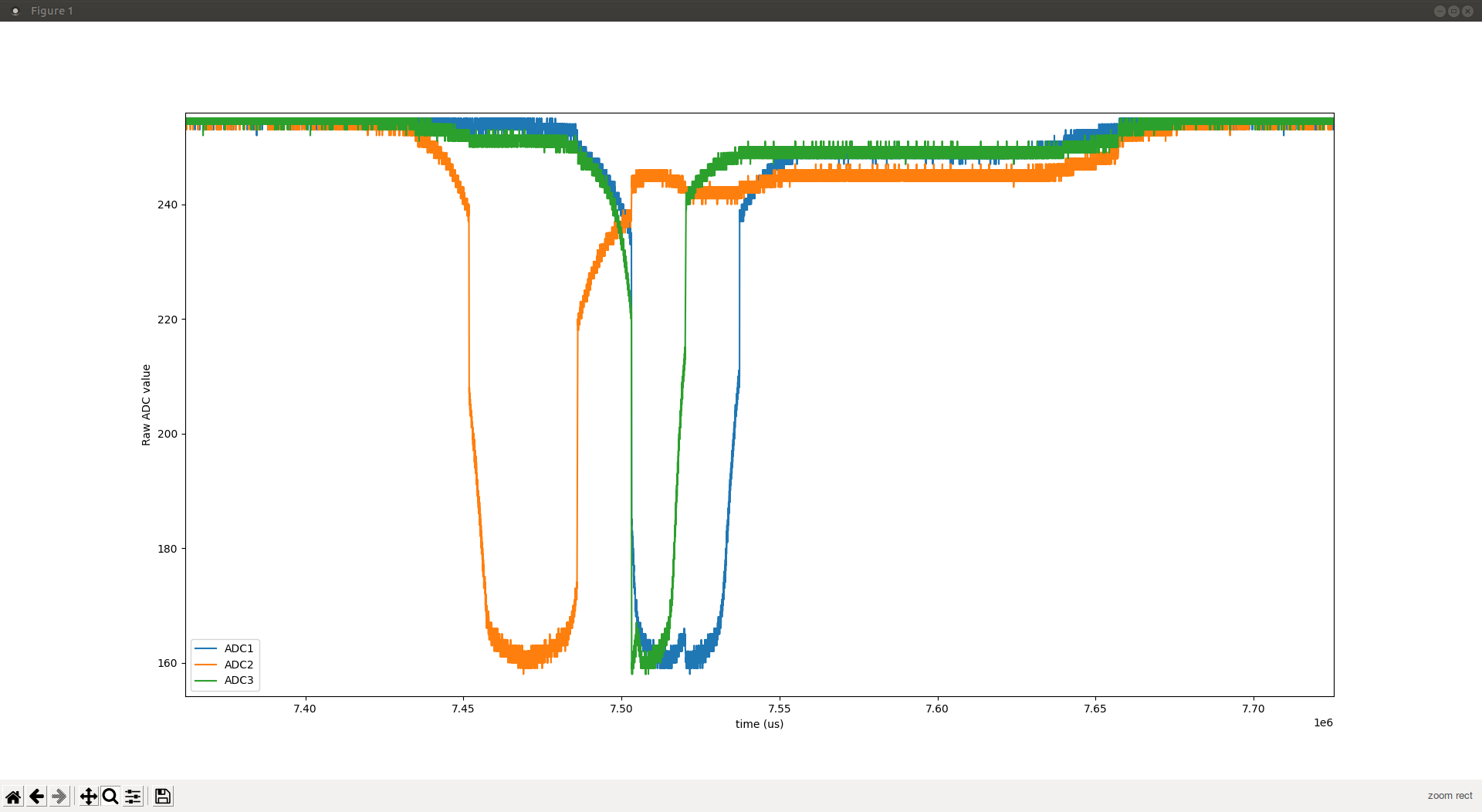
I think one thing that we have not said is what is the slowest and fastest velocity which we would like to detect. We have that paper quoted above in this conversation, but I also captured an ADC session with pp, mf, f and ff strikes. I have posted that data into here and it can be plotted or extracted to a text file with the ./plot_midi.py tool placed here -- I will add READMEs shortly after hitting "post reply" here.
The pro is that my data contains also timing information of when the sampling occurred (with us accuracy). The con is that the USB bus of the Pico (and perhaps also of the old receiving computer I am using) chocked if I tried to send it at 10kSample/s or faster. Here is the picture of one of the three data files