Skip to content

A brand new Steinway from VSL: 1887 model D concert grand

johanibraaten

CyberGene However, in the world of MIDI controllers where you have no dampers and no varying key weight, you will always press with the same target acceleration and if the underlying samples have different audio volume, that’s a problem.

If the difference is big I agree it's a problem but a slight difference might perhaps feel natural for someone that plays most of the time on acoustics.

pc-king No, because with the N1, for example, I don't have any influence from the pedal. I play with the same force on the pedal, and of course, I don't want it to be any louder.

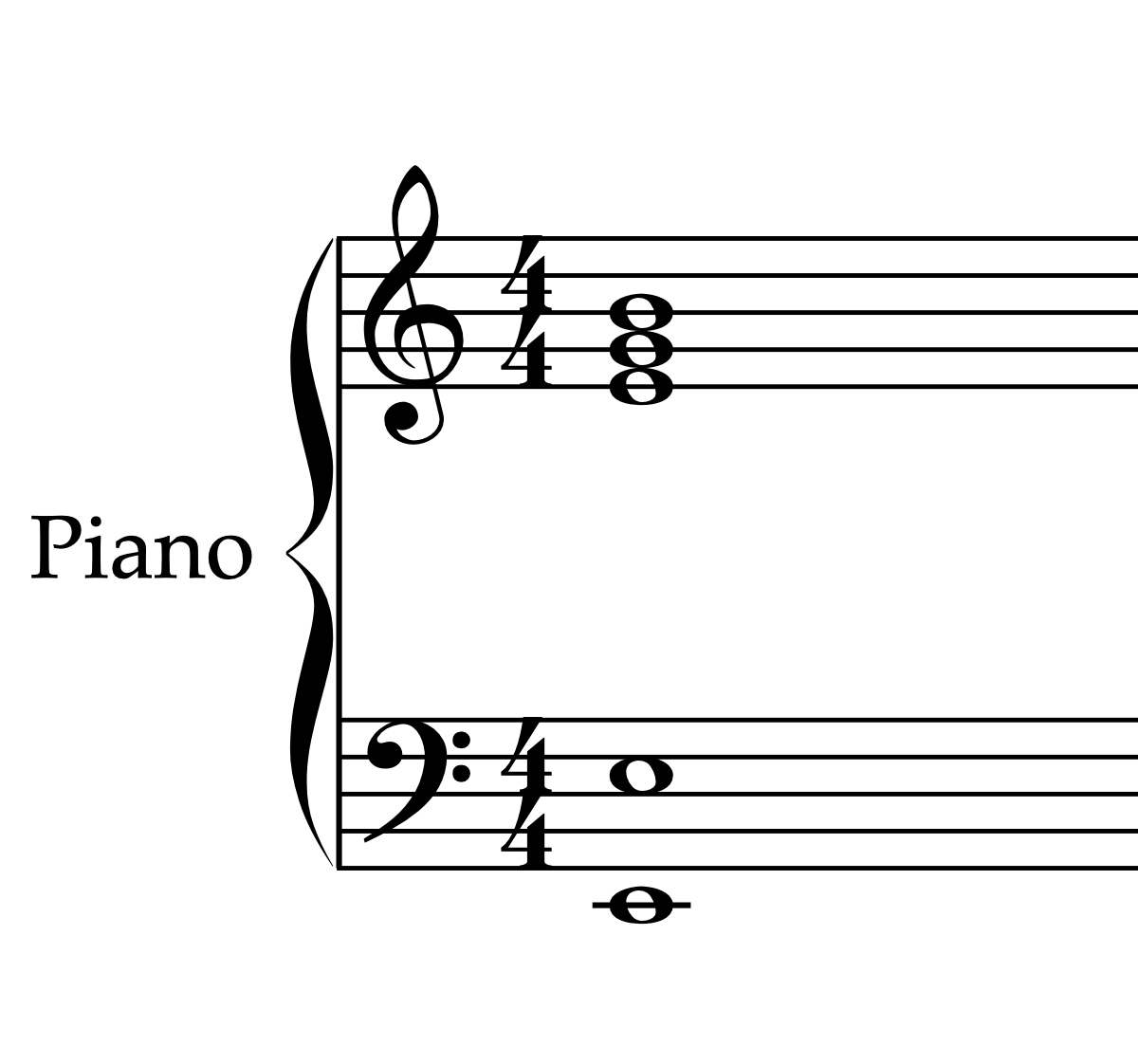
This is of course subjective but I think this is a reason why the pedal samples on the N1 are louder than the ones without (I have the N1 too). Try to play this chord with the internal sound on the N1 with no pedal and then hold it while you press the pedal.


pc-king

johanibraaten I've known about it since around 2012. That's exactly why I started looking for VI back then.


johanibraaten

pc-king Ok, I misunderstood you. I thought your "no" meant that you didn't feel that this was an issue with first gen. Avantgrands. Anyway, since there is objectively a physical difference between keyboards with damper mechanism and those without I guess it's subjective how one want the sound engine compensate for that.


Johnstaf

We humans are funny creatures with the way we adapt to things. The first time I played a grand I was startled by the difference in feel when using the sustain pedal. Now it doesn't even register.


pianow

Pete14 VI-Labs is nowhere near 60 layers (never mind 100)

for some time i thought they're doing that big numbers for marketing reasons but nowhere in the vsl's website you can find the number of samples per keys, they just do it cause it seems right to them, that's the reason why they've invented a robot hand to make multi layer sampling easier for them. and vilabs also has changed their methods about the number of layers, their ravenscroft had like 20 layers and it's dynamically limited and narrow, so they decided to record more layers for the md and it has over 30 (maybe even more then 35 layers), i say both approaches are equally valid, considering they both have great playability and sound 🙂

Pete14 so it begs the question, should VSL spend more time on programming/modeling and less on recording a bunch of samples?

i don't think they need to do less sampling to be able to do more programming, it's obviously what they want their product to be, and of course i wound be happy if they decide to use modeling for some of their shortcomings such as resonances and pedaling, but still those things aren't like top top priority, but again a resonance engine on vsl pianos like the one pianoteq has is a potential game changer. specially now that they finally have una corda samples, the resonance engine (which also fixes the pedaling bugs) is the final piece of the puzzle.

Pete14 Hint: a little sampling + modeling goes a long way, is less taxing on resources, and some might argue that it allows for more realistic resonances….IMHO!

i agree, perhaps one day…


pc-king

pianow what does tf mean?


mducharme

Pete14 hould VSL spend more time on programming/modeling and less on recording a bunch of samples?

It isn't quite so cut-and-dry as this. The piano libraries are only part of their business and their developers were stretched pretty thin.

Part of the issue was until last year, many of libraries were developed for two sample players that they made in house - the very old Vienna Instruments player and the Synchron player. They were different enough that work done in one had to be re-done in the other. Maintaining both players was causing enough extra work that they were unable to take on big new enhancements due to this.

Finally last year they decided to discontinue the Vienna Instruments player for these reasons and this infurtiated a lot of long time users who had wanted to stay on the old player for as long as possible. I was not one of those infuriated, as I saw this coming and stopped investing in the Vienna Instruments libraries long ago and moved everything to the newer player. I figured it was the case that this would happen, and advised people to buy the newer Synchron versions instead of the older ones, but often a group of enthusiasts of the old Vienna Instruments would enter the thread and convince them to spend their money on the old release instead. Now suddenly those people will have to pay an upgrade fee.

Regardless of whether you hate their decision to discontinue Vienna Instruments or not, the fact is that their development has significantly ramped up. For their regular sample libraries (outside of the piano libraries), they had this classic Dimension Tree that tended to scare new users away, and have implemented a much more inviting Flow View. They added much requested tuning capabilities for alternative tuning systems, allowing microtonality with their instruments. It is a noticeable step up in development since they've been unshackled from having to continue to support Vienna Instruments.

But the flow view related programming is obviously taking up a lot of their resources, and in addition to that they are doing lots of back end programming work that benefits all of the players including the piano player. Sympathetic resonance is not good at the moment, yes, but I'm sure they'll get back to that. It makes sense to me that they are focused on addressing things that were preventing them from appealing to new customers, and this was more serious of an issue on their orchestral libraries side rather than the piano libraries front. We're seeing the movement, they aren't just sitting idly by - and the programmers are really really good and doing great work. It's just a matter of not enough hours in the day and they have to focus on what helps keep the company profitable.

And the people who do the recording and the editing of new libraries are not the programmers. Very different skill sets are needed. In most cases to make a new piano library the involvement of the programming team would be very limited. So they can't just tell random staff who are available to create sample libraries to do some programming instead, if they aren't developers. It's not the right people. So it's not an either-or situation. If they didn't have them making this piano library, they would have them sampling a different library that wasn't a piano library. This still wouldn't free up the developers time for sympathetic resonance.

pc-king

vel-1-127-gain-response-always-max-midi-response-linear.zip
23MB

That's 10 or maybe 15 different samples, right? You can hear it and see it on SoundForge. And with the low tones there probably are more layers.


JonFromMaine

I don't want to be tempted until future sales so I'm not going to get a trial at this point, but curious. As previously mentioned, I have 10 full VSL licenses (all except the prepared) and, while I enjoy the realism, I've always been disappointed to heavily rely on the note editor to acheive an even sound across the full range for the VSL pianos, and the tradeoff of playability vs timbre when adjusting the microphones and velocity curve. Can someone who's tried, or bought this, comment on how it compares to the other VSL full license offerings and which it comes closest to in terms of sound and overall quality. I'm assuming the Studio A D-274 but would like to hear feedback, especially for classical repertoire. Is it even, playable and fairly dry with any of the presets out of the box?


clavierhaus

JonFromMaine To answer those questions, that's exactly what the trial is for.


Jay Lane

clavierhaus I did a trial and it was excellent. I enjoyed the fact that is was sampled on Stage B. It wasn't as characterful as I'd imagined but clearly this was because the piano was in very good condition.


bostonmoores

Since VSL records pedal up and pedal down samples, when we hear VSL records '60' velocity layers, is it more like 30 per key? Just curious if perhaps 60 is represented both the 30 pedal up and 30 pedal down.


pc-king

bostonmoores Since the wrong sample is normally played anyway (when you press or release the pedal while holding down a key), it doesn't really matter.


Johnstaf

bostonmoores Since VSL records pedal up and pedal down samples, when we hear VSL records '60' velocity layers, is it more like 30 per key? Just curious if perhaps 60 is represented both the 30 pedal up and 30 pedal down.

It's up or down. They're not combined. However, some black keys (high treble and low bass) are pitch shifted versions of their white neighbour notes. This was to save storage space. I don't know if that's still considered necessary.


pc-king

Johnstaf I know that, and it would be okay if it switched to the sample without the pedal as soon as I released the pedal and to the sample with the pedal as soon as I pressed the pedal. Instead, for example, the sample without the pedal only plays if I released the pedal before pressing the key. So, only an amateur could have done it, because even vilabs managed to do it.


Tozen

JonFromMaine

This is nothing at all like the D-274. Universes apart. Much warmer, much closer, and more character/vintage.

It has seemed the most playable to me of any of the VSL libraries I own out of the box, but I am a rank amateur compared to the average user on this forum, so all with a grain of salt.

One interesting note about the presets on this version is that there is almost no overlap in mics between standard and full. It is almost like choosing between mic set A vs mic set B.

I am finding the standard library to be quite sufficient for concert and ambient settings, but I miss the tube and the sphere a lot for player perspectives. As a VSL veteran, I am sure you know what to expect by now from the condensor mics.

It is really hard to find a current library to compare it to as nothing in the lineup really sounds like it. The vintage quality of it makes me sometimes think of the German Upright, but it is nowhere near that level of "character" and it obviously isn't an upright - it seems far more versatile for being used across genres. The presets also significantly change the tone. The VSL site does a good job showing how this instrument can be used in a variety of situations.


mducharme

OlivierW

Hi Olivier,

I see you have added clarification into the folder as to what everything is (perhaps in response to my question on Pianoworld) and now I can see those are Logic patches, and I see you have also added Gigperformer versions of the Modern D patches.

Could you add Gigperformer versions of the VSL patches as well? I don't have Logic and it would be wonderful to be able to use your customized patches as a non-logic user.


OlivierW

mducharme The patches (sample + modeling) for the VSL 1887 and VSL D-274 pianos — made for Gig Performer 5.1.4 PRO — do not work in Essentials, because they rely on a MIDI script that disables VSL’s sustain behavior.

These patches are ready to use, but you’ll need:
• the corresponding VSL pianos, and
• at least the Standard or Pro edition of Pianoteq 9, which allows fully playable resonances with re-pedaling and true sympathetic resonance.

I’m a Logic Pro user on Mac, but I created these GIG PERFORMER/VST3 version presets especially for you tonight.


« Previous Page Next Page »