Pianissimo:
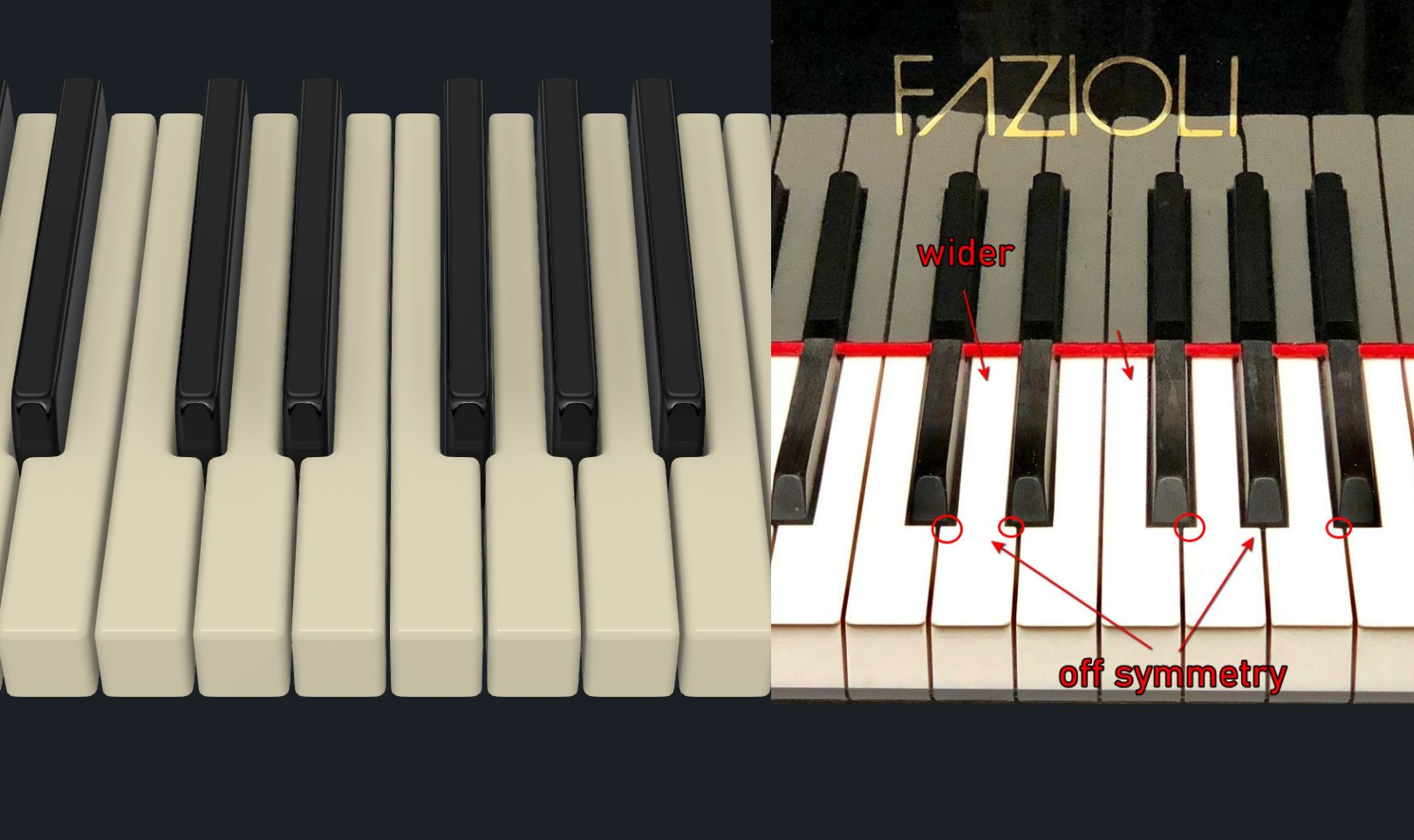
the F# is almost sitting on the middle of the entire F head, and the Bb is sitting almost entirely on the middle of B head. This is not good when you play chromatic passages, because the shift of your thumb underneath your middle finger, will encounter different distances in those two areas. So all in all, I think there is not convenience in making heads and tails perfectly symmetrical. But it was a good idea.
![]()
Are you sure you know what you point out as an argument of concern regarding chromatic passes?
I might not be proficient at piano playing but I know what good design is and what isn't. If you have problems (when such keyboards are there for you to try out) I will personally by you another piano of your choice.
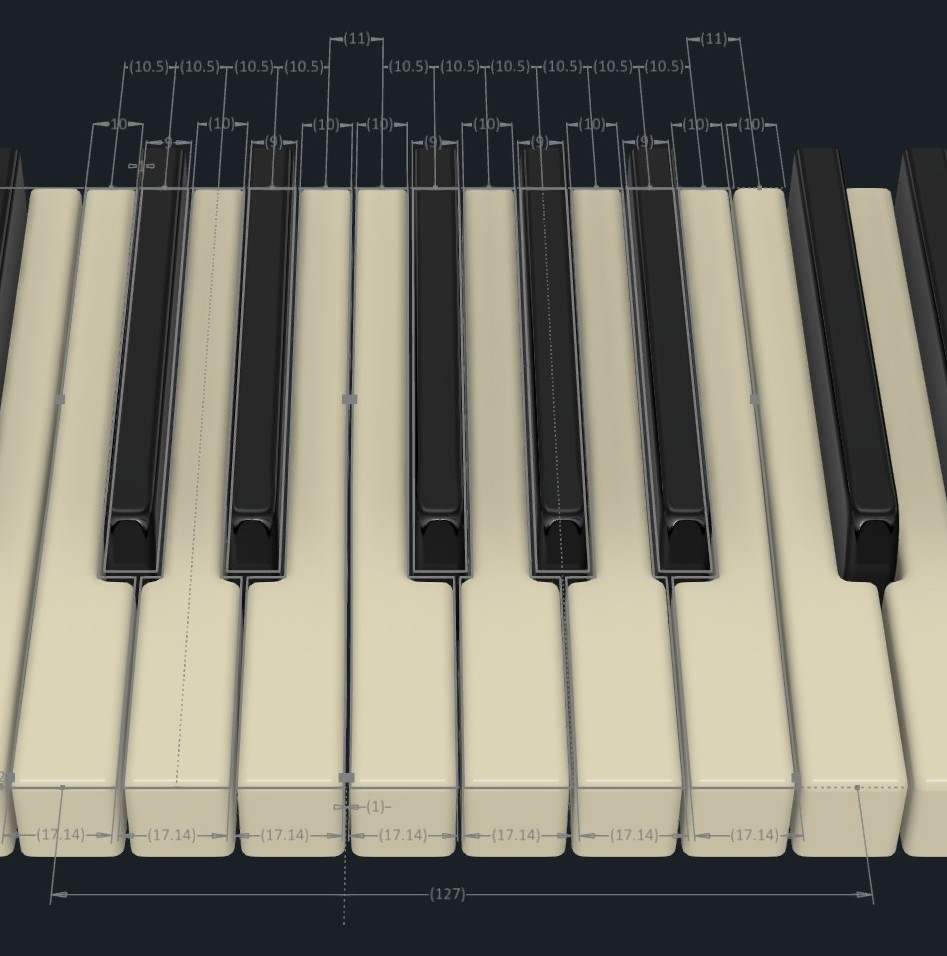
Keep in mind that in my "flat" design above, with perfect widths, from the comparison screenshot above the renova ("octave") span (C₄ to C₅) is 127mm, where Fazioli is 164mm (a difference slightly bigger than one White Head + Black). That is why the relative corners look smaller – the "octave" is ridiculosly smaller in size ("octave" is actually what C to A is on a "standard" width). See next:
![]()
Pianissimo:
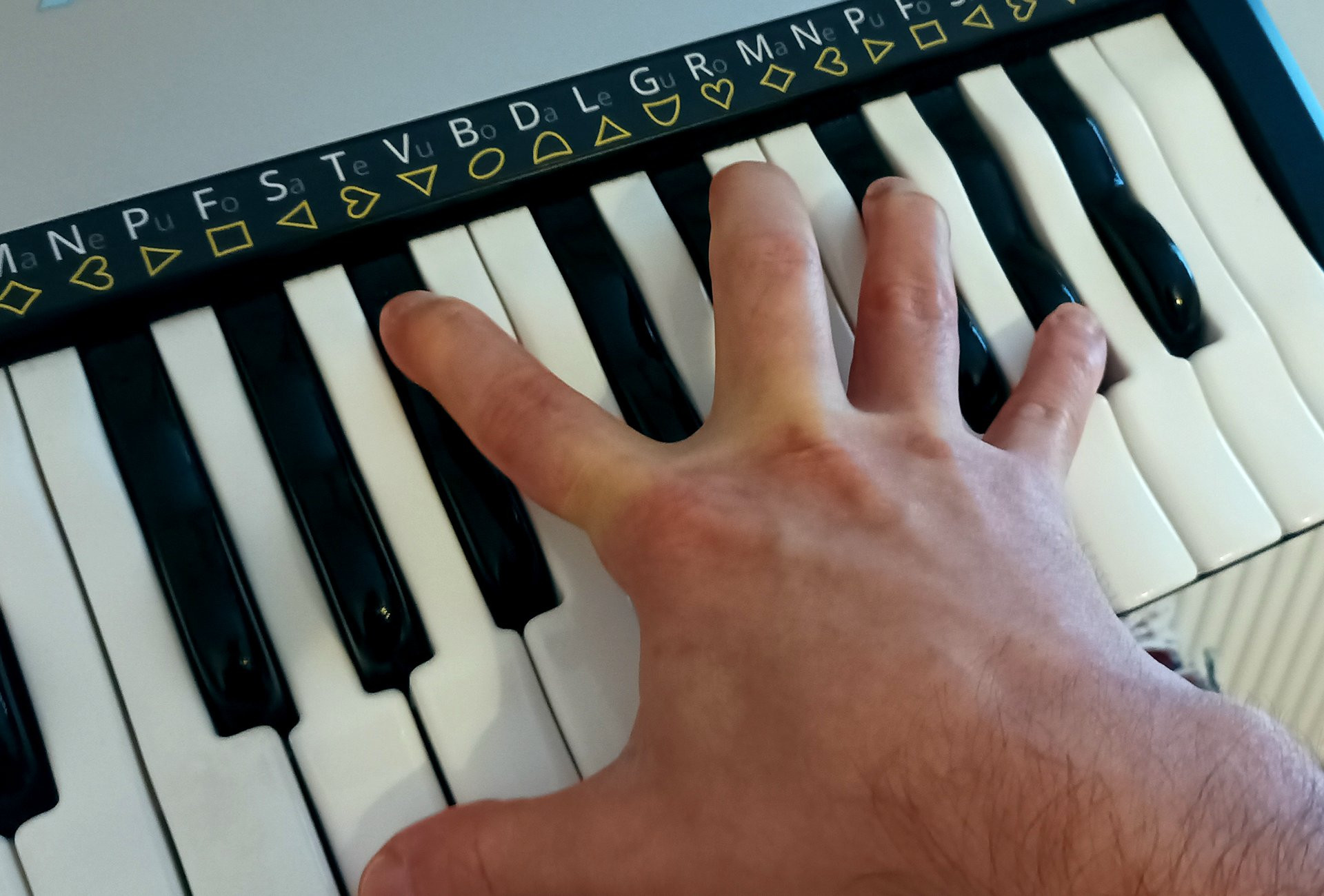
The first flaw is that with these curved black keys, you are increasing the chance of playing two or three keys at once, accidentally.
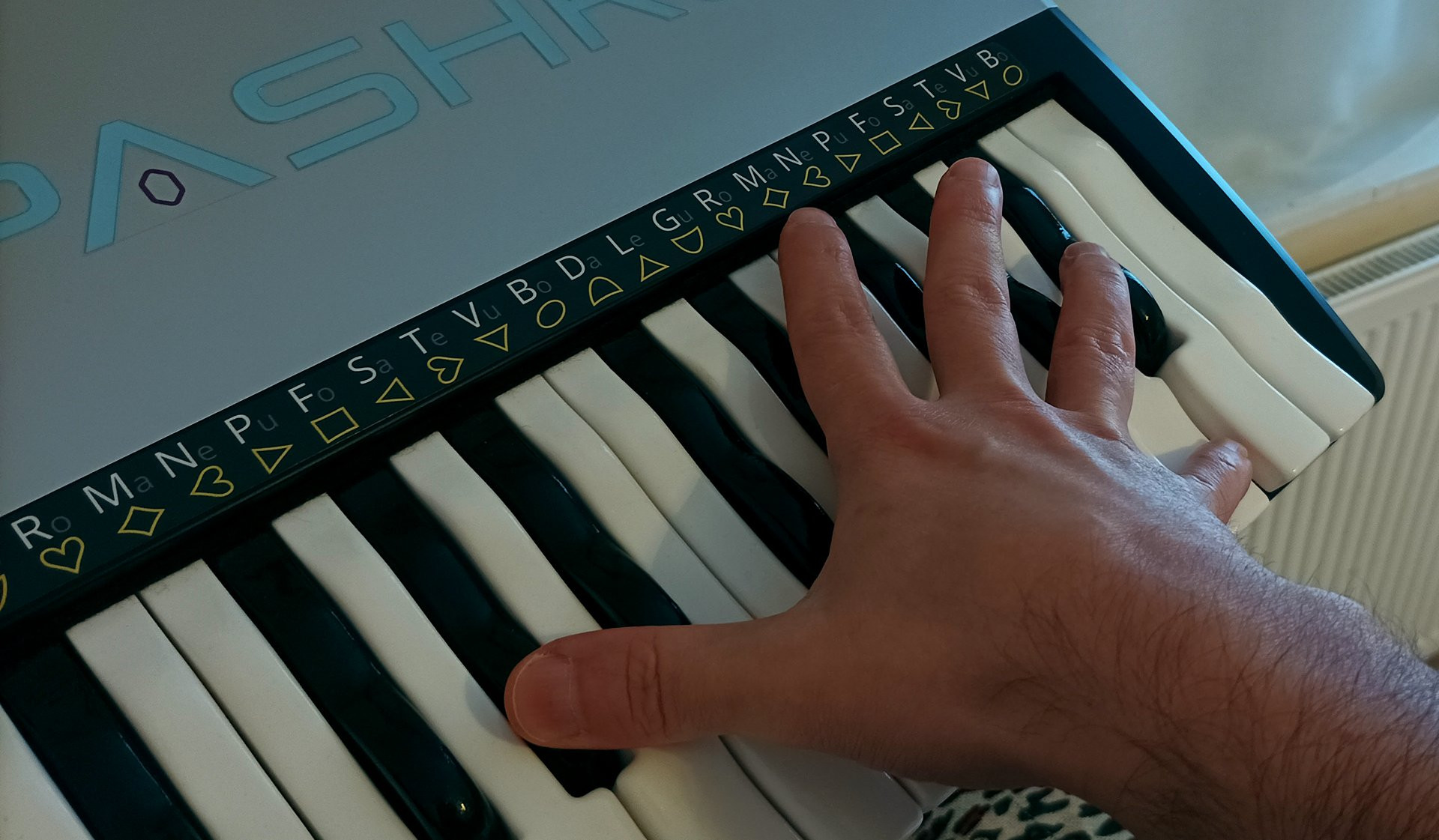
The second problem is that when you need to stretch the hand span a lot (beyond one octave), you often need to push your hand forward until you litterally push the keys forward so with your curved black keys there is the risk that your stretched fingers won't meet any resistance from the black keys, and you will end up again playing the wrong notes accidentally.
You can do that on B‑C and E‑F on your keys as well. And you have to jump over the akjacent black keys… especially on wider stretches, so… you learn to play with confidence.
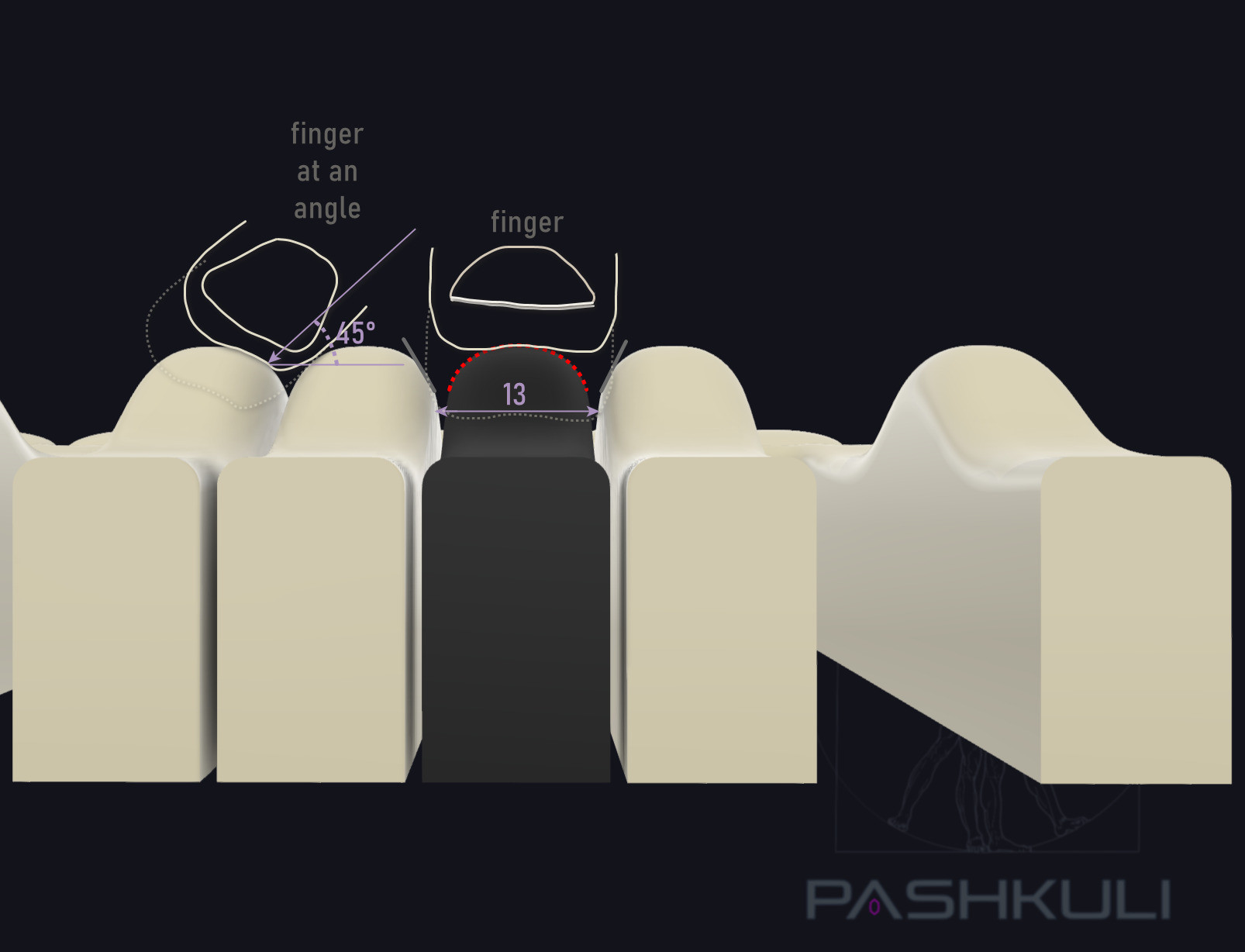
With my design you can benefit from the fact that naturally fingers get positioned at an angle (most of the times) and especially… again… whin you have to do very wider stretches, so the curved profile (if you slice the key) gives you more surface and support at the same time to play the stretched note. See next:
![]()
CyberGene:
The black keys seem to have a very short contact surface, they are reduced to mere buttons. That would make it very difficult to play various chords, especially in the rear where black and white keys are on the same level and so narrow. There’s a real reason why black and white keys on the standard keyboard are on different height levels and why they are long. That gives you a leeway for pressing the key at an angle without pushing the adjacent keys. All that advantage is removed here.
Please, see above screenshots as responses to Pianissimo. You will find that angle is better and your finger has more grip (control) on the key thanks to the curved section profile.
CyberGene:
Anything more than that is too exotic and unorthodox, bringing more issues than “improvement”. I don’t want to sound harsh, but the obsession with changing what is a proven and established thing, namely the piano keyboard layout, is a bit childish, no offence. And especially if you can barely play the piano, and getting annoyed that manufacturers didn’t care for you, sorry that’s immature.
No offence but you don't know anything regarding the origin of piano keys, how black keys got introduced (one by one), etc. historically and from construction\deisign point of view. I do not blame you, there is hardly any info on this on the internet and even libraries.
For example, you might find it interesting that at some point B♭ and B were accidentals, yet both they were "big white" keys. In my almost 20+ years of research I have found pianists (pro and hobby) absolutely ignorant on what instrument they play and how it came to be as such. This "flat" design has been here for over 600 years and composers have played it and written 'piano' music for it and on it. It is normal to think "that it is better the way it is" as a pianist yourself.