RIP
You are mentioning 'symmetry'. This is a really interesting topic and I have not finished my third video (for my YouTube channel, I had recent Windows OS issues and had to clean my PC).
When you speak about 'symmetry' I can only suggest you to look at your hands. What do you notice about them?
Yes! Indeed, they are symmetryc to one another… yet, that is not the way you play it on a piano. On a piano all notes go from left to right (ascending in pitch) and vice versa. Put on top of that the dexterity phenomena: left or right-handedness! It is a fact of Nature, you can not object nor can you ignore it.
Look at flute, guitar, violin and many more instruments where the player sort of 'embraces' the body of the instrument – for each hand the notes go in one direction because the hands oppose to each other as the result of the embracement.
Now look at piano and such accordions. I see the problem, hope you see it as well.
The current status quo on those instruments is… they are costructed to fit the dexterity of left-handed players!!!
Here is my proof or train of thought regarding this:
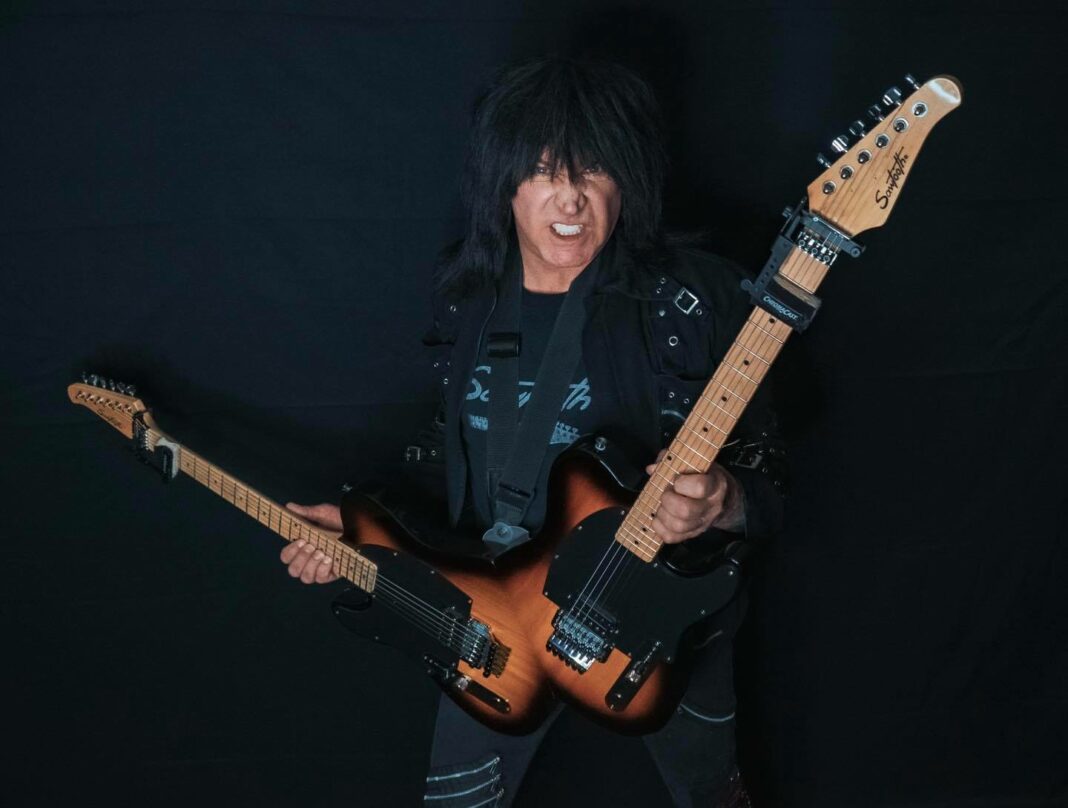
A left-haded guitarist usually holds the neck and plays "virtuosly" with their right hand and the notes go ascending from index\thumb to pinky for buth hands (yes, I know there are odd balls such as Eric Gales, Seal and maybe a few more but they are exceptions which has its explanation in their youthful ignorance of just taking a "regular" guitar and symmetrically flip it to hold it as a left-handed players by nature).
Left-handed guitarists use the left-hand as dominant to trigger strings, strumming, dynamic pluck etc. or when finger-picking that left hand thumb and index/middle usually trigger lower notes.
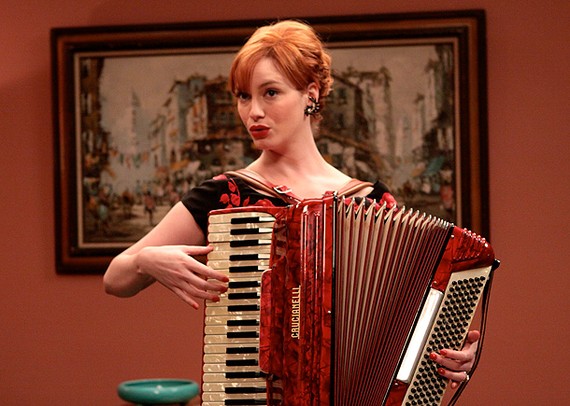
Take an accordion with a Halberstadt ("standart") piano keyboard. What do you notice?
The bass notes are on the left hand, The bellows (air compartment) gets expanded and compressed thus "strumming" the reeds by the same left hand (onder a strap on the left side of the accordion). Where the right hand if you expand wide enough te bellow will look as the right hand of a left-handed gutiar player (notes go ascending from thumb to pinky).
This is a left-handed accordion (they all are)!
")
![]()
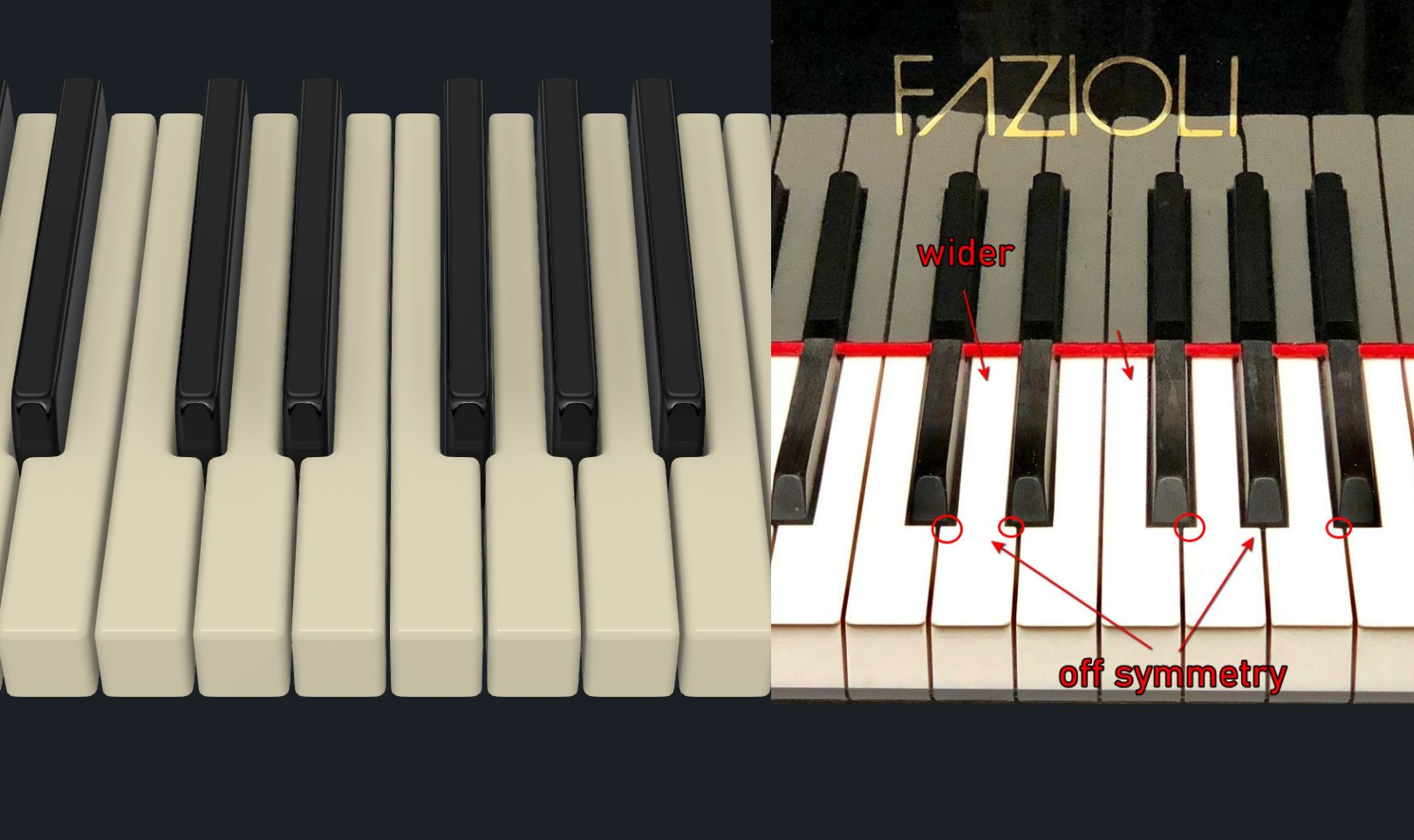
Now lets see\analyse the typical piano:
It has its lower notes on the left (left hand) usually used as a bass, chord foundation notes, mode\root.
The right hand has its notes ascending from thumb\index to pinky and are usually the higher notes. Exactly how it is with a left-handed guitarist. But here is the problem!
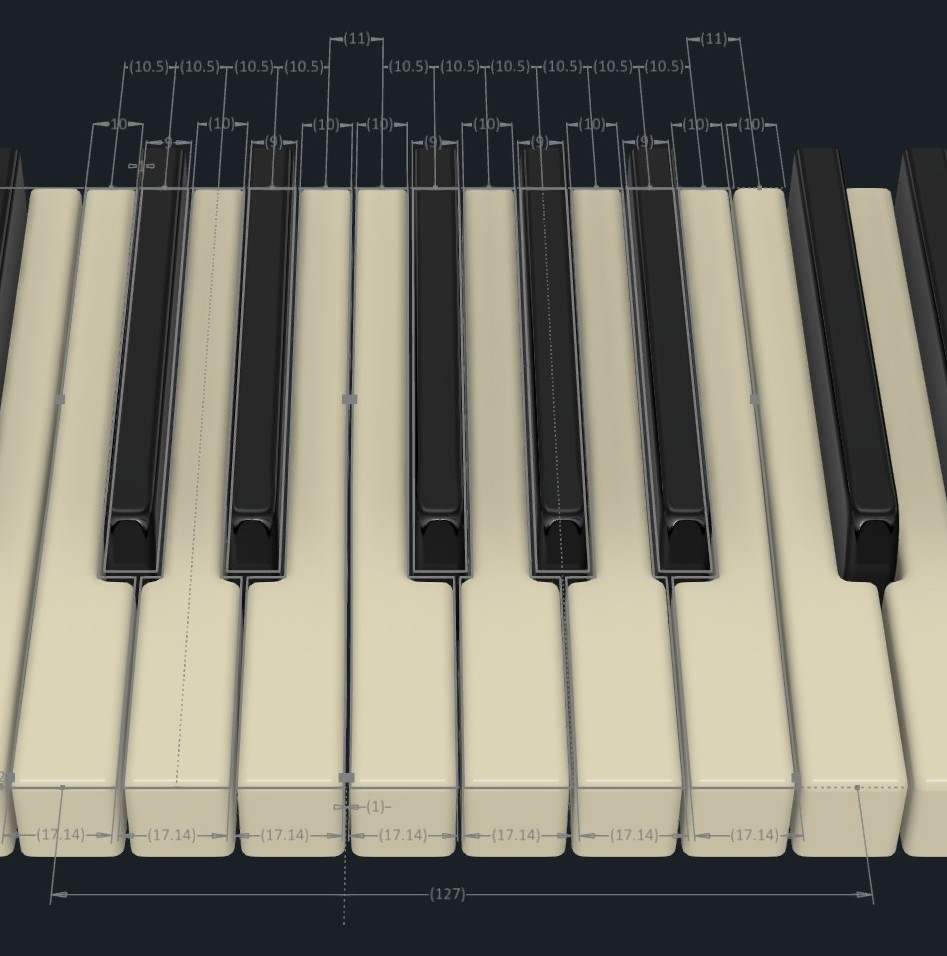
Your hands are symmetric! Most people are right-handed! On a piano fingers of each hand do not oppose, rther they play on one side of the layout of notes.
Therefore, piano disregards the natural symmetry of fingers from each hand! And it forces you to use your left-hand where the heavier\bass notes are on the weak fingers (pinky and ring). And after all that analysis it is evident piano is more suitable to left-handed players! But that is not all.
Pianos should be split in two tiers for each hand – where each tier has a symmetric\mirored direction of the ascending notes! And more over – because most people are right-handed – the higher notes should be on the left and the lower should be on the right tier yet for both hands notes should asscend in pitch from thumb to pinky.
All chords and phrases will have the same shape for eather hand on the respective tier. Unless you want to cross hand and play on either tier some occasional parts.