Skip to content

Pianos (keys) are badly designed!

PASHKULI

porco_rosso
How about – no. I have observed (studied) my friend as she prepared for competitions to the point she thought I was actually in love with her. That was not the case, of course, but since she was the only one at school who had a proper grand piano at home… that is what I did – observing while she practiced. I never had any desire to play such a clumsy instrument, which by design is a total lazy job.

I am patient with your answers… if you'd like to share such thoughts of cours. Not going to blame you if nothing comes to mind. Please, do not forget the earliest questions regarding the direction of notes on a piano and should we call it 'right-handed' or 'left-handed'. I shared with you my reasoning and why I think curront pianos are more suitable to left-handed players, yet at the same time extorting their left-handedness. Current accordions (with such layout) are exactly suitable to left-handed players. For a right-handed they (the manuals) should be swaped but the direction of notes should stay. My logic is based on the handedness of guitarist.

There are gazillion questions really. As a self-taught "musician" by ear and TABs (guitar) I never bought what was written in those Music (theory) manuals or instructions. In my head since I was about 14 there were immediato questions such as: But why? Who said so? What is the origin of those designations? And so on…

At some point around the time I was in my early 20s I had to say: "Stop! Enough!" and make my own "version" or re-vision.

  • just for the record, I am not a 'troll' who is here to gag or waste our mutual time
  • I love Music as an art and from scientific point of view and've been listening to Music (by necessity) since I was 7~8 as my grandad was a clarinet and drum player and one evening he took me with him to the local bar or pub with live music and I got fascinated by the drum kit with all those boomy sounds and shiny cymbals
  • I am in fact an 'amateur' (admirer) of everytihng Music related, played in school\uni rock bands but never for money or for contests\competitions and my own music is equally odd as my interest in Music.
revox


PASHKULI

So, back to the main topic of this thread…

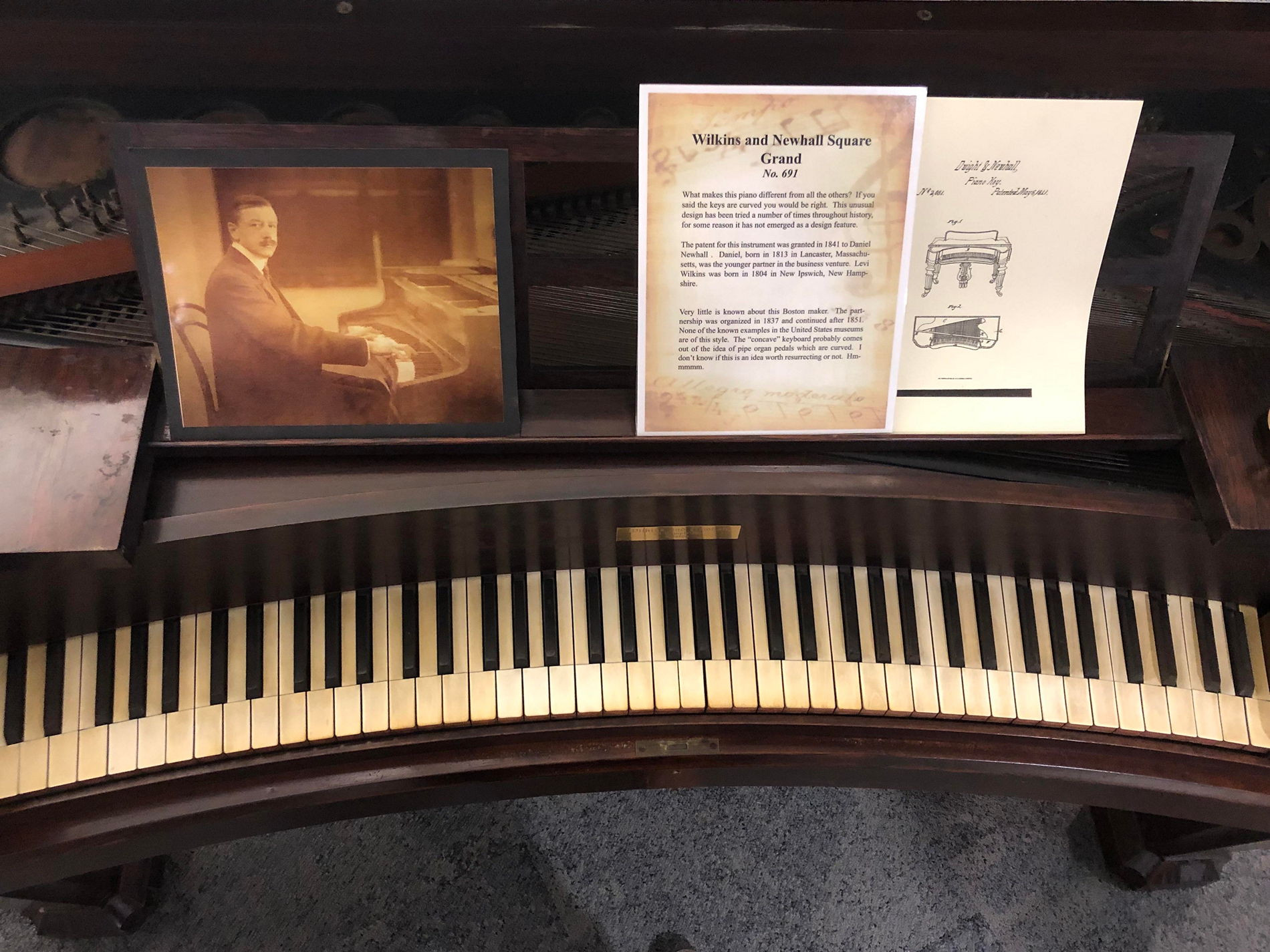
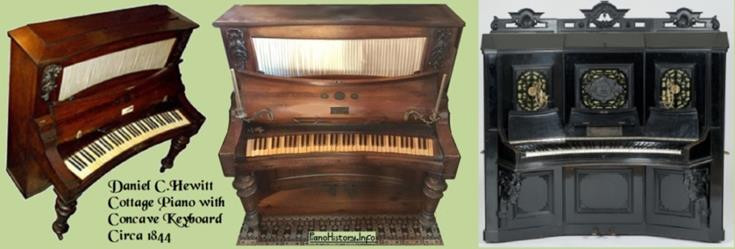
There have been some design iterations with regards to hand (the whole hand that is) movement and ergonomics. Historically those were documented around 180 years ago – the so called horizantal arc-shaped keyboards. There are modern vertical arc-shaped keyboards which are an abomination IMnsHO.

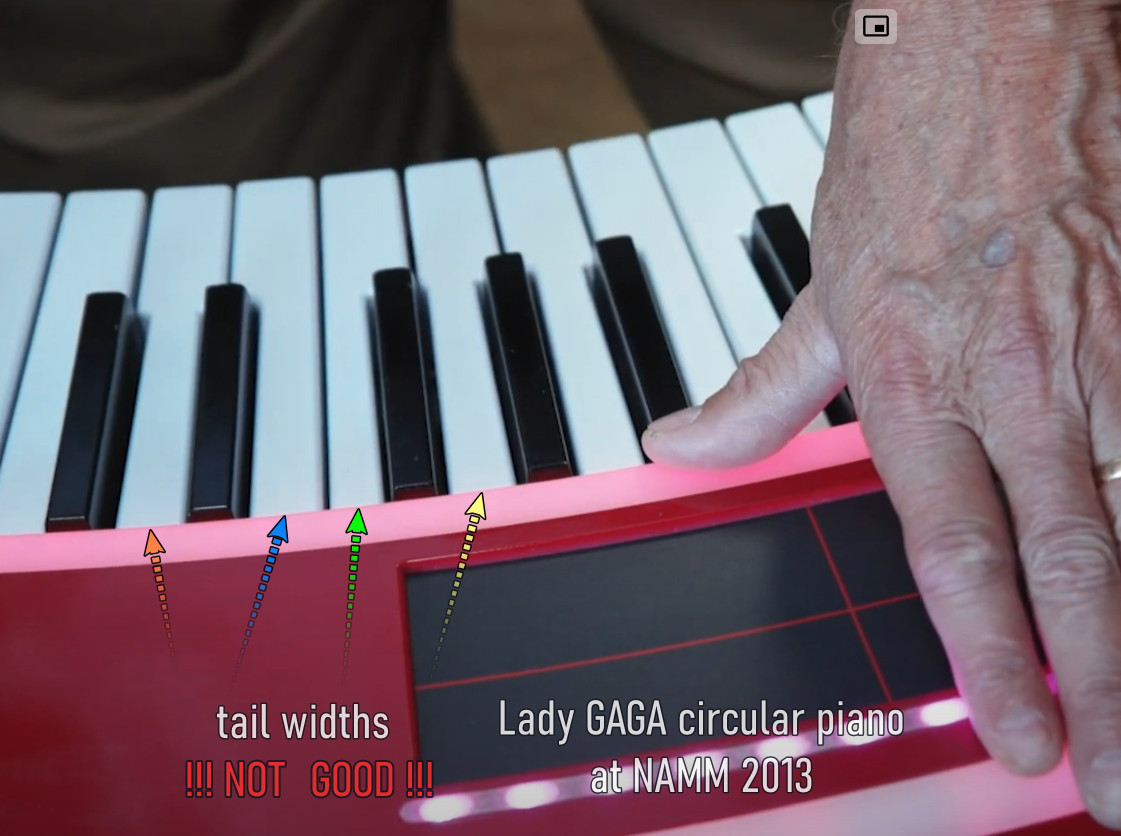
A designer company in USA built such arc-circular piano for some Lady GAGA show or something and they presented it on NAMM in Los Angelis about 12 years ago.

• these are the oldest ones (please, notice that they are two types):

According to the book "The modern Piano" by L. Nalder from 1927 there are arc-pianos fith radial keys and one with key that are 'straight' but attached to a horizontal curve. I hope the difference is visible.

I prefer the radial ones. Ergonomically it makes a lot of sence, especially if the piano has more than 70 keys and especially intended for pianos with 88+ keys.

• here is the one the guys at ArcPiano (USA) designed for Lady Gaga (the problems are self evident)

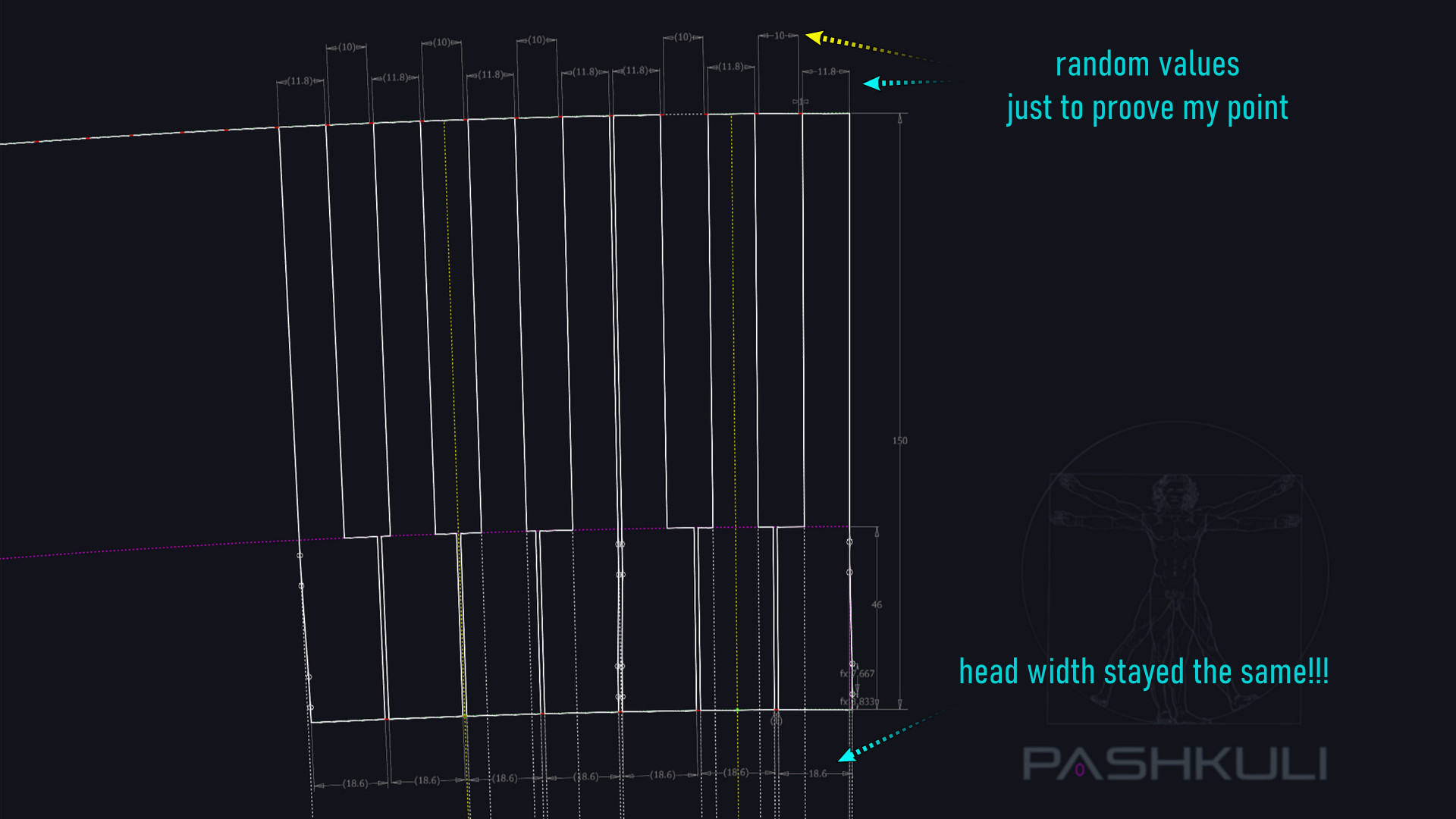
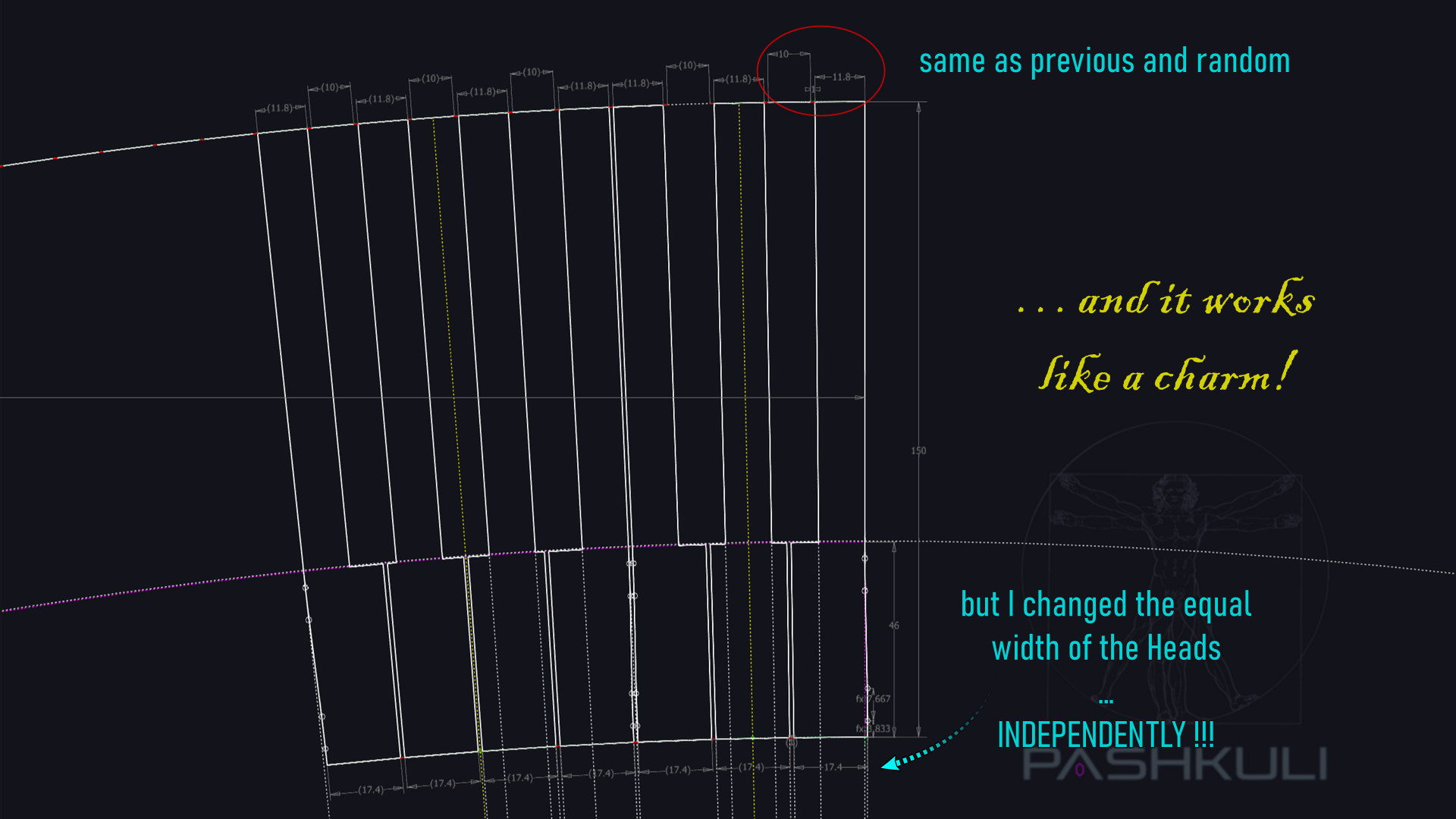
They made it with an arc-shaped keybed, radial but messed up the widths big time (as with a typical piano)

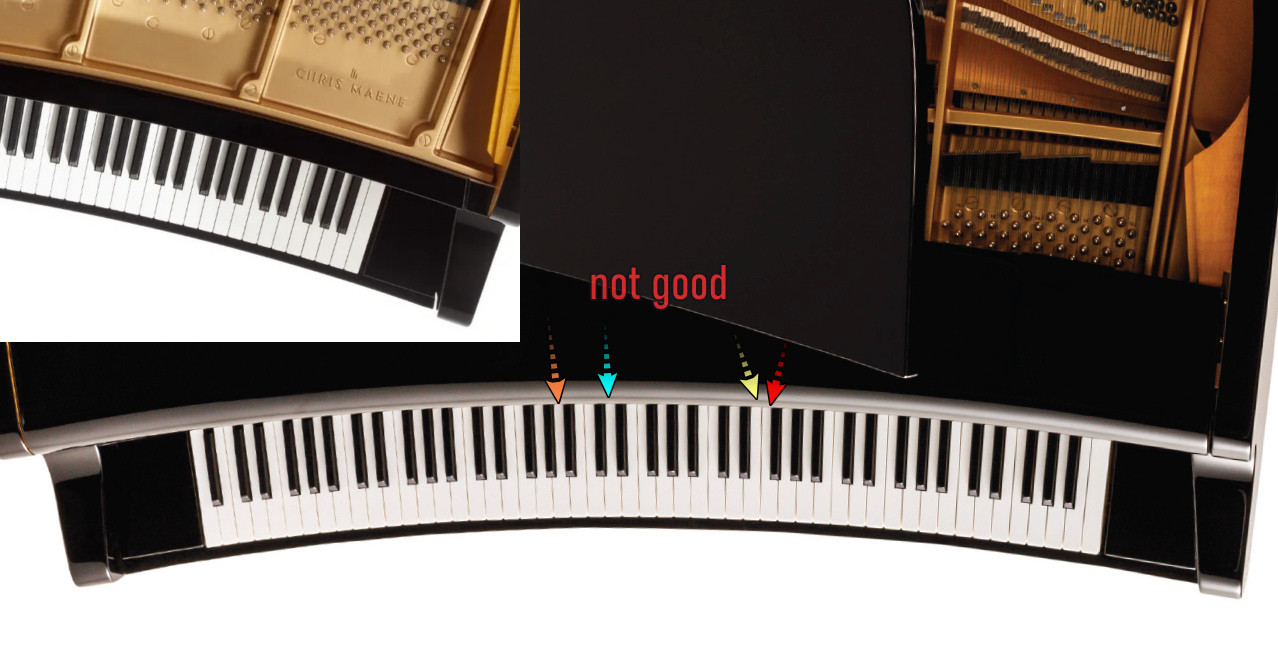
Here is a similar one (but acoustic grand with all parallel strings, hence – exesivelly long body) built by Chris Maene (Netherlands); it alse has messed up widths despite the arc is more gentle

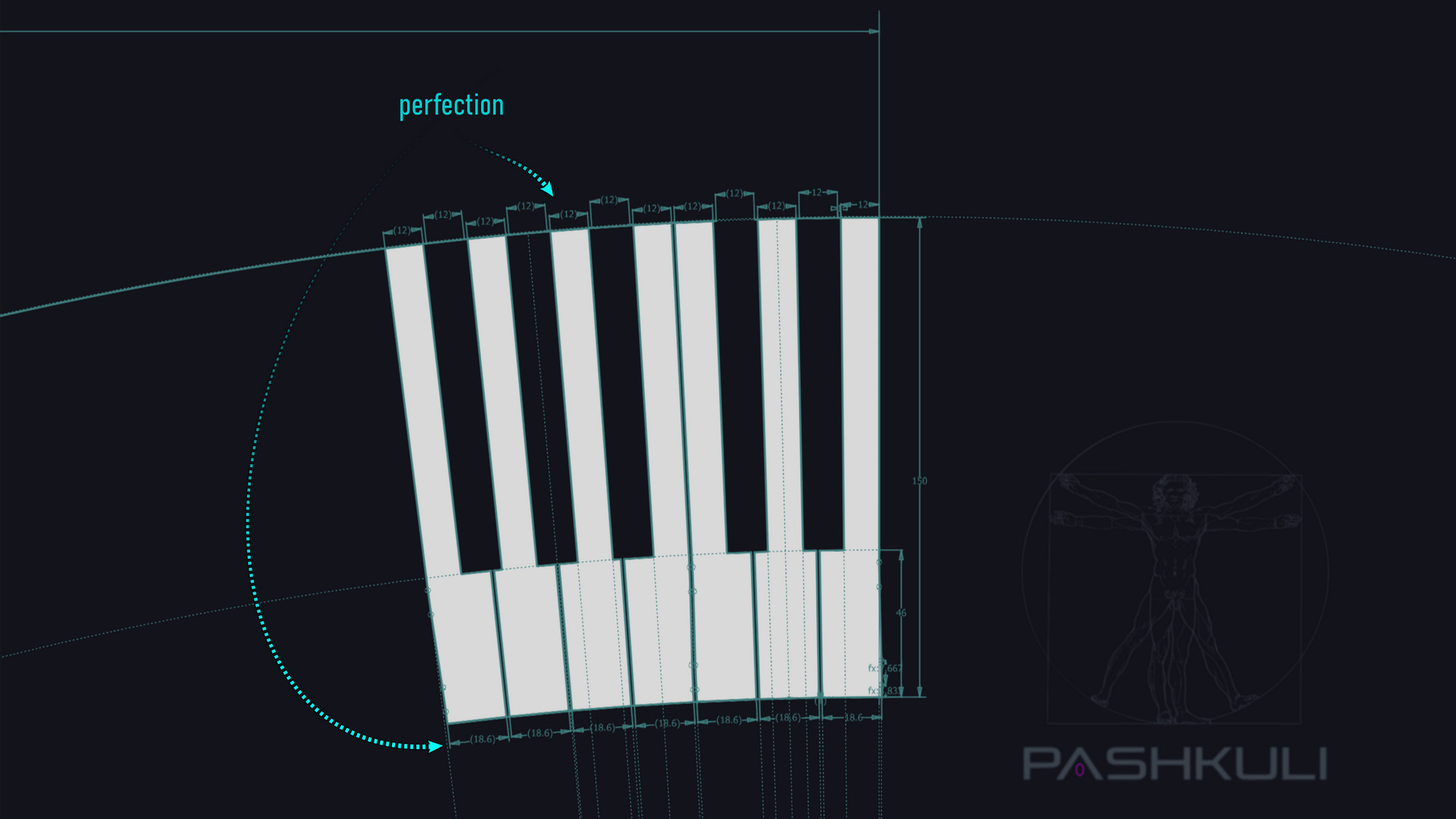
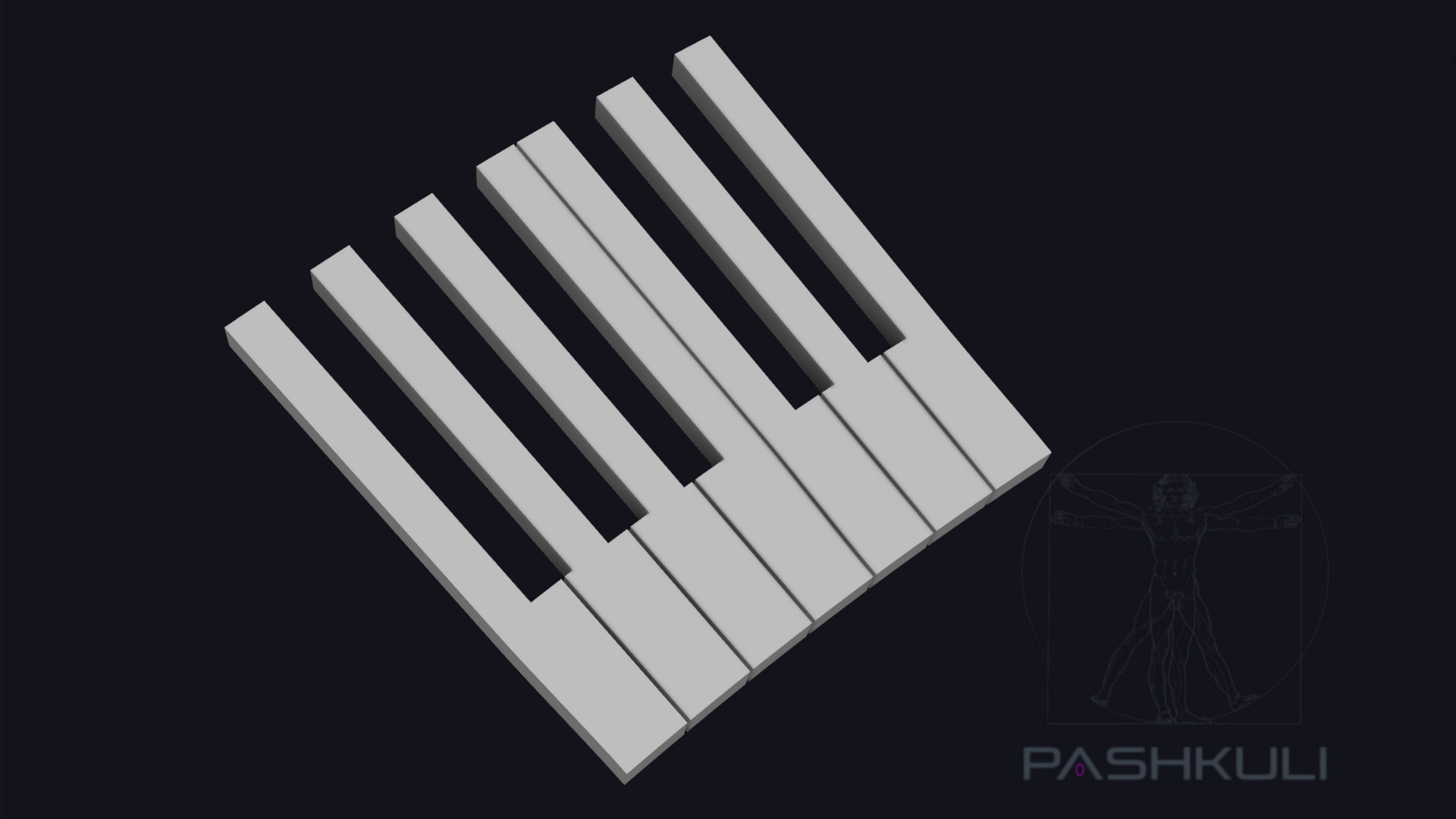
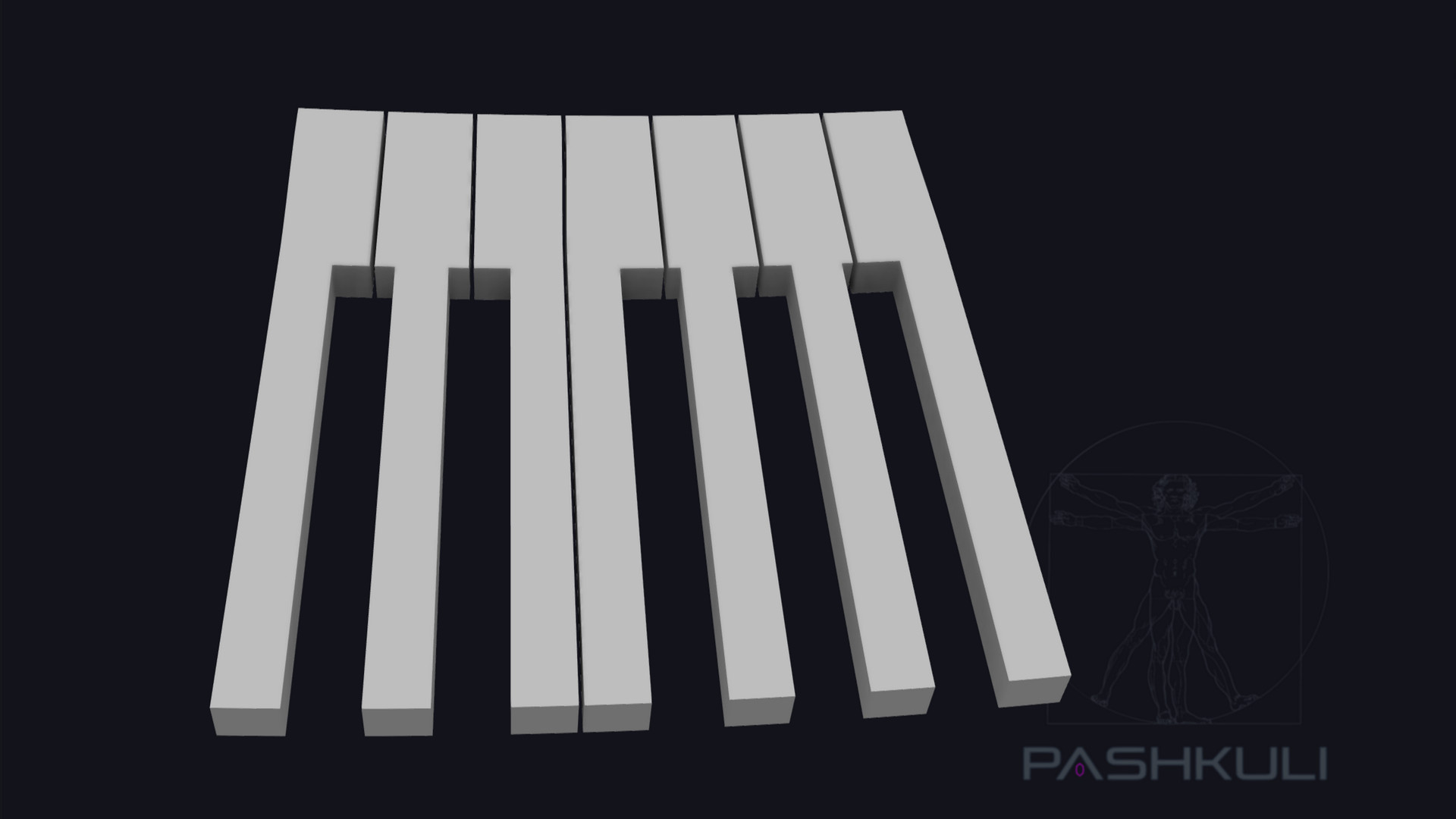
Here is my solution. Only as a concept. I could not build a prototype because the price was extremely high to order such bespoke elements and parts.

I am really fascinated by the idea of building it one day. But it will be with two manuals (each with 57 keys, where ~17 will be duplicates in the middle range, can be adjusted how many will be duplicates).
Notice those are "flat" keys. Of course I can design them as curved keys and from a design engineering point of view it is quite a intricate and very challenging task!

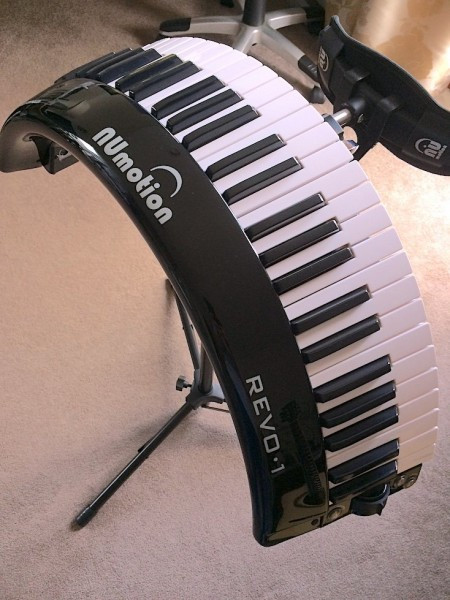
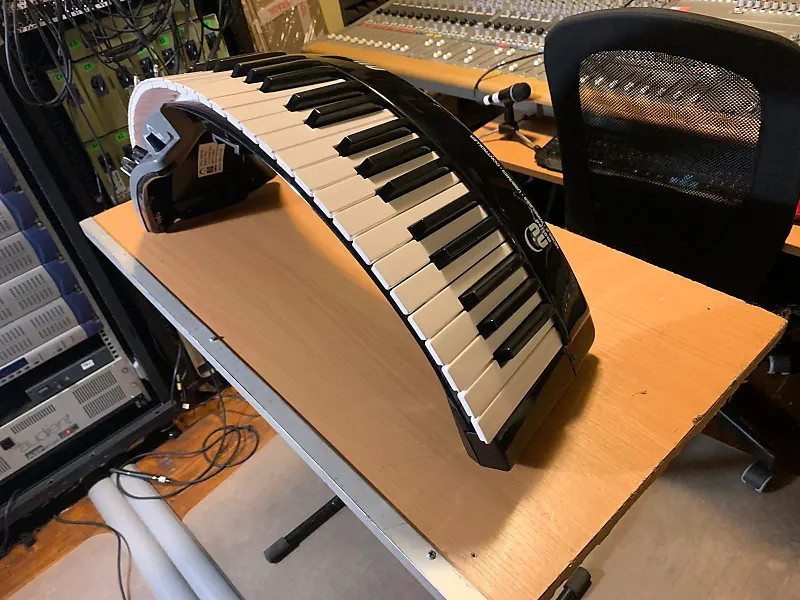
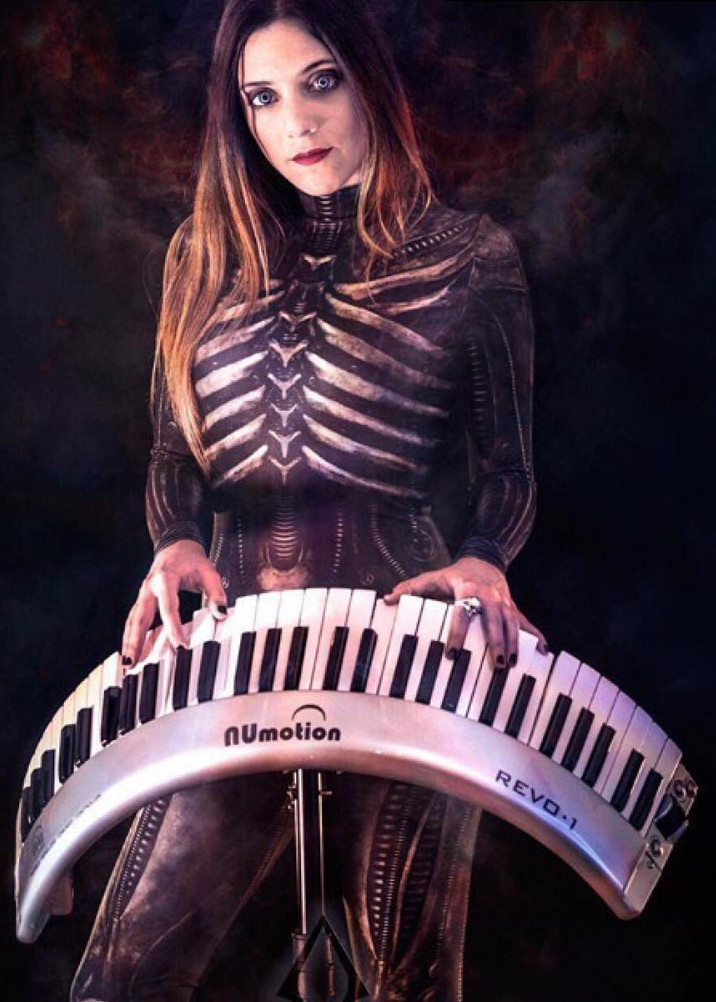
Oh, here are the abominations (I can not even…):


Khuja Wangtishvili

@PASHKULI

Why don't you simply call Chris Maene and tell him that his piano designs are lazy and simply wrong?


PASHKULI

Mindbullets

Not saying it can't be done or there isn't plenty of room for innovation here, but you might consider involving a fluent pianist with your prototyping.

I think I have completed that phase by 2010.


PASHKULI

Khuja Wangtishvili Why don't you simply call Chris Maene and tell him that his piano designs are lazy and simply wrong?

Guess what! It has been done. All sketches above has been sent to him around the end of summer 2024.


PASHKULI

Mindbullets

I specified (like an exercise):

only examples of a bar long phrase not more than 8~12 notes.

Chopin's whole pieces are not for a total beginner such as myself. Please, be more specific.


Khuja Wangtishvili

PASHKULI Guess what! It has been done. All sketches above has been sent to him around the end of summer 2024.

Did you get any answer?


Khuja Wangtishvili

BTW @PASHKULI

Do you have a car?

And do you know, that in most cars the pivot of the steering wheel is moved to the right vs the pivot of the drivers seat? Should we than stop driving the cars because of it, or do you think there is some well thought reasoning behind it?

And do you know that 99% of drivers are not aware of it, but somehow magically can drive the cars?


PASHKULI

Khuja Wangtishvili

It all started in 2007 when I sent my work to both Yamaha and Steinway or Bosendrofer.
No prototypes back then, only drawings and a bit basic renderings.
No answer. Yamaha returned the parcel intact stating IP policy and that a japanese attorney (representing me, hired by me) can only open them but the hearing most likely was not going to be held because it first has to go throuh R&D dept. etc, etc.

In 2024 I contacted Petrof, Bechstein, Kawai, recently C. Maene.

2022~2023 Roland, Fatar, Kurzweil, chinese brands… German, here in UK spoke with Edelweiss (bouitque baby grands, they had no idea what I was talking about, but spent more than an hour there, last words form the owner was: "You seem very enthusiastic but who are you?", I found it a bit weird so I just said "Nobody." and it was not meant to be a joke at all).

No answers. Petrof's owner Susane Petrof gave me the email of their Lead designer but no response, so aftor my second email to him I lost interest, but they have the .pdf files and photos (as in the Google drive links above)

Khuja Wangtishvili
Do you have a car?
And do you know that 99% of drivers are not aware of it, but somehow magically can drive the cars?

No idea as I do not know anything about cars.


Mindbullets

PASHKULI I specified (like an exercise):

only examples of a bar long phrase not more than 8~12 notes.

Chopin's whole pieces are not for a total beginner such as myself. Please, be more specific.

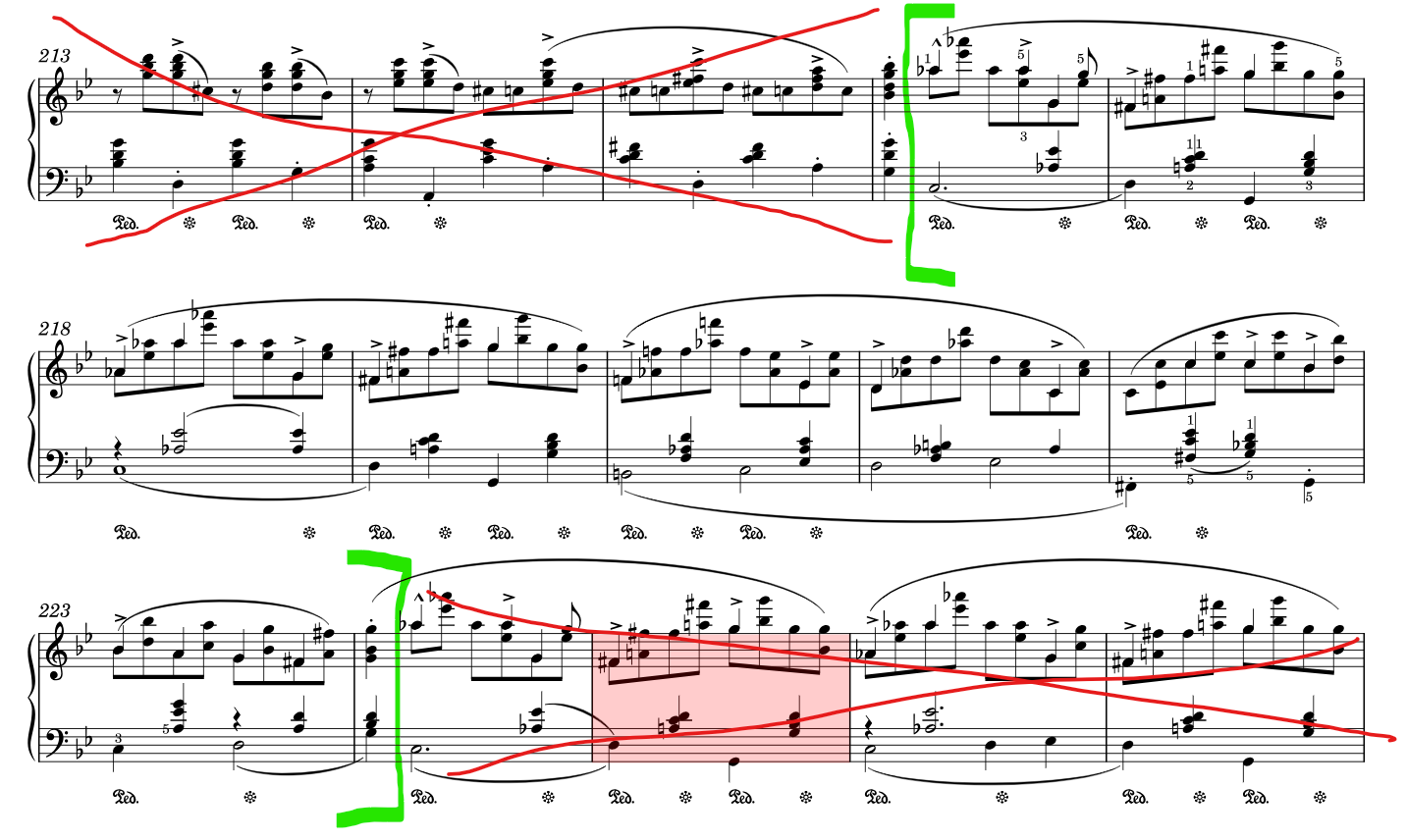
Ah, that must have been in a different post. I'm not trying to be antagonistic, but a bar is hardly long enough to put together a complete musical thought, especially in challenging passages. You argued that nothing is difficult to play, I would argue that the coda above (a small part of his Ballade in Gm) is difficult to play. 4-8 bars might even be enough to sell me, as I imagine it's particularly difficult on a keybed where it appears to be more difficult to feel the topography.

Perhaps you could persuade a fluent pianist to put together some demonstrations? You seem to be struggling to sell your idea to fluent musicians, so perhaps you need to recruit one to help you demonstrate. Whether it's true or not, this whole idea feels theoretical beyond a total beginner's skill level.


PASHKULI

Mindbullets You argued that nothing is difficult to play

It was regarding something about F♯ chord or phrase will be difficult on my curved keys or something Del Vento wanted to show but never did.


Khuja Wangtishvili

PASHKULI No idea as I do not know anything about cars.

And it is the same with pianos. No difference.


PASHKULI

Khuja Wangtishvili

If you could elaborate that would be great. At least will learn something about cars and their relation or association with the piano. You got my curiosity, let's see whether you will get my attention.


Khuja Wangtishvili

PASHKULI If you could elaborate that would be great. At least will learn something about cars and their relation or association with the piano. You got my curiosity, let's see whether you will get my attention.

Yes it's made for safety reasons, was most important in older days without airbags. The aim of it was to move steering wheel center out of the middle of our chest, and more specifically from our heart if there would be an accident so the direct impact wouldn't be almost directly in the place where heart is located


PASHKULI

Khuja Wangtishvili

I really do not know. From my father I have heard that actually the driver's seat is usually the safest in case of full front collision (and the deadliest is the seat next to the driver). But I assume even with a seatbelt and no airbag the driver's face will be all smashed by the wheel (inertia of upper body – neck – head). Otherwise airbags would not be also in the steering weel. I am not a keen driver. If I drive for more than 15~20 min. I get that panic feeling that the car controls my time and attention (thoughts\survival).
Statistically, in a car (moving\driving), your safety (life) is only 25% in your hands. The other 3×25% are in the hands of the car's driver in front of you, the one behind you, and the one comming from the opposite direction. Plenty of videos on YouTube.


PASHKULI

open questions to all participants (in case you missed them above):

  1. Who said that the note A should be there on that key on the Piano? Why, for example, A is not where C is?
  2. Why we then "separate" ranges from C to C (you can even see it in digital realm, MIDI rolls). Why not A? After all A is the first letter in many (if not all) European alphabets (even hebrew, but it has a bit different letter). Why "middle C", not "middle A"?
  3. Why is it the sequence of the Latin\English alphabet assigned to those exact notes? Why not Greek, Cyrillic… Hebrew?

Mindbullets

PASHKULI It was regarding something about F♯ chord or phrase will be difficult on my curved keys or something Del Vento wanted to show but never did.

Well a chord in isolation (or an easy passage) isn't going to be difficult to demonstrate on any keybed, regardless of how ergonomically (in)efficient it is. Fluently/naturally shifting between different tonalities/hand positions as part of a complex musical phrase seems like it would be particularly challenging on your keybed (though I could be wrong -- hence the desire for a demonstration).

A single phrase from the coda above that seems like it would be further complicated by your keybed would be something like this:

Obviously that's more than 8-12 notes, but if someone could demonstrate this (or similar) on your keybed, that might pique my curiosity. Otherwise it feels purely conceptual, and I'm having trouble imagining the practical advantages vs the traditional piano keybed.


Mindbullets

PASHKULI Who said that the note A should be there on that key on the Piano? Why, for example, A is not where C is?

I assume it was someone who favored the Aeolian / natural minor scale.

PASHKULI Why we then "separate" ranges from C to C

I assume it's because the major scale / Ionian mode eventually became the generally preferred scale/mode in western music. To be clear, I don't personally separate ranges from C to C.

In my mind, the keyboard "butterflies" out from D and G#/Ab symmetrically and those are my "default" anchor points to intuitively grab hold of the circle of 5ths from any angle.

D is at the "top" of the circle of 5ths (go out 2 5ths in each direction from D to get C maj pentatonic, go out another 5th in each direction to get the notes for F Lydian, the "brightest" mode of major because it's just stacked 5ths straight up from the tonic). G#/Ab is at the "bottom" of the circle of 5ths. The physical topography makes more sense than the arbitrary note names.

PASHKULI Why is it the sequence of the Latin\English alphabet assigned to those exact notes?

I'd assume it's because western musicians (maybe because of the Catholic Church?) eventually standardized on Italian as the language used for notation, and Italians use the Latin alphabet. All just guesses.


« Previous Page Next Page »