Khuja Wangtishvili
@Paulo164
How much does it cost? And can it be fitted in any upright, or there is some specific thing about Yamahas?

@Paulo164
How much does it cost? And can it be fitted in any upright, or there is some specific thing about Yamahas?
johanibraaten Is it a complicated installation process and is it primarily made for Yamaha pianos?
Yes, it is primarily made for Yamaha pianos. On Yamaha’s Japanese website, there is a list a Yamaha pianos compatible and which RSC3 system is compatible. Mine is RSC3-10 but you have different versions.
Now, this system is compatible with most of upright pianos, sometimes with a few adaptations. The hammers stop bar is probably the thing that should be the less compatible because there is a specificity between the lower and mid sections but it would fit as it is on my Samick piano (though I decided to keep the silent bar installed from my previous adsilent system).
To install the sensors, it is very easy. Probably 100 times easier than what most of people on this forum are attempting in their DIY projects.
It took me 1 day to install the sensors and proceed to calibrations, taking my time not to do any critical error.
Also, worth to notice : if you are okay with an upright action, then you can glue transducers on your soundboard and experience a sound radiation more realistic than what you could get from monitor speakers (which have their pros by the way). This way, you also have the vibration coming back to the keys.
Usually, people involved in a DIY project choose a grand piano action and give away the acoustic part (soundboard).
Please see my other message about this.
For the hammers stop bar, it depends where your low/mid sections limit is located but I would say it should fit at least 50% of conventional modern uprights who share the same strings sections.
For commercial info, please contact me in PM.
Paulo164 In fact, I still had the adSilent at this time
Bit off-topic but, out of interest, could I ask how you found adSilent?
I've only ever tried Yamaha & Kawai silent systems and wondered how others compared.
Hello,
I have done a review of different silent systems based on my impressions when I visited a piano store :
It included the adsilent v1 (Petrof edition).
Unfortunately, I couldn’t test the adSilent v2.
Hopefully it will answer most of your questions but don’t hesitate in case you need further info.
Cheers.
Thank you!
Also very interesting to read about the technical adjustments you've made on your action
Paulo164 thank you for the info. It seems like a great system. And a DYI kit with transducers with a good manual how and where to mount them would be a cool addition (although I think the existing transducer technology in pianos and DP:s is a bit odd).
Hello, I live in France (Lyon) and would like to acquire the RSC3 retrofit system from Yamaha. Can you tell me how to have one delivered to me?
Hi David,
Just contact Queue99 in a private message. He will give you all information needed but you can still ask here for non commercial questions.
PM me for info about customs taxes.
Also, once you have ordered, I can guide you on how to have it delivered properly after it enters the French territory (ie. retained in customs inspection).
Best.
Hello Paulo, Thank you very much. Is it possible to mount this system on Schimmel upright pianos and if possible, do you know of a correspondence table between the different RSC3 systems (1, 3, 5, 10, 30) and the different Schimmel models?
I would say it's possible.
Regarding the hammer stop rail, it depends on the string section, separating bass strings from medium strings. Although I had no need for it, I tested the rail on my Samick SU-127 and it seemed to fit perfectly (as if string sections on modern uprights was a kind of standard).
Regarding the sensors to mount under the keys, it will probably fit. You need to have ~60mm of free space between balance and front rails. Height of sensors rail should not be an issue.
Here is a Yamaha document giving compatibility between the different RSC3 versions and Yamaha uprights :
Maybe you can see if your Schimmel's geometry is similar to the one of a certain Yamaha model listed here ?
Okay, this is the effect of proper regulation and preparation of the upright action before receiving the silent system :
https://youtube.com/shorts/ebV7Sw-uwJA?si=RB2h2tAo7kRQgpm7
As you can see, the jack is reset well before the key is completely released.
Hard to repeat correctly with just one finger (the other hand holding the phone) but believe me you can repeat very fast and reliably with 2 fingers.
ACTION REGULATION #2
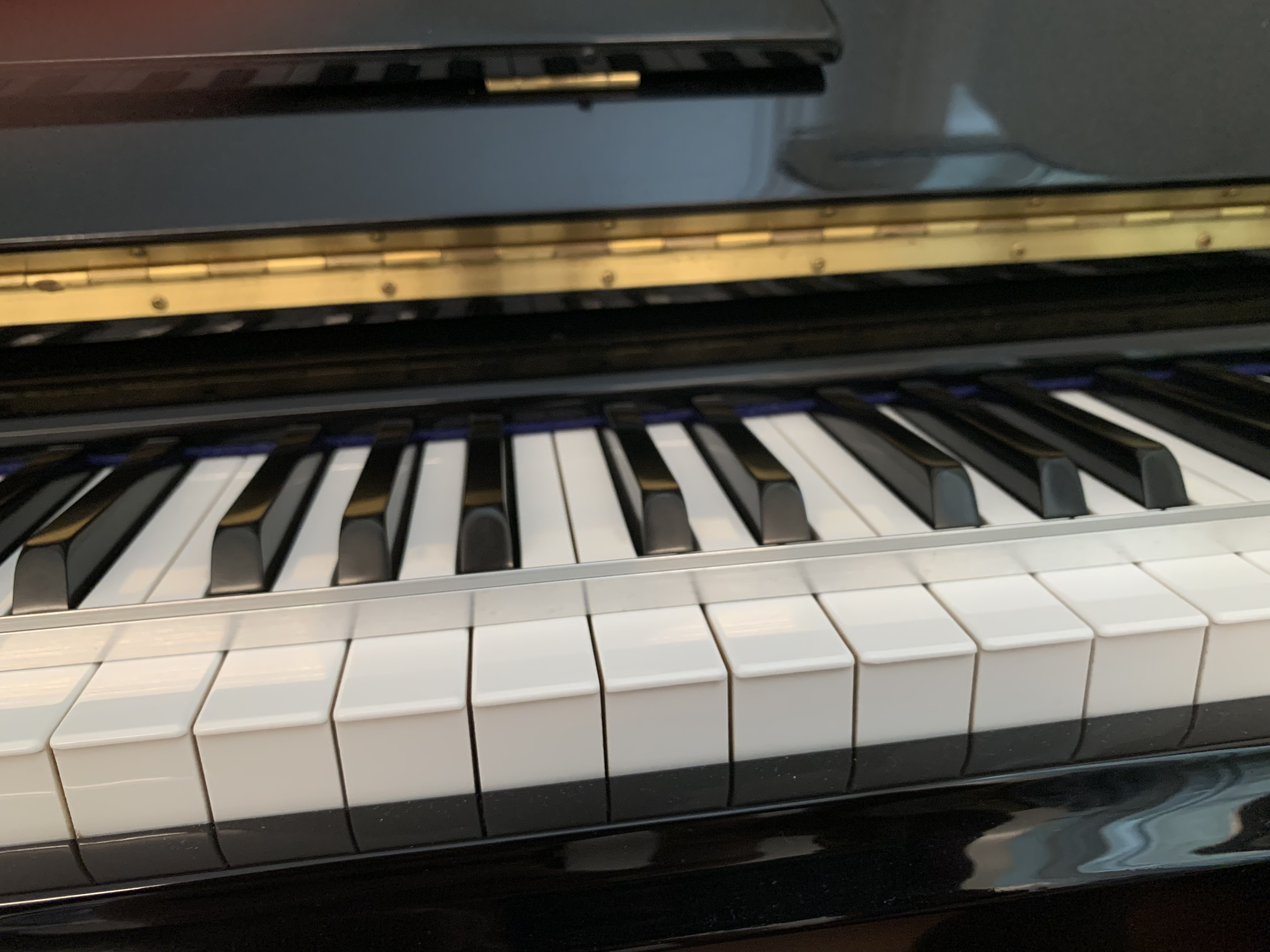
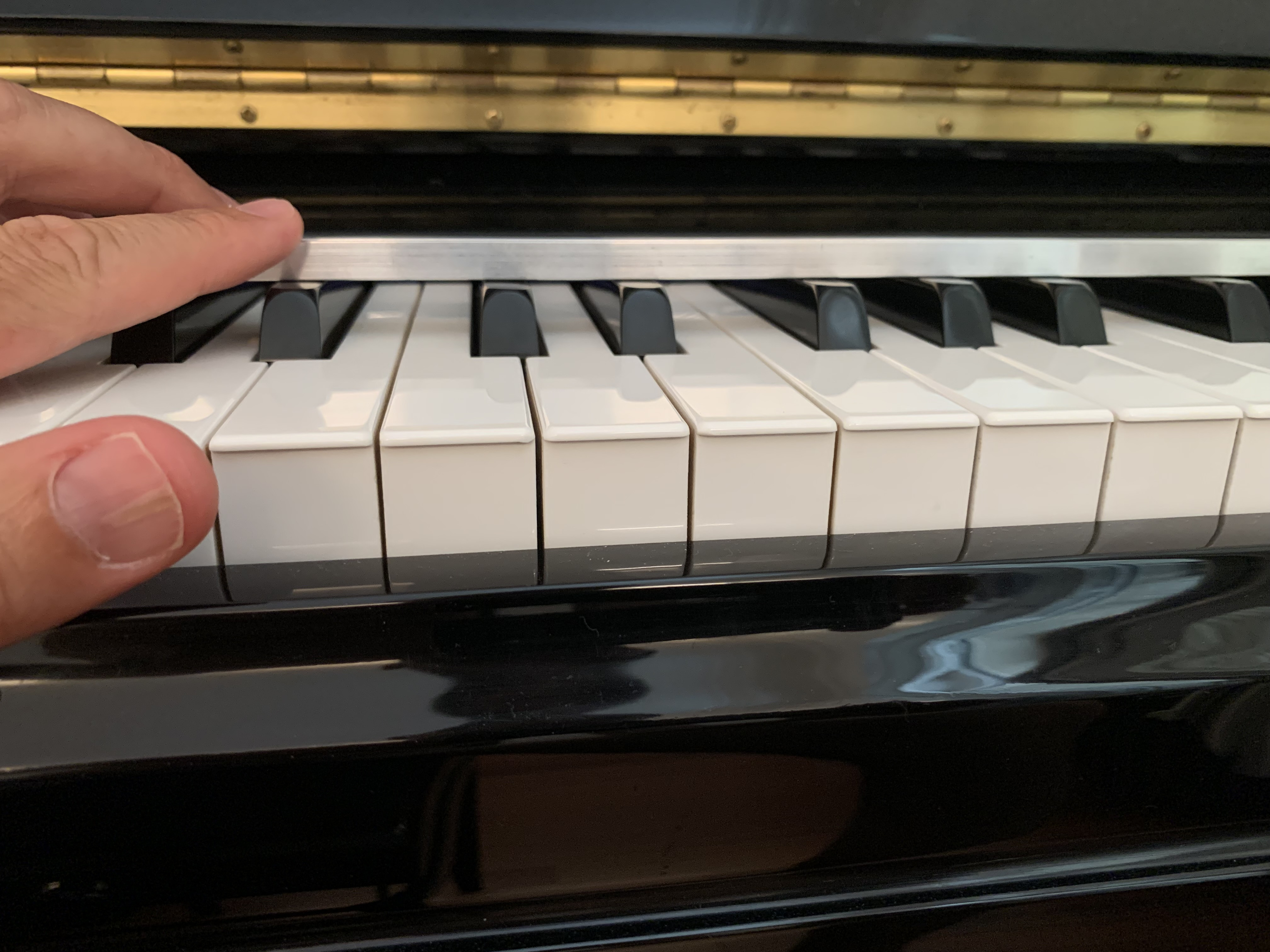
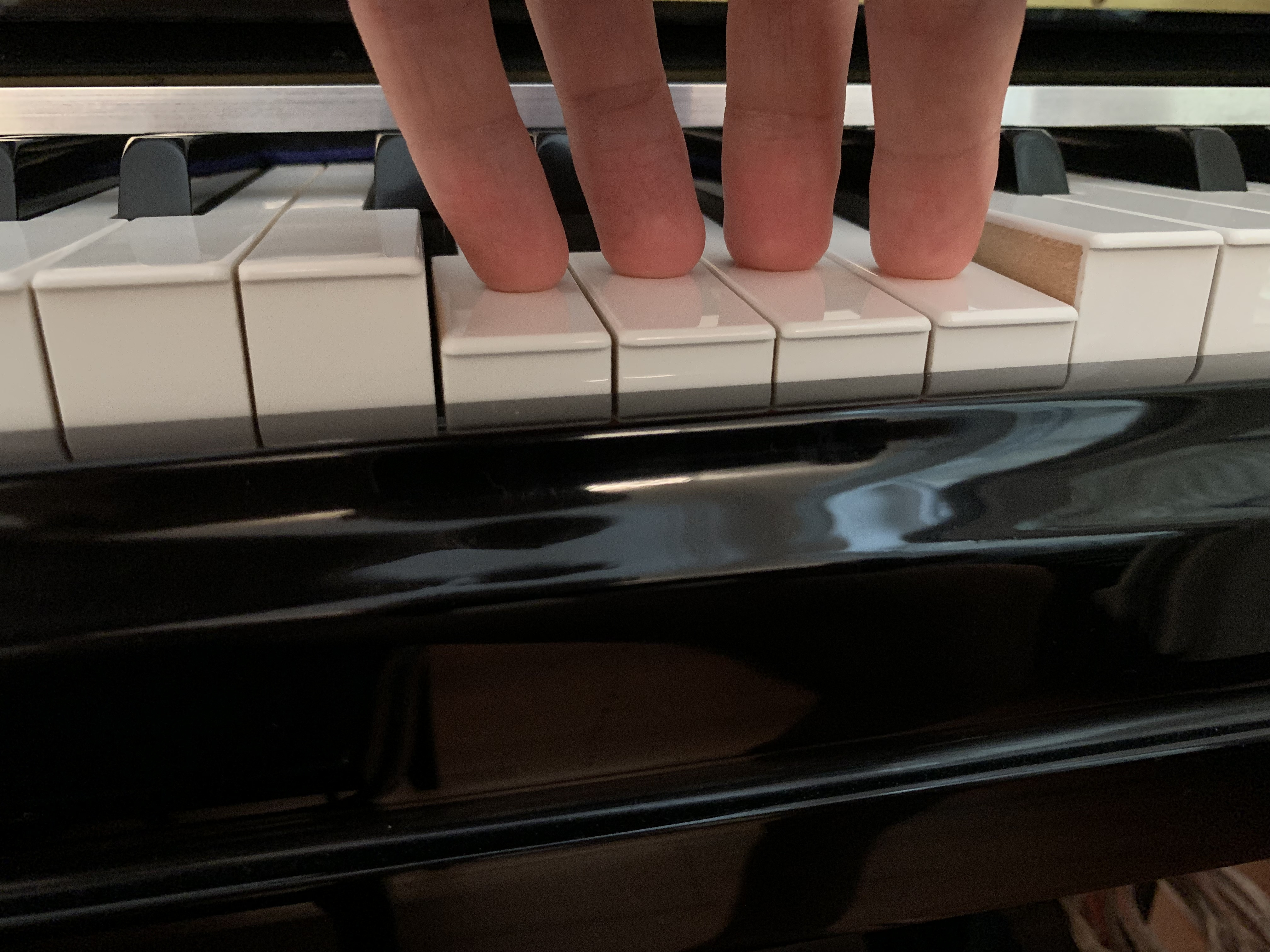
Important also to expect a consistant response from the sensors all across the keyboard : keys leveling (white keys, black keys) at rest and when depressed.
As you guess, you give more chances to the system to behave evenly if all the keys are evenly leveled.
Leveling the keys in depressed position is much trickier because of the felt under the key that compresses more or less according to the force you apply.
Also, I found somewhere that Yamaha recommends the black keys to be 12 mm above the white keys (at rest). I guess this depends on each key geometry and the most important is to have all lower faces aligned together (not easy to check).
For those who know, the RSC3 uses new EM sensors. You have the main sensors rail + tiny sensors (inducers) to glue on the lower face of the keys.
It is important that both parts (sensor and inducer) facing each other be well aligned together.
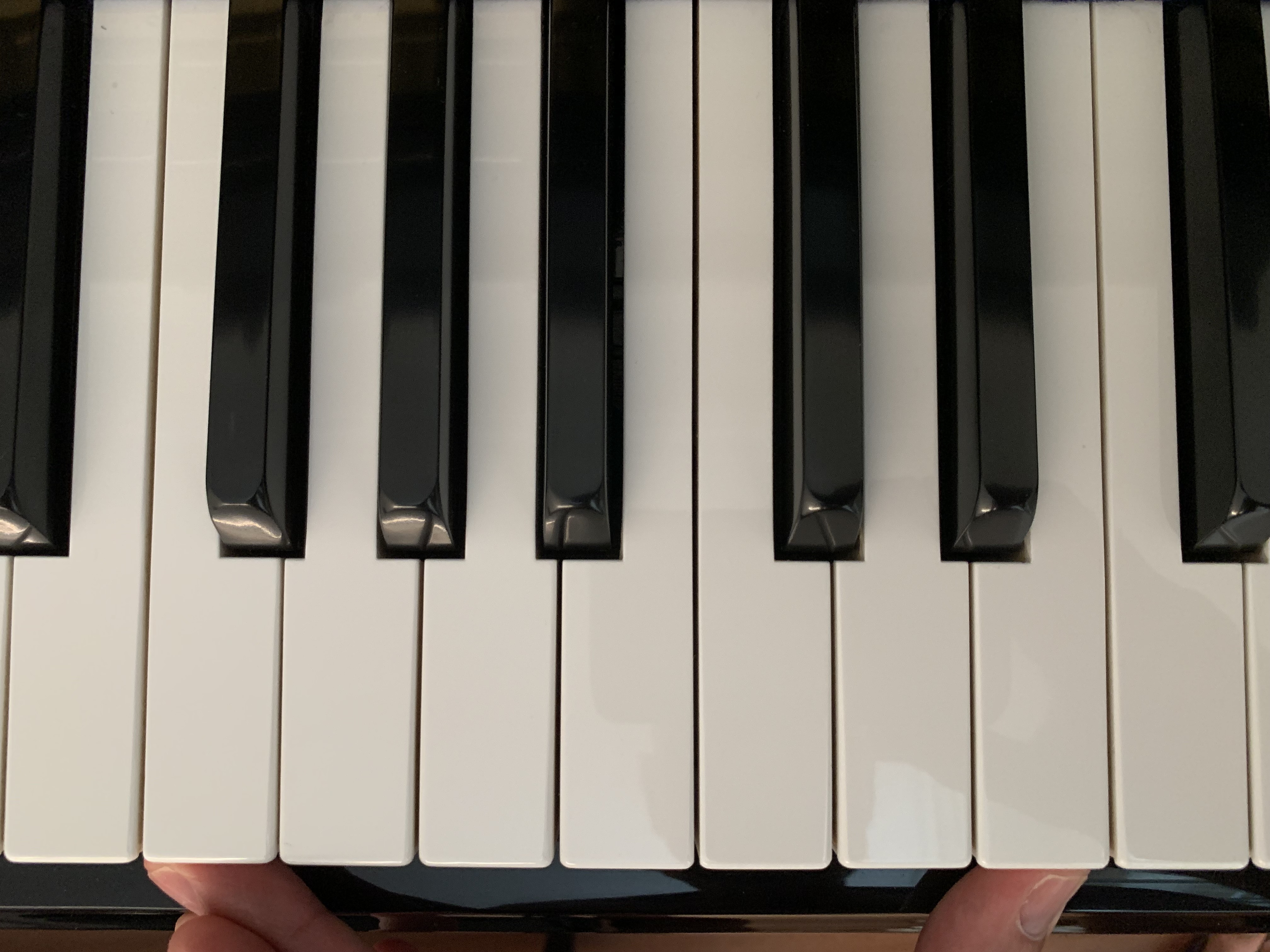
So one important step to do before mounting the system is keys spacing.
If you mount the system before proceeding to keys spacing, sensor+inducer will be aligned, but then, if you decide later to space evenly your keys (let say for aestetic reasons), they risk to be a bit misaligned for keys that have been moved lateraly. This could reduce the induction response. So I recommend to do this before.
Thank you Paulo for all these very important clarifications and also for these very detailed videos and photos (I imagine that they must not have been easy to make but they are very appreciable to understand the adjustments to be made with precision).
Sorry if I may sound silly with this question: I thought that the key spacing of a piano was not adjustable because it depended on the balance tip fixed immovably to the keyboard frame: how should we proceed with the spacing of the keys? Is this operation essential to carry out before proceeding with the assembly of the RSC3?
You need to bend the front pins laterally with a plyer. This should be done carefully, little by little. Put something soft between the plyer and the pin if you don’t want to scratch it.
It is possible that your keys be already evenly spaced. Then leave them as they are.
But generally, the black keys in bass and treble regions are the most solicited laterally which tends to make them the most off-axis.
Okay, before commenting about the system features, built-in sounds, midi response and settings, I would like to mention a last concern related to action regulation.
Look at this very short video :
https://youtu.be/7XP1CfEjCq0?si=_nYmLG5-wfEdFGQX
Can you see at the very end, when the hammer bounces on the hammer rest rail, after the key is released ? I am not talking about the bounce on the string but the bounce on the rest rail.
Well, this is something that can make the system sub-optimal, as well as the experience in acoustic mode.
Why ? Because the moment when the hammer bounces on the rail, it is floating in the air and the jack (thus the key) is no longer in contact with the hammer butt. The contact is only re-established once the hammer falls back again.
During this time, the key can achieve abnormally greater speed and trigger - too soon - a too high midi velocity.
In acoustic mode, it is also disturbing because the hammer is going the opposite way of the key move, which results in a feeling of counter-force acting against the move of your finger and your musical intent.
I think the rebound is due to the elasticity of the hard felt glued on the hammer rest rail.
Instead, a material like memory foam could absorb the shock and reduce drastically the rebound, resetting the jack immediately and having the hammer ready for the next key press.
I read on another forum that Kawai had introduced some years ago a memory foam on the hammer rest rail, now labeled “microcell enhanced repetition”, replacing the traditional felt.
Let’s be clear : I am already very satisfied by the RSC3, much more than the adSilent but have identified this rebound as a potential room for improvement. I just have to find the proper absorbing material and do some testing.
Right now, my main concern is I am not too inclined to remove (unglue) the original felt for something maybe not as durable.
Well, well, well… Look what was left inside the Yamaha box !? 🤩
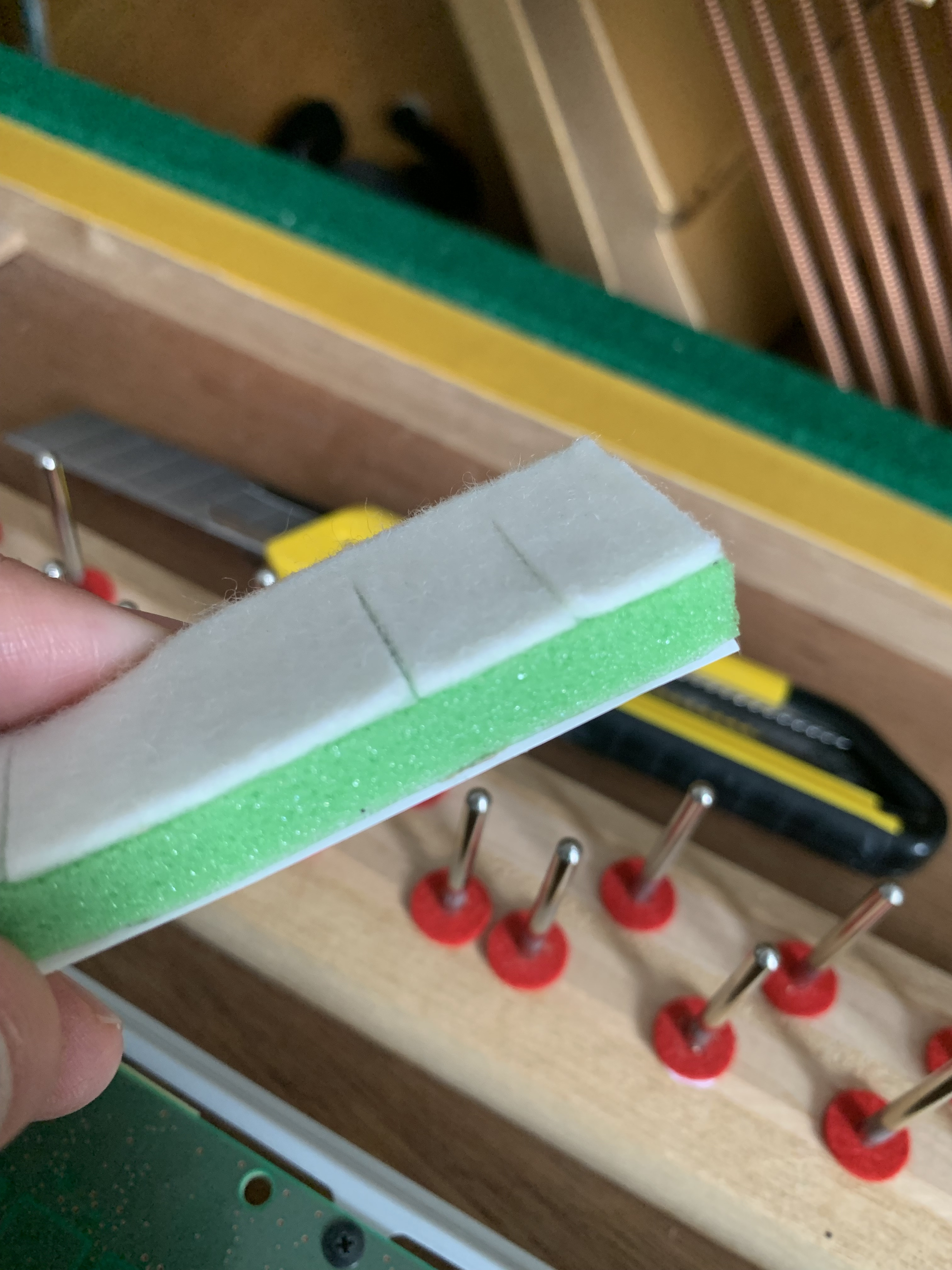
It’s a tape of memory foam covered with thin and soft felt.
I thought initially this was intended to be for the hammer stop rail (which I don’t use), but no. The hammer stop rail already has its own felt on it.
So obviously this is for the hammer rest rail.
As explained previously, I was quite reluctant to remove the original felt and glue this chemical foam instead. But I did a lot of tests to find out what was the best way to take advantage of it.
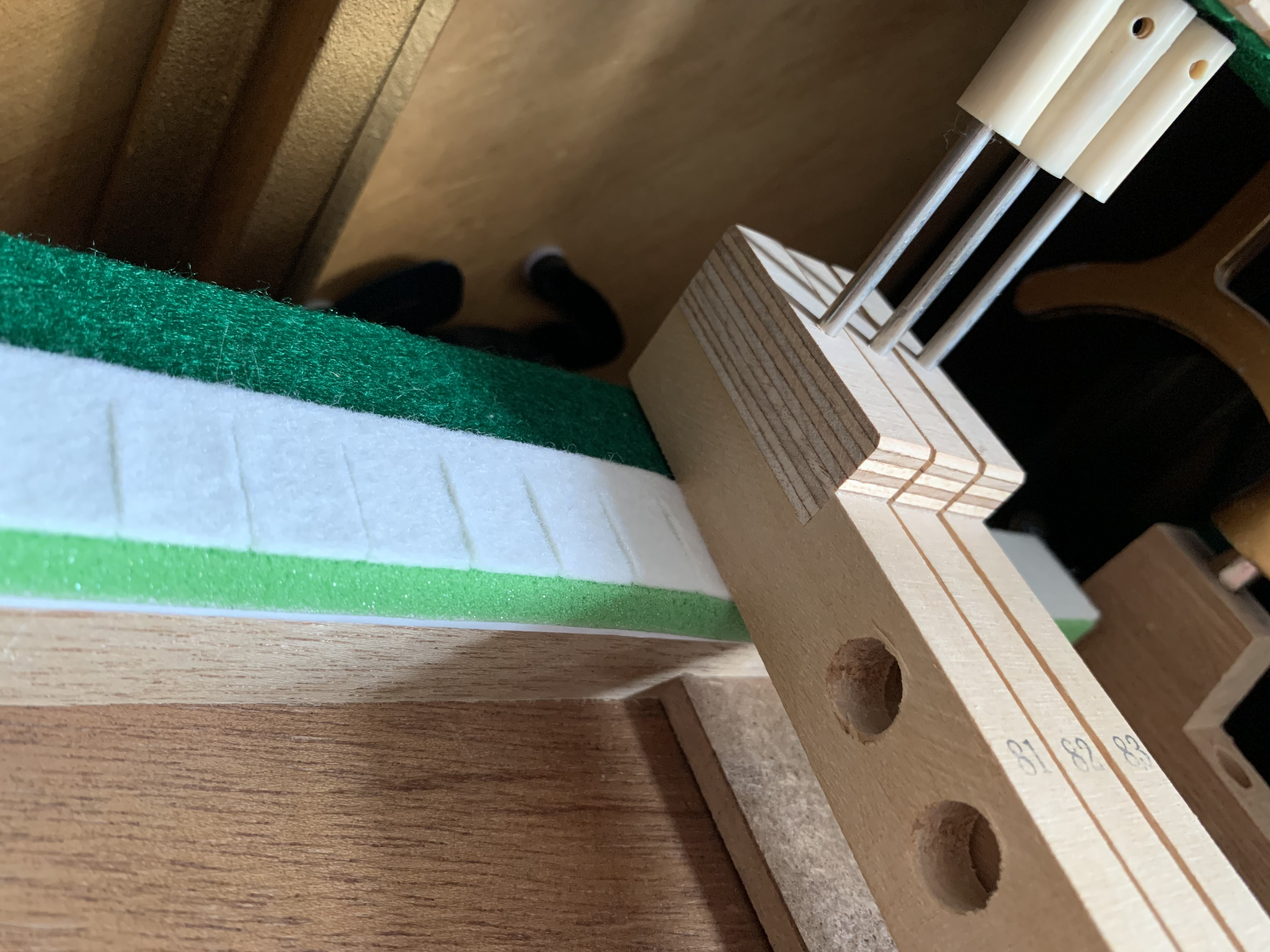
It appears this foam is very useful placed just beside the felt of the back rail, right under the keys :
As you may probably see, the foam is not replacing the original hard felt but is combined with it. The height of the foam is 3-4 mm higher than the one of the felt. So when the key is released, the back of the key first lands softly on this foam, compresses it a bit and finally rests on the original felt, like before the modification.
The result is :
I am still having a close inspection on this modification to see if it brings more pros than cons over an extended period and if the properties of the foam remain stable in spite of the permanent compression.
Worth noting also : the capstans need to be regulated finely to take advantage of this “soft touch”. It is to find the sweet spot allowing for minimization of hammer bounce while still having the key resting properly on the original felt (otherwise key leveling is off) and getting this light and soft feeling.
FEATURES & PERFORMANCES : FIRST IMPRESSIONS
Now that the action regulation is behind us, let's discuss about what, I hope, might interest you in this system.
After installation, what you need to do first is to calibrate the sensors. Here it's quite easy, you press a combination of buttons to enter in "full keyboard" calibration sequence (you can also enter the 1-key calibration sequence, in case you need to recalibrate only one key). It's very easy, just press gently all keys one by one.
Good surprise : after this operation, the RSC3 gives very good results out of the box (even and consistent velocity throughout the keyboard). Which leads me to think the calibration process is very well controled by the system as well as how sensors are reading the key speed.
What strikes me is how good it is compares to my previous adSilent system. Not that it was bad but this RSC3 is so damn accurate. You really get the sensation to play your own acoustic piano. And this is not only thanks to the binaural recordings. The timings are very precise also.
Speaking of timing, it reproduces fairly well the behavior described by Anders Askenfelt & Erik Jansson in their "From touch to string vibration" book, chapter Key bottom and hammerstring contact where they explain how dynamic level can influence the timing of the action (to make it short : the softer you play, the sooner the sound is emitted relative to key movement, the stronger you play, the later the sound is emitted).
I think this is only possible with continuous sensing systems, as opposed to discrete sensing systems like all controllers grouped under the category "double sensor / triple sensor actions".
That being said, you have very few controls over the performance itself. On my adSilent, I was able to set stuffs like "key depth" with "upper limit" and "lower limit", "maximum repetition per second limit".
Here, nothing. What you can do is at the moment of calibrating the sensors : if you depress the key very softly, it will set the trigger point higher, which means you trigger the note-on early while depressing the key. On the opposite, if you depress the key and press harder on the felt under the key, this will move the trigger point lower. Not ideal but you can manage to proceed with a few iterations to match quite perfectly the behavior of the acoustic counterpart (which I think is what should be done).
At this stage, when you press a key, you hear the tone generated by the RSC3 and the tone coming from the acoustic piano occuring at the same time. You could say this is how to achieve a zero-latency system ;-)
Worth mentioning : there is a setting allowing to select the model of your acoustic piano (Yamaha upright U1, U3, grand C3, C6, etc.) as well as "infinite model" but I can't see nor hear what it is made for. Maybe it is related to the pivot length or difference between white and black keys to compensate for something but, even though I hear carefully, I don't notice any impact on the performance.
I will discuss more in detail later about the sounds, settings and so on but what I can tell from now is :
Very nice report. Thank you for your detailed review.