Skip to content

A brand new Steinway from VSL: 1887 model D concert grand

clavierhaus

dickiefunk I may be wrong, but I am not sure whether you are aware of the fact that the source for the "Studio Concert D 1887" is an actual piano from 1887. It has been preserved in a way that a historically accurate restoration has been possible at all - and in that it is an actual instrument.

It took months of preparation of the piano in terms of regulation and voicing, getting new hammer replicas just for the sampling session and a lot of back and forth between VSL and me to actually have the Una Corda sampled separately.

Whatever ways other products on the market went to achieve their results, I am pretty confident that both VSL and clavierhaus went a lot more than just one extra mile to give you something that is completely unique.

Different from all the modeled VSTs out there, you can simply give me a call and arrange for the unique opportunity of playing the actual piano in real. This 1887 D (S/N 62523) exists, resides in my studio in Vienna and can actually be played and be rented for special occasions.

I am curious to learn what other VST providers tell you when you inquire about the serial number of their "D" and whether you can play it at some place upon making an appointment.
David Lai

clavierhaus The only other Steinway library I know that does exhibit their Steinway serial number is Modern D. The Steinway used has the serial number 616803. However, I don't know where they sampled the instrument, or where it lives now. I got the serial number from their product website.


clavierhaus

616803:

"Congratulations, this Steinway is so new that it has not yet been added to our online system. "

Maybe one digit too too much due to fat fingers. And if it was supposed to read 60103, then it's not the real deal, because that's a B residing in my home in Vienna.


pianow

Tozen

my dear friend, i shouldn't have asked in the first place but since i'm extremely rude i did it lol, i'll watch simeon then 🙂


pianow

clavierhaus this piano is a blessing for sure, thank you again, i wish you collab with vsl again, like i'm pretty sure there's a B211 in your possession so that can be a good "next move", especially because people have been tearing at vsl for not sampling a steinway b (in their stage b)

the d 1887 stands out on so many levels, regulation, preparation and tuning is top notch, the una corda sounds very good and it's still very dynamic,

so i believe vsl should just continue working with you people 🙂 their last few releases weren't good at all and most of the problem were in the preparation phase, like the second octave on the f212 sounds dead and muddy where the rest of its octaves are fine, there are dynamically limited notes on the f308 and some out of tune ones on the cfx,

there's none of that in the d 1887, so i'm extremely grateful, and i'm sure a modern steinway b211 would be awesome 🙂


clavierhaus

pianow there's none of that in the d 1887, so i'm extremely grateful, and i'm sure a modern steinway b211 would be awesome

My Steinway B211 is even 1 year older than the D. And it has taken me 4 years and a lot of effort to bring it from sad to awesome.

[


David Lai

clavierhaus "Congratulations, this Steinway is so new that it has not yet been added to our online system. "

Well, it was made in 2021 or 22 or something like that. On their website it said that when they sampled it, the Steinway was 2 years old. So you're right, it's a new D.


David Lai

clavierhaus You do play very beautifully too. It's rare that musicians get to work with sample library makers, I think this is a great start.


pianow

clavierhaus

wow so you're all into historical pianos, that's just cool, i'm watching simeon playing the d 1887 RN and mayn, it sounds wonderful, i don't think there's anything like it on the market, i mean it, i used to like the tone of embertone steinway but this one just beats that in everyway, thank you again, i love your work man.


Jane

I downloaded the demo and played with it today.

Below is a link to three recordings (mistakes aplenty - beware!)

I recorded it using the condenser mic solo (no reverb, no ambience) then re-rendered it with sphere mic solo and tube mic solo. So there's one "identical" recording soloing each of the three mics.


clavierhaus

Jane I am not sure how you recorded those three pieces, but what I am sure about is that all three of them are monaural recordings - unless my headphones went the way of the Dodo all of a sudden.

This is not how you I hear the 1887 D - and I play on it every day, listening with two ears.


Jane

clavierhaus Let me see if I can figure out what happened in my rendering.
Thanks for waking me up 😉
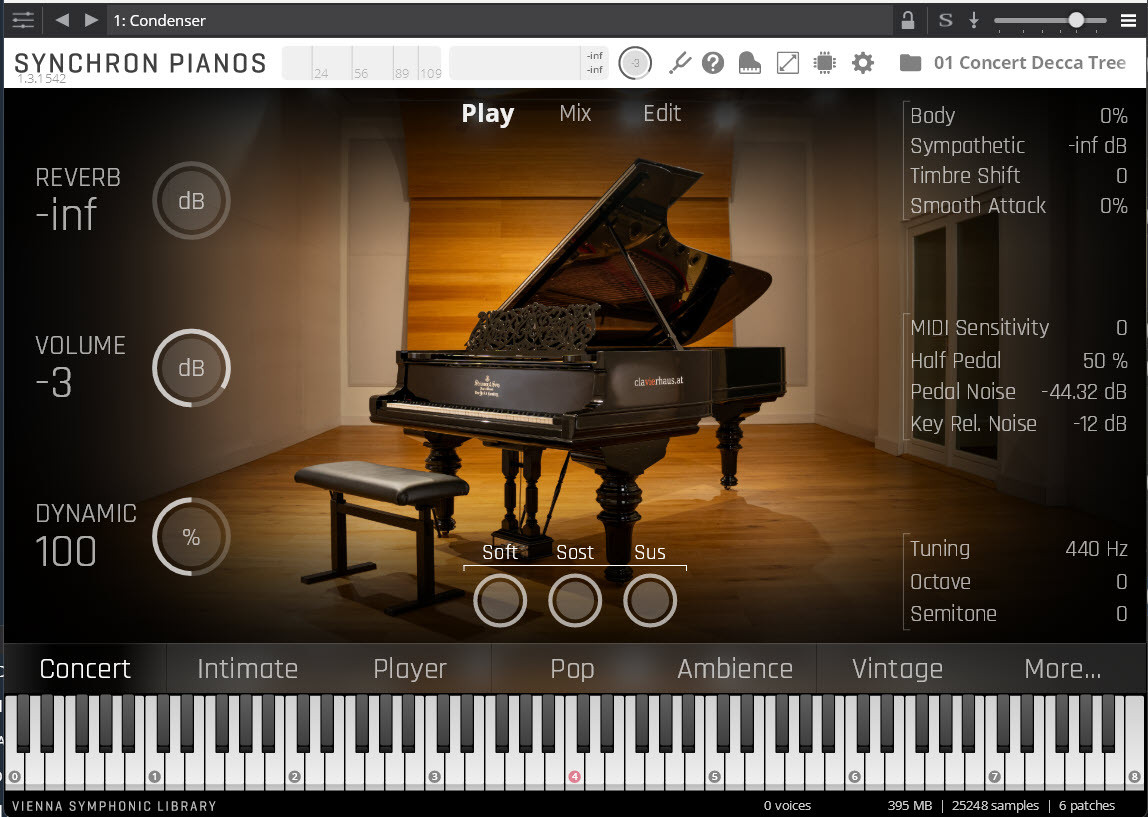
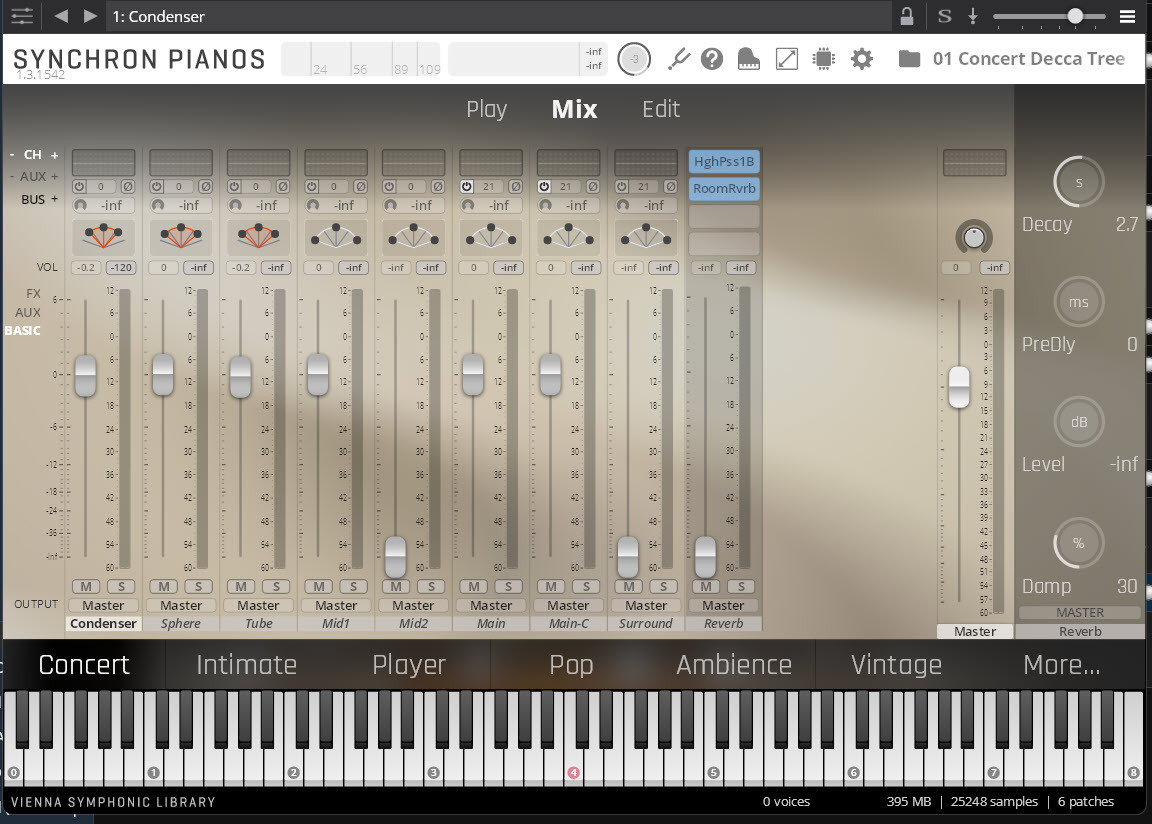
I started from a "wrong" preset to represent the mics correctly.
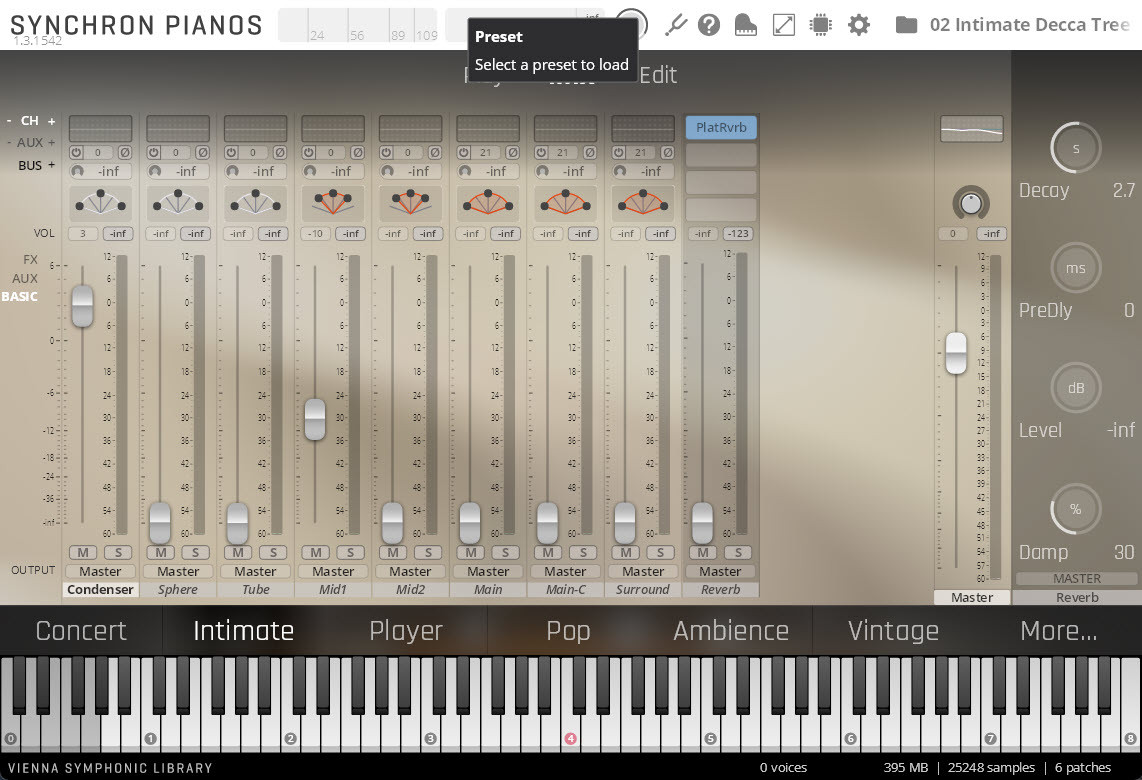
Notice in my third screenshot that above the volume slider, the phase dots are in red.
I'll try to correct that and re-upload.


Jane

I'm not allowed to edit my prior post.

OK.
Here's a link to re-uploaded tracks.
I had started from the "concert" preset in VSL, not noticing that the mic phase setting is tweaked (observe the three red dots above the Condenser fader in my previous post).

As Clavierhaus pointed out, it sounded like mono.

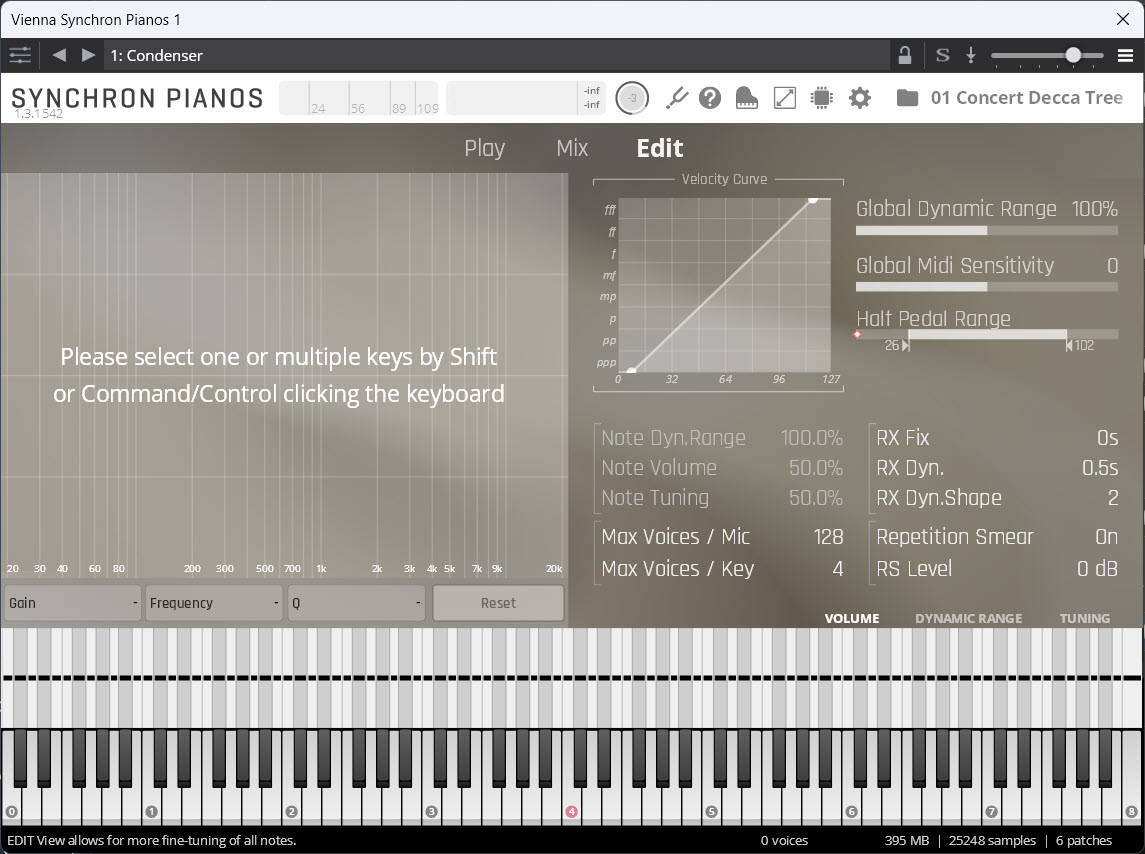
I've re-uploaded the tracks. Note that the phase setting is not reversed and is set to full wideness in the screenshot below.


David Lai

Jane I like the Sphere and tube mics a lot, but sadly, they're not in the standard library. My least favorite is condenser…


Jane

David Lai I like the Sphere and tube mics a lot, but sadly, they're not in the standard library. My least favorite is condenser…
My preferences are the same as yours, David.

I confirmed on VSL's website.
The 30-day demo comes with everything.

Standard includes Condenser (Close 1)
Mid 1
Decca Tree Stereo
Decca Tree Mono

Full adds
Sphere (Close 2)
Tube (Close 3)
Mid 2
Main Surround


David Lai

Jane Great, thanks for letting me know, Jane! 🙂


pc-king

clavierhaus As a classically trained pianist, I regularly use the sustain pedal. Amazing. Therefore, it's important that the correct samples are played. So if I release or press the sustain pedal while holding down a key, the other sample must be switched to. This isn't a nice-to-have; it's absolutely essential, like the half pedal. I understand that you're proud of your work, but unfortunately, since Modern D, the product has ultimately become outdated and uncompetitive. Given that these deficiencies have been reported to VSL for years, it's astonishing that such a product is being released now.


Tozen

Jane

That was great! Thanks. I really like the sphere mic as well and hope it is used on future products. It is wide and enough and full enough to enjoy on its own, whereas I feel like the other ones require additional mics. I continue to dream of a day when we can pick and choose mics we want in a custom package. The pricing continues to be the biggest obstacle for these libraries.


David Lai

Tozen And the best mics are in the more expensive option, that's to be expected… Yeah, if I could choose, I'd just get one of the mids, and one of the close. That's it. 🙂


CyberGene

pc-king Therefore, it's important that the correct samples are played. So if I release or press the sustain pedal while holding down a key, the other sample must be switched to.

It doesn't work exactly like that. It's only the loud attack portion of a note that has enough energy to excite the open strings (when all dampers are open). However, if you first play a note without the damper pedal and hold it and then press the damper pedal, the resonances will be much lower, especially if you pressed the pedal after the attack portion. In practice you might not even hear them once short time has elapsed. Just switching from the non-sustain sample to the sustain one is wrong and will lead to audible artifacts. This is one particular behavior where Pianoteq is apparently better (or even some digital pianos with modeled resonances such as the recent Yamaha pianos, maybe Kawai too). But IMO, switching from non-damper to damper sample should be done only if there's a re-pedaling immediately after the note is played. Half a second later and it better stays with the original non-damper sample, that would be more realistic than switching to a full-blown damper pedal sample.

The opposite: playing first a note with the damper pedal, holding the note with your finger and then releasing the damper pedal, is a valid case where the samples can be switched though.


« Previous Page Next Page »