Skip to content

Pianos (keys) are badly designed!

Pete14

RIP Excellent idea.

Thank you!

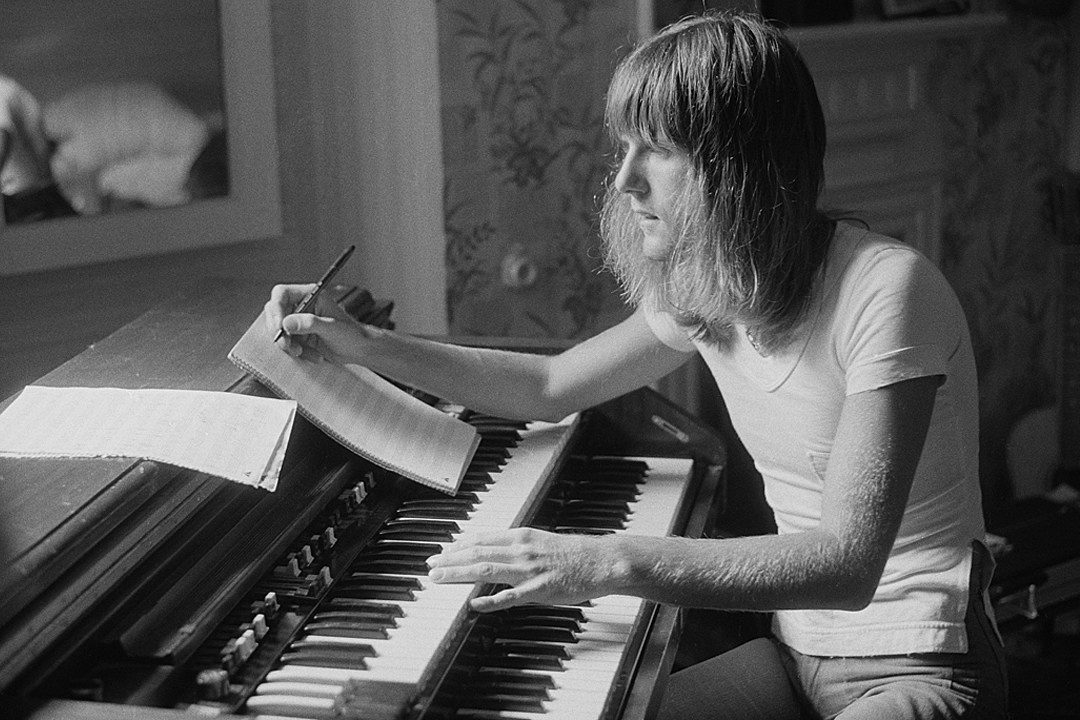
I must say, I got the idea when I saw this guy (down here) struggling, so I thought: what if he was freely hanging/swinging from a contraption (fixed onto the ceiling), so that he could simply “glide” his weightless ass over the keys by using his body mass to create momentum that would propel him left/right as needed.

Of course this would be done in a very dignified manner, and as I said before, it’s a work in progress (I’m open to suggestions)……

https://youtu.be/AE2-0XU5cHU?si=vuGz1qBPxzLpC7Bx


Johnstaf

PASHKULI I am sorry but you have no idea about human anatomy and what dexterity is all about.
Your body is symmetryc (I hope): limbs, fingers, toes… face of course they are not 1:1 exact copy (ala Egyptian statues are 1:1 symmetric) only topologically!

I will give you an example and I hope, oh man I really do hope, you can understand the correlation.

Left handed vs right handed writting (with a pen, pencil, rastrum)
Here is my claim:
Writing left to right direction is suitable for right-handed writers (people). (european languages)
Writing right to left direction is suitable for left-handed writers (people). (hebrew, arabic, parsi middle-eastern scripts)

Most people are right handed (by nature, you could say even genetically maybe).
Now… here in Europe we have about 10%~15% left-handed writers. See them how they write… yes "perfectly comfortable" (it is sarcasm – it is devastating for them).
But in the middle east most people are also right handed, yet they write from right to left… and it is a struggle.

Can you see why? (let's make it a discussion) And how this can be correlated to the piano?

Ok. Now you're just talking nonsense. The current piano keyboard is an advantage to right-haded players. If you disagree with this you haven't the lightest clue what you're talking about. You don't play, so you don't understand what is easiest for pianists.

The writing thing is irrelevant to the piano. People have trouble writing if their hand covers what they have just written making Western writing easier for RH people. This is entirely irrelevant to the piano keyboard. In music both hands move in both directions. Writing is irrelevant. Do you think pianists only move their hands from right to left?

You haven't really thought this through, have you?


PASHKULI

Johnstaf
Ok, you somehow start to get the picture. Baby steps, I understand. Take your time.
So, you say… people have troubles im their writing hand covers (esentially would smear the ink or graphite) what they have just written. That is correct observation! Well done!

Yet… and here is the "mindblowing" part (not really) right handed people in the East have been hand-writing for ages\centuries from right to left before the modern digital devices came into picture. One can only wonder why would they (hebrew, arab, persian, turks – before Kemal's writting reform to use Latin script – and so many more) even think that writting from right to left was a good idea. INteresting, isn't it. But they did. They learnt, they practiced… and I can assure you non of them dared to flip the direction – humans adapt!

Just like left handed (european languages) writer write from above or tilt their papers to almost 90° counter-clockwise.
https://youtu.be/2i4CRw3DG-s?si=hyjzj50u_pV-x0Yl&t=206
So what should such left-handed (european lang.) writers do to make it less stessful on their hands?
Well one famous left-handed person did exactly that. Leonardo wrote most of his work with as… please read:
https://www.mos.org/leonardo/activities/mirror-writing.html

What an imbecil, right? How dare he! He was wrong. He could not write and was lazy to learn the correct way! He might have been ambidexterous but who knows. Same some say about Mozart and Beethoven (that they were rather loft-handed but probably ambidext.).

Do not worry, we'll get to the piano…

Yet, not many left-handed people could afford learning a "mirrored" writting. It does not matter today (well since computer\printers were invented) so no need to force them learn Leonardish.

The point is, hypothetically if I, let's pretend am an ambidext person (writer), would like to use my left hand to write in my european script, I have to do it the Leonardo way. Otherwise my abidexterity for writting with my left hand will be extorted, forced, will bring me fatigue, unnecessary stress upon having to uncover what I have written – even if the ink is instant dry and not susceptible to smearing!

Ambidexterity is only aplicable to non-sided activities for example hammering a nail, tossing a ball.
The moment you include directional sequence your ambidext. will have to be extorted to comply with the direction because either hand\fingers will have to go in the same direction.

Pianist are forced to learn that way – it is not ambidexterity. The poor one directional layout of the piano notes extorts dexterity for one of the hands. I proved abouve why corrent piano is suitable for left-handed people using example with left-handed guitarists as notebook example of handedness in the music instrument making.

Certainly, practice makes perfect. You can force yourself to play a right-handed guitar despite the fact being born a left handed person. Kiko Loureiro (a quite famous virtuoso metal and fusion guitarist) did, because he had no choice and no access to other instrument but a right-handed guitar. Hear the man himself:

https://youtu.be/cpZMhgSC9CE?si=MuP1D4dqEh7Q5VCR&t=332
(watch it from 5:32 to 6:44)

The man was forced to learn the "right" way (uh, the pun!)
Isn't it weird how humans can adapt to discomfort (and most om the times not even realising it!).

CyberGene

PASHKULI Johnstaf
Ok, you somehow start to get the picture. Baby steps, I understand. Take your time

This is very condescending and arrogant. I see why you’ve been banned from other forums. Please learn to be respectful or you will be going down the path of the only person who got banned here.


PASHKULI

CyberGene

He, Johnstaf, wrote:

You haven't really thought this through, have you?

Maybe I found it condescending so, what goes around comes around. We are even now.


PASHKULI

@Johnstaf

You are right that pianist move their hands in both directions but you have missed the fact that regardless of hand move, the underlying layot of piano notes is one directional.
I already wrote it in the beginnig:
current piano notes ascend from left to right → this means from pinky to thumb (for the left-hand) but from thumb to pinky for the right-hand.

from thumb\index to pinky for the right hand is how notes ascend on a left-handed guitar fretboard (virtuoso moves, legato, solos)!
That is why current pianos are more suitable for left-handed players (as I see it as such).
Same with the accordions.

I really hope you can see the correlation as well. Otherwise, you will keep ignoring the fact that people have 'handedness', especially with regards to piano.

Furtermore, we can discuss violins (there have been left-handed ones) but also many left-haded people are forced to learn "usual" (right-handed) violins.
Then we can discuss trumpets – buttons are played with right hand. To whom is it suitable for?
But then a similar instrument – the horn – has the buttons intended for the left hand, regardless of your (player's) dexterity. Saxophone, flute… the list is as long as can go.

But let's concentrate no the piano.


RIP

PASHKULI you have missed the fact that regardless of hand move, the underlying layot of piano notes is one directional.

And you have missed the fact that it's not. True piano playing is three dimensional. You move the hands right-and-left to select the notes, but in-and-out and up-and-out for both ergonomy and proprioception. The fact that the black keys stick out is essential to orient yourself while playing. Piano playing does not happen on a sheet of paper and even less so on a unidimensional line.


PASHKULI

RIP

Buddy, this is a completely different thing.
We are discussing the direction of writting not how "beautiful" (caligraphic) your hand gestures are and the appearence of the script is. You can do whatever gestures you want over the piano keys.
Geometric constraints are evident with the "flat" and angular designs, especially the 'black' keys. Denying that is like denying that a window is not a door but can be if you know how to move\jump over\through it.

My design is based on the Chopin's quotations. Tha man says something about pivot points and how the long fingers can use tha black keys for that purpose. Thumb and pinky usually on 'white' keys.
Let's transpose so that thumb (and pinky) are on 'black' – yes might not be in many panists repertoire but I am not a pianist, I am an engineer, my job is to cover\explore all possible scenarios.
So, the pivots are gone… quite bad if your long fingers have to play 'white' key. Not only there is no pivot but your fingers (long) will have to go down to touch the "flat" tails between the 'blacks'.

That's it. I made the pivot points so all fingers (long in this case, but also pinky) can access it as such when thumb is on a 'black' key.
Ah, and made them widths all equal (respectively): all tails equal, all blacks equal, all heads equal.
You can also have 'blacks' = 'tails' if you want (I prefer it that way since I got them curves act as pivot and equal access).


CyberGene

Let me summarize. You're an engineer and can't play the piano. You found some "issue" with the piano keyboard layout based on dimensions and measurements. You don't have a hammer-action prototype and won't have one because your landlord won't allow you to make one where you live. Hence, we are only presented with some pictures of some curvy keyboard. You haven't yet convinced anybody that there's an issue with the existing piano layout. You can't even demo your layout because you're not a pianist.

If you don't see the sheer lunacy of it, then I have nothing else to say.


PASHKULI

CyberGene

No, they work. They are digital. They do not need hammer action. But I can if I wanted to, starrted that way originally, went over budget after a renova\octave + ½ because I do have my own "hammer" action (withot hammers), call it hybrid, whatever.

Apparently you haven't browse the links provided earlier.
Otherwise, yes – I can barely, really, play the piano. Never have I had intentions to learn it… for obvious reasons – I thought (and still do) it was a poorly designed musical instrument. That is my perspective. If to you it is the most perfect instrument, we are not on the same track.
I can demo anything you show me to play on your "flat" key (no pun intended) pianos to the best of my ability, but only examples of a bar long phrase not more than 8~12 notes. I can't pull of a Chopin's etude\exercise, that is for certain!


CyberGene

PASHKULI If to you it is the most perfect instrument, we are not on the same track.

I hope I will not disappoint you, but yes, to me the piano is the most perfect instrument 🙂 I assume it wouldn't be an exaggeration to say that for most people on this forum that holds true.


ambrozy

PASHKULI I can't pull of a Chopin's etude\exercise, that is for certain!

So stop arguing with those who can (which is probably half of the people posting here), you are trying to solve minor issues while introducing major issues, which you don't understand because you can't actually play the piano. Why is it so hard for you to grasp?


ambrozy

I would like to see at least couple of bars of Schubert Impromptu No. 3 Op. 90 on your keyboard, that's relatively easy piece for the player, but hard for the piano
https://www.youtube.com/watch?v=LUp2u9wI1fY
you can try to see and hear what her hands have to do on the keyboard to pull this off and perhaps draw some conclusions


PASHKULI

ambrozy
It is a bit advanced for me. I will need at least a few years of practice (on whatever piano) to be able to play this.
I do not know what you mean by:

relatively easy piece for the player, but hard for the piano

Do you mean it was not written for a piano, rather this is a 'transcription' for piano?
The camera angle is not very informative for learning purposes though.


ambrozy

PASHKULI Do you mean it was not written for a piano, rather this is a 'transcription' for piano?

No it was written for piano but It highlights some real issues with keyboard/action design


PASHKULI

Got it, ok
Since Schubert died a few years after Erard got his 'double escapment' action out, probably Schubert did not have much time to play it (I do not know really much about Schubert). So most likely he used the simple action.
I am mostly shure that lady (Khatia) plays Erard\Renner action (probably).

He (Schubert) was not a virtuoso contrary to Chopin at piano but a good composer. My washing machine has\plays his theme when finishes and I've been whistling it every time for the past 7 years! That I know is his work "A major 'Trout' Andantino"!


RIP

PASHKULI The camera angle is not very informative for learning purposes though.

Sigh. You don't have to learn this piece (or rather a couple of bars) from this video. You just have to see how she moves her fingers, finding her way based on the fact that the black keys are raised in the back. Your flat-in-the-back design makes this easy piece very hard to play, do you realize that?


PASHKULI

RIP

So, seems you have played it on my design and could not find "your way" talking from first hand experience. Sigh.
To me it is obstructing having to wriggle your fingers between the 'black' keys. Fingers should have access. If you can't play without "support" maybe you should… practice more till you can't get it wrong.


PASHKULI

In my teenage years I found some performances of hard ruck\prog keyboardsit such as Keith Emerson who had a very odd (to me at least) double tier keyboard. I had no idea at that time that double tier (two-manual) harpsichords existed since the Baroque era.

I got convinced in my ignorant, uneducated mind that those were for each separate hand and the direction of notes on ane was opposite to the other, so either hand could play the same chord with the same fingering positions!
The disappointment was crushing when I found out the second manual (tier) was merely for a different timbre\sound-setup.

Later, maybe early 2000s I found that on some digital keyboards you could 'split' the keyboard digitally.
Sadly, it was not possible to flip the direction on one of the such split sections. I've been inquiering manufacturers for such a feature but to no avail.
Which reminds me… I can try and flip the data cable form the keys' velocity sensor to the PCB inside one of the prototypes, but am mostly shure they go only one way in into the pins. I have to check, it might work!
Might also swap them so that the the lows are now on my dominant right hand!
Will keep you posted this weekend (now am testitng the CLAIRE library) and it seems ok, maybe a bit quiet.


RIP

PASHKULI So, seems you have played it on my design and could not find "your way" talking from first hand experience. Sigh.
To me it is obstructing having to wriggle your fingers between the 'black' keys. Fingers should have access. If you can't play without "support" maybe you should… practice more till you can't get it wrong.

Okay, so in the end we are understanding each other, yeah!!!

I played in the way you described and became attracted by Janko and your design which I found on some other forums back in the day. So I understand what you are talking about because that was myself, until 3 years ago and for several decades before. I never reached any fluent way to play the piano that way, and I can now confidently say that it's true for the vast majority of players who approach the piano that way.

Why? A variety of factors, but one particular that is relevant in this conversation! What you call "obstructing" it is the very heart and soul of fluent piano playing, which I started to do when I met my current teacher. Starting at that time, I learned to love the piano layout exactly in the way it is (besides being slightly too wide) and what it enables: knowing perfectly where my hands are exactly at all times. In fact, I can fluently switch between regular acoustic piano keys and Korg microKEY synth without any problem: I always know what I am doing, without need to practice anything (in fact I improvise at all the time, don't play pre-decided pieces).

Practicing until you can't get it wrong is the worse one can do, relying 100% of "muscle memory" and its mindless approach which leads nowhere: pieces are forgotten easily; mistakes creeps in at all time; you can't improvise; the minimal distraction or difference forces you to stop; trimming your fingernails makes you forget the piece you knew till few minutes before (!!!!); playing a piano slightly heavier or lighter than the one you practiced on it's incredibly hard; and more problems. Ask me how I know: I did it for decades.

Hence, no thank you, you are not solving "the obstructing" that pianists have, you are removing what they need to keep the love of their instrument strong!

To be even more clear, you wrote:

PASHKULI having to wriggle your fingers between the 'black' keys. Fingers should have access.

Unless you have a hand disability, these movements are totally natural and innate in the normal dexterity of the hand.

Now that I think harder about it, your idea could be fantastic in simplifying piano playing for people with disabilities who have mechanical issue in their fingers, or control disease which limits what movements their fingers can make. So I strongly suggest that you try to reach to that demographic, and not the one of even marginally accomplished pianists like the ones who can find here.

PASHKULI Which reminds me… I can try and flip the data cable form the keys' velocity sensor to the PCB inside one of the prototypes, but am mostly shure the go only one way in into the pins. I

You can do that in software with zero effort. For example you may use Python and mido -- that would take you probably 30 minutes including the most difficult part which is making sure you install it correctly (see this bug to save you some grief)


« Previous Page Next Page »