David Lai
OlivierW I downloaded without any problems. it's the using that is the problem, because my screen reader can't really read the user interface normally.

OlivierW I downloaded without any problems. it's the using that is the problem, because my screen reader can't really read the user interface normally.
I recently purchased the KORG SGX-2 because its German D piano truly stands apart from every other sampled instrument I’ve tried. From the very first notes, the attack and release feel incredibly clear — there’s no veil, no masking, and no artificial smoothing of the transients. The tone speaks freely, with real presence and dimension, especially in the midrange.
The release samples are impressively realistic — sometimes even too strong, so I usually reduce them slightly. I also set the master output to –6 dB for better balance and headroom.
What really impressed me is the velocity and dynamic response: for the first time, it behaves almost exactly like a real acoustic piano when played from my Yamaha N1X. The expressive range from PPP to FFF is beautifully captured, without the uneven jumps or compressed layers that plague many other VSTs.
The only minor flaw I’ve noticed is that the sympathetic resonance doesn’t continue after the sustain pedal moves from down to up while keys are still held — something VI Labs fixed in their Modern D v1.1. Hopefully, KORG will refine this behavior in a future update.
To overcome this, I’m preparing a Gig Performer preset with two options:
1. A hybrid version using Pianoteq 9 for a complete resonance simulation, and
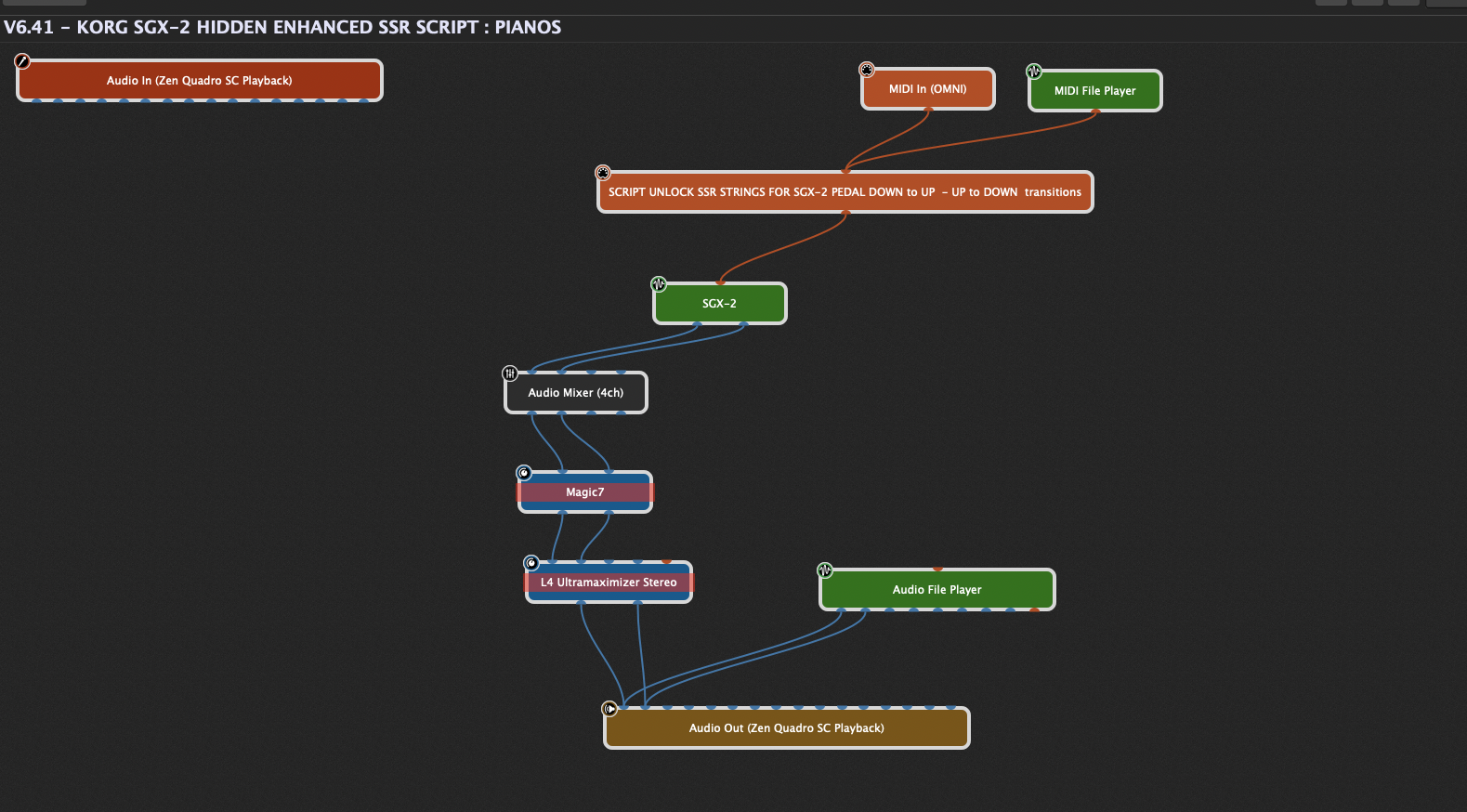
2. A standalone preset without PTQ9 with custom MIDI scripts to fix the sustain-pedal resonance transitions and String resonances directly within the SGX-2 engine.
The tone of the German D is exceptionally versatile — warm and lyrical in pianissimo, yet powerful and crystalline in fortissimo. I keep all mechanical and resonance noises around –20 dB, and the string resonance also around –20 dB for a natural acoustic feel without overemphasis.
For only $99 USD (about €89 with the current offer), the KORG SGX-2 delivers a level of realism and playability that, in my opinion, is light-years ahead of VSL. It’s not just impressive — it’s inspiring to play.
I’m genuinely in love with this piano. It feels alive, organic, and deeply musical — a must-have VST3 for any pianist who values authenticity and touch.
David Lai So to hear that David, so many companies give scant thought to accessibility. Are you on Windows or Mac?
OlivierW Great news Oliver.. If I could get the trial I'd try it. I think there servers must be getting hammered. Wondered if it'll be cheaper on Black Friday?
I have the M1 and it's exactly the same with the exception of actually having real Digital to Analog filters.
The Trinity plugin is good to and actually has the artifacts of the original board ☺️
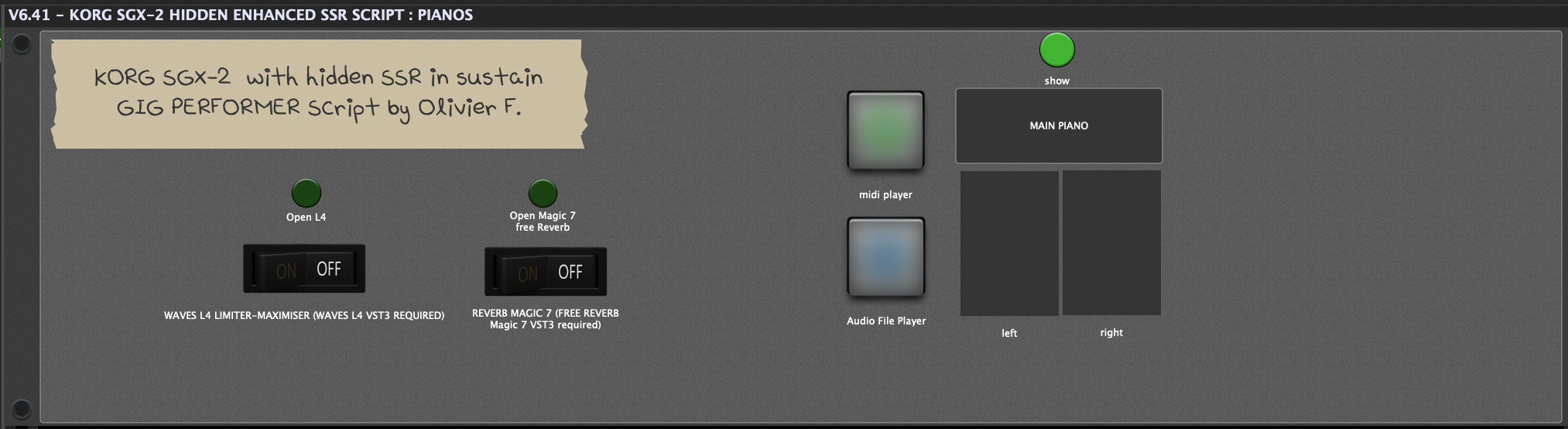
My KORG SGX-2 scripted in GIG performer fix STRING RESONANCES without PIANOTEQ Help. I will upload it soon here 🙂
https://www.dropbox.com/scl/fo/0i2wton7fgcf90461k1dt/h?rlkey=ry3iuzwbwvy6bog832f1k8z7p&st=8zmg8fwj&dl=0
Jay Lane That's alright, at least I still have other options. I'm on Windows PC.
And the Italian F is very good too 🙂 GERMAN D and ITALIAN F (but i don't like the japanese preset)
This piano lib seems to be best selected and prepared from all of the piano packs available on flagship workstations and stage pianos. None of them is redundant just as none of the five perspectives of MD is.
Mind you, there is a Berlin D SGX-2 pack. I saw reviews say the bass is weaker and the sound is thinner, so this may explain why Berlin D is not included. The developers are really careful and dedicated.
The UI is intuitive and simple to use. Major functions are offered directly at front page. It is resource optimized. The original Italian Grand data is over 8 gigs. But the five pianos of the SGX-2 lib are 10 gigs all together. So, each is around 2 gigs. IIRC, Vintage D with 13 layers is over 5 gigs and Alicia Keys with 12 layers is over 6 gigs. They probably used proprietary compression method, and had investigated the status quo of virtual piano market before launching projects.
BTW, the tone is authentic,I mean, feels like hearing the tone of real pianos, which reminds me of Pianoverse, especially that small Bosie 200 grand, tasty, but way too big size. It's great to see one more decent choice of virtual pianos.
Yeah just will not download the samples for me no matter what I do.
I will wait until Korg's new MIDI keyboard comes with this software.
If this Korg engine is the same as that in the Grandstage X (which I've owned) then I wouldn't write home about it. It was okay but nothing special to my ears.
compare SGX_2 with Modern D :
Couldn't quite get the video to play as don't have TikTok. What I did hear B seems to have more clarity. Maybe upload to YouTube and link where possible 😊
Jay Lane
here the Youtube version, to be sure to play it at - 14 LUFS like the master :
B, the other one has more nasty resonances and even clips at some times
PASHKULI Yes — Piano A does have the real, slightly imperfect release resonances you’d expect from a real mid-aged Steinway.
OlivierW
I do not know much about the release resonances but upon testing it (the SGX-2 as released) overall it is less than impressive at least for my taste.
After seeing this thread I downloaded the demo out of curiosity, and I have to say that I'm really impressed by this, especially for $99.
The main reason is that the playability is remarkably good. The overall responsiveness, snappiness, clarity of attack, evenness of tone, and level of control is as good as any VST I've ever tried - and way better than most. I would even go so far as to day that it equals - if not surpasses - the Modern D in this aspect (though not in others).
In terms of sound, all 3 pianos (German, Italian & Japanese) have attractive and varied tones, and have been very clearly recorded with good presence, although the recordings are definitely not as deep or as polished as Modern D or VSL. It appears that only the Italian Grand has una corda, and I can't tell if it's real or simulated (I suspect the latter) but regardless, it's quite nicely executed, and much better than having nothing at all. Controls and interface are also very clear and useful.
On the downside, there does not appear to be much in the way of sympathetic resonance (like almost none) but a good external reverb can cover up a lot of this, and you can also daisy-chain Pianoteq to work as a sympathetic resonance engine if you have it.
Still, for $99, this is an absolute steal as far as I'm concerned, and the biggest surprise I've come across this year. It just feels refreshingly straightforward, unfussy, and fun to play on, and I have a feeling I will be using this often.
OlivierW From the very first notes, the attack and release feel incredibly clear — there’s no veil, no masking, and no artificial smoothing of the transients. The tone speaks freely, with real presence and dimension, especially in the midrange.... It feels alive, organic, and deeply musical — a must-have VST3 for any pianist who values authenticity and touch.
Agree 100% - those are the exact qualities that makes this stand out from the crowd, IMO.
Still can't download the samples 😭